
Kia Stinger CK: Fuel Delivery System / Delivery Pipe
Repair procedures
| Removal |
| 1. |
Release the residual pressure in fuel line. (Refer to the Fuel Delivery System - "Release Residual Pressure in Fuel Line") |
| 2. |
Switch "OFF" the ignition and disconnect the negative (-) battery terminal. |
| 3. |
Remove the intake manifold. (Refer to Engine Mechanical System - “Intake Manifold”) |
| 4. |
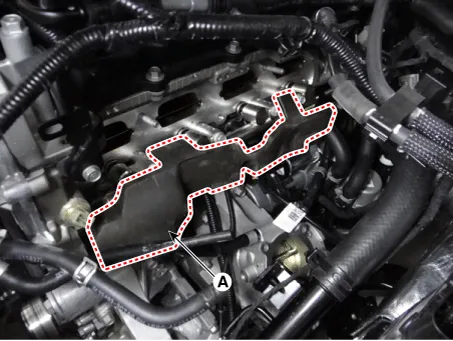
Remove the delivery pipe foam (A).
|
| 5. |
Remove the cowl top cover assembly. (Refer to Body (Interior and Exterior) - Cowl Top Cover") |
| 6. |
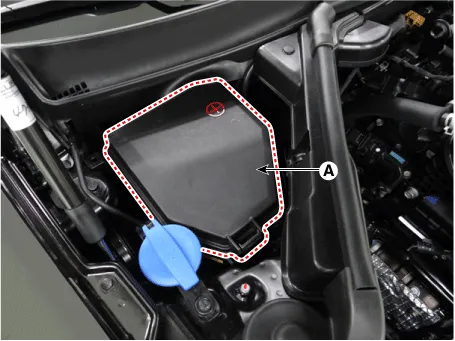
Remove the engine box cover (A).
|
| 7. |
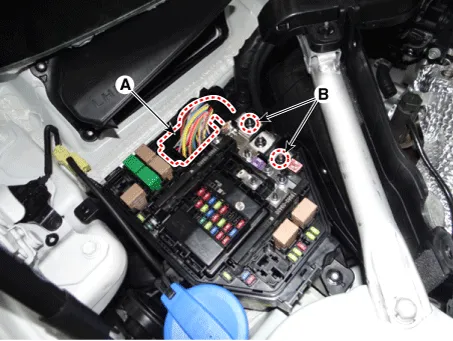
Disconnect the front control connector (A). |
| 8. |
Remove the groune terminal nuts (B).
|
| 9. |
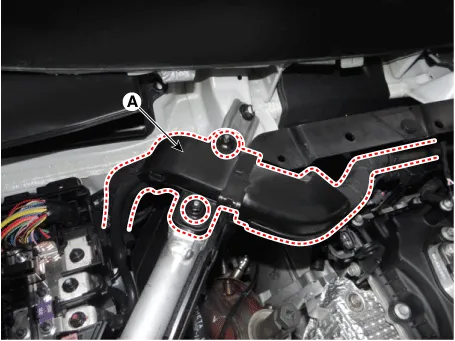
Remove the wiring protector (A).
|
| 10. |
Remove the high pressure fuel pipe.
|
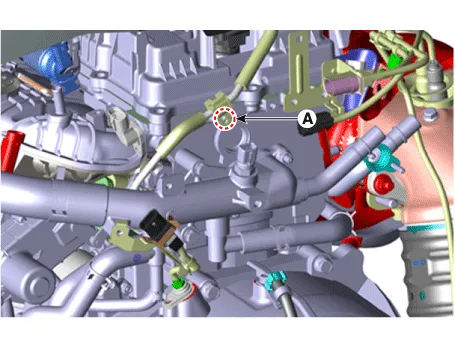
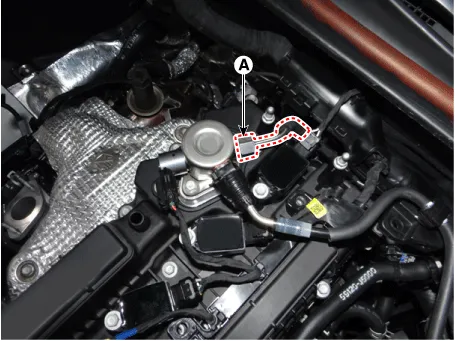
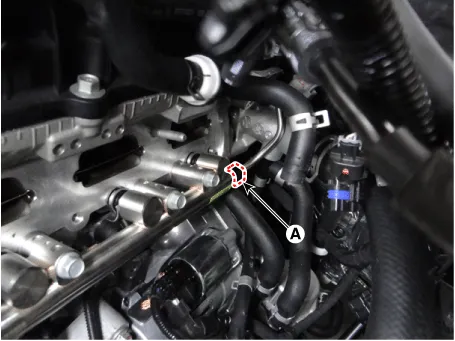
| 11. |
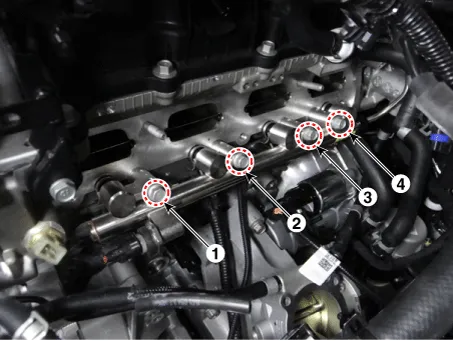
Remove the mounting bolts (A), and then remove the delivery pipe & injector assembly from the engine.
|
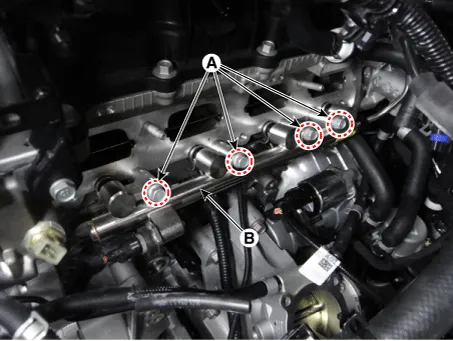
| 12. |
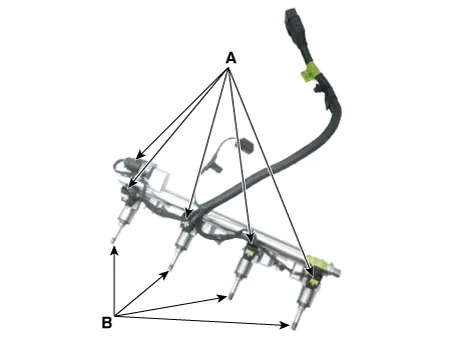
Disconnect the injector & rail pressure sensor connector (A). |
| 13. |
Remove the injector (B) from the delivery pipe.
|
| Installation |
|

|
| 1. |
Install in the reverse order of removal. |


Other information:
Kia Stinger (CK) 2018-2023 Service Manual: If the engine overheats
If your temperature gauge indicates overheating, you experience a loss of power, or hear loud pinging or knocking, the engine will probably be too hot. If this happens, you should: 1.Pull off the road and stop as soon as it is safe to do so. 2.Place the shift lever in P and set the parking brake. If the air conditioning is on, turn it off. 3.Kia Stinger (CK) 2018-2023 Service Manual: Front Seat Inner Shield Cover
Components and components location Component Location 1. Front Seat Inner Shield Cover Repair procedures Replacement Put on gloves to protect your hands. • Use a plastic panel removal tool to remove interior trim pieces without marring the surface.Categories
- Manuals Home
- Kia Stinger Owners Manual
- Kia Stinger Service Manual
- New on site
- Most important about car
