
Kia Stinger CK: Automatic Transmission Control System / Inhibitor Switch
Specifications
| Specifications |
|
Item |
Specification |
|
Output type |
PWM |
|
Power supply (V) |
5 |
Components and components location
| Components Location |
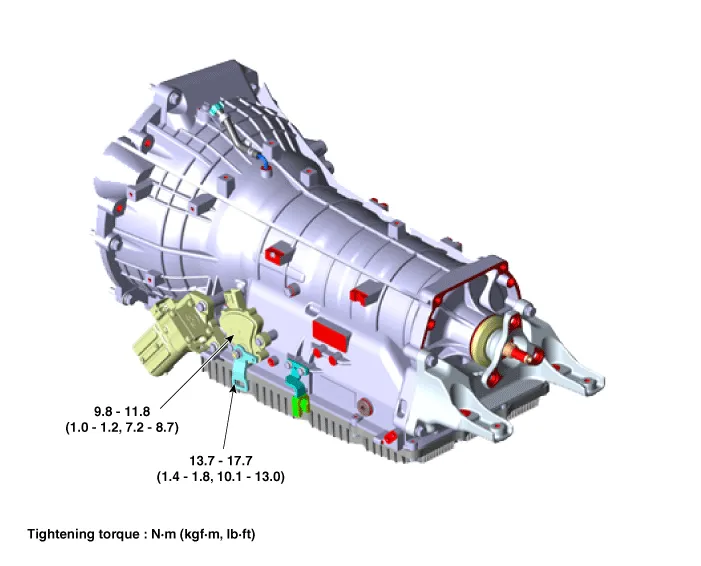
| 1. Inhibitor switch |
2. Manual control lever |
Schematic diagrams
| Circuit Diagram |

Repair procedures
| Inspection |
Inspect the connector thoroughly for looseness, poor connection, bending, corrosion, contamination, deformation, or damage. |

| 1. |
Disconnect the parking switch connector. |
| 2. |
Turn Ignition "ON", & engine "OFF". |
| 3. |
Measure the output signal in each range (P, R, N, D). Signal code table
Connection table
|
| Removal |
| 1. |
Shift the gear to "N". |
| 2. |
Disconnect the negative (-) battery terminal. |
| 3. |
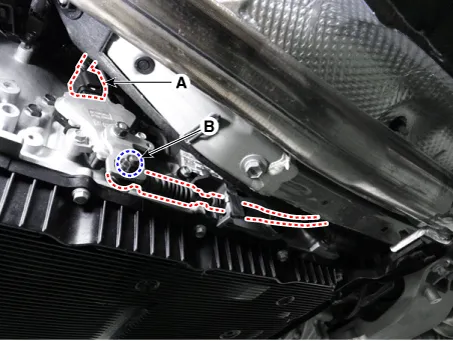
Inhibitor switch connector (A) and loosen the nut (B).
|
| 4. |
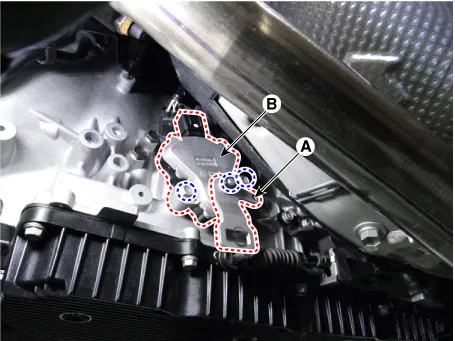
Remove the manual control lever (A) and then remove the inhibitor switch (B).
|
| Installation |
| 1. |
Install the inhibitor switch (B) and manual control lever (A).
|

| 2. |
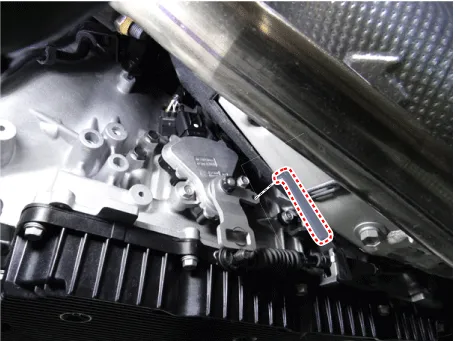
Install the SST (09480-D2100).
|
| 3. |
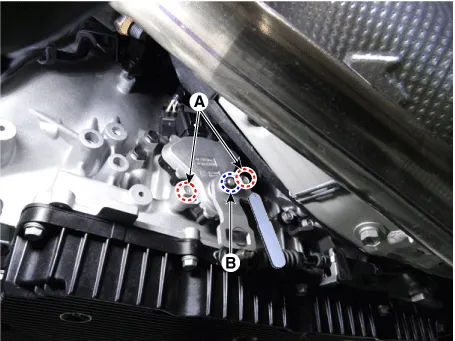
Tighten the inhibitor switch mounting bolts (A) and manual control lever mounting nut (B).
|
| 4. |
Remove the SST (09480-D2100). |
| 5. |
Connect the inhibitor switch connector (A) and tighten shift cable mounting nut (B).
|


Other information:
Kia Stinger (CK) 2018-2023 Service Manual: Heater Core
Repair procedures Replacement 1. Disconnect the negative (-) battery terminal. 2. After loosening the nuts and bolts, remove the main crash pad and cowl cross bar assembly altogether. (Refer to Heater - "Heater Unit") 3. Remove the heater core (A). 4.Kia Stinger (CK) 2018-2023 Service Manual: Front Seat Frame Assembly
Components and components location Component Location 1. Front seat back frame assembly 2. Front seat cushion frame assembly Repair procedures Replacement • Put on gloves to protect your hands.Categories
- Manuals Home
- Kia Stinger Owners Manual
- Kia Stinger Service Manual
- New on site
- Most important about car
