Kia Stinger CK: Rear Suspension System / Trailing Arm

Repair procedures
Removal
1.

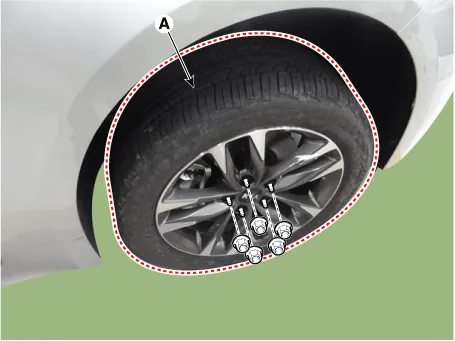
Remove wheel nuts, wheel and tire (A) from hub.

Tightening torque:

107.9 - 127.5 N·m (11.0 - 13.0 kgf·m, 79.6 - 94.0 lb·ft)


Be careful not to damage the wheel bolts when removing the wheel and tire (A).

2.

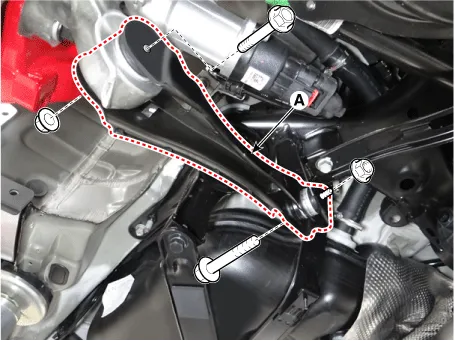
Loosen the trailing arm bolt & nut and then remove the trailing arm.

Tightening torque:

117.7 - 132.4 N·m (12.0 - 13.5 kgf·m, 86.8 - 97.6 lb·ft)


Up the transmission jack under the lower arm in order to remove the rear lower arm in no-load condition.

3.

Install in the reverse order of removal.


Install at the empty vehicle height when it is assembled.

Inspection
1.

Check the bushing for wear and deterioration.

2.

Check the trailing arm deformation.

3.

Check the all bolts.

Other information:

Kia Stinger (CK) 2018-2023 Service Manual: ISG (Idle Stop and Go) system

Your vehicle may be equipped with the ISG system, which reduces fuel consumption by automatically shutting down the engine, when the vehicle is at a standstill. (For example : red light, stop sign and traffic jam) The engine starts automatically as soon as the starting conditions are met. The ISG system is ON whenever the engine is running. ✽ NOTICE When the engine automatically starts by the ISG system, some warning lights (ABS, ESC, ESC OFF, EPS or Parking brake warning light) may turn on for a few seconds.

Kia Stinger (CK) 2018-2023 Service Manual: Side Airbag (SAB) Module

Description and operation Description Installed inside the front seat, the side airbags (SAB) protect the driver and front passenger from danger in the event of a side crash. The SRSCM determines deployment of side airbag based on Side Impact Sensor (SIS) signal.    Never attempt to measure the circuit resistance of the airbag module (squib) even if you are using the specified tester.

Categories

 
Copyright © 2026 www.kstinger.com 0.0094