
Kia Stinger CK: Lubrication System / Oil Pressure Switch
Repair procedures
| Removal |
| 1. |
Disconnect the battery negative terminal. |
| 2. |
Remove the alternator. (Refer to Engine Electrical System - "Alternator") |
| 3. |
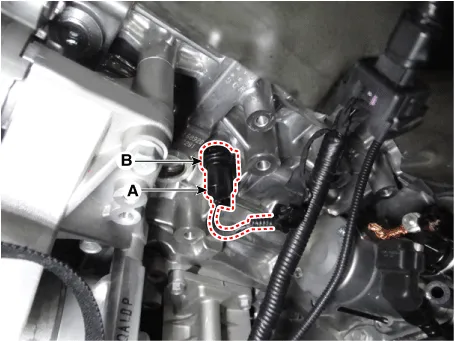
Disconnect the oil pressure switch connector (A) and then remove the oil pressure switch (B).
|
| 4. |
Install in the reverse order of removal.
|


| Inspection |
| 1. |
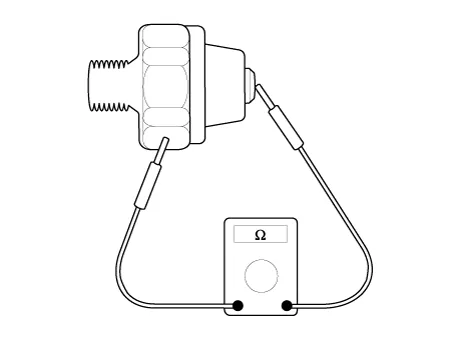
Check the continuity between the terminal and the body with an ohmmeter. If there is no continuity, replace the oil pressure switch.
|
| 2. |
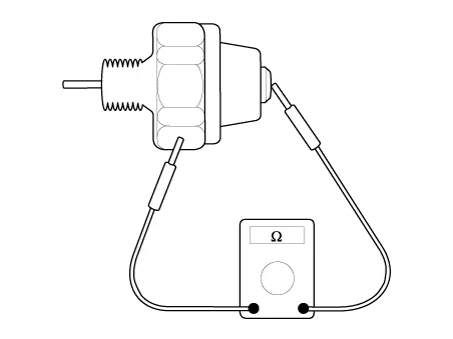
Check the continuity between the terminal and the body when the fine wire is pushed. If there is continuity even when the fine wire is pushed, replace the switch. |
| 3. |
If there is no continuity when a 50kPa (0.50kgf/cm², 7.25psi) is applied through the oil hole, the switch is operating properly. Check for air leakage. If air leaks, the diaphragm is broken. Replace it.
|


Other information:
Kia Stinger (CK) 2018-2023 Service Manual: Tire replacement
If the tire is worn evenly, a tread wear Indicator (A) will appear as a solid band across the tread. This shows there is less than 1.6 mm (1/16 inch) of tread left on the tire. Replace the tire when this happens. Do not wait for the band to appear across the entire tread before replacing the tire. The ABS (Anti-lock Brake System) works by comparing the speed of the wheels.Kia Stinger (CK) 2018-2023 Service Manual: Rear Seat Back Cover
Components and components location Component Location 1. Rear back side seat assembly [LH] 2. Rear seat back assembly [LH] 3. Rear seat back assembly [RH] 4. Rear back side seat assembly [RH] Repair procedures Replacement Put on gloves to protect your hands.Categories
- Manuals Home
- Kia Stinger Owners Manual
- Kia Stinger Service Manual
- New on site
- Most important about car
