
Kia Stinger CK: Emission Control System
Kia Stinger (CK) 2018-2023 Service Manual / Emission Control System
Contents:
- Specifications
- Crankcase Emission Control System
- Evaporative Emission Control System
- Exhaust Emission Control System
Components and components location
| Components Location |
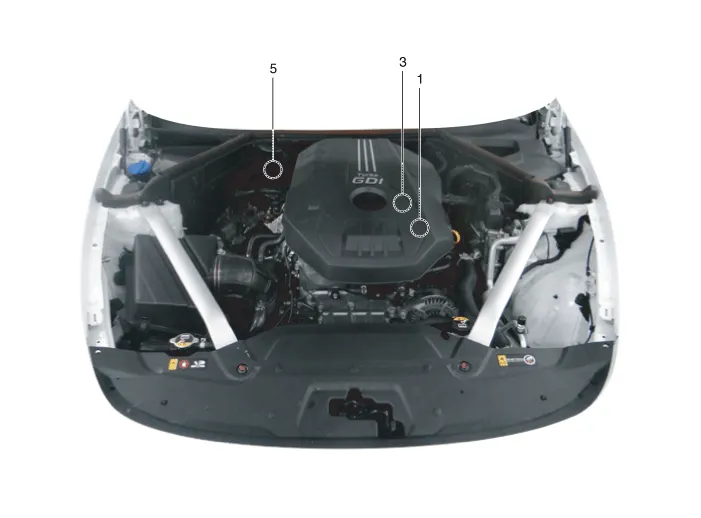
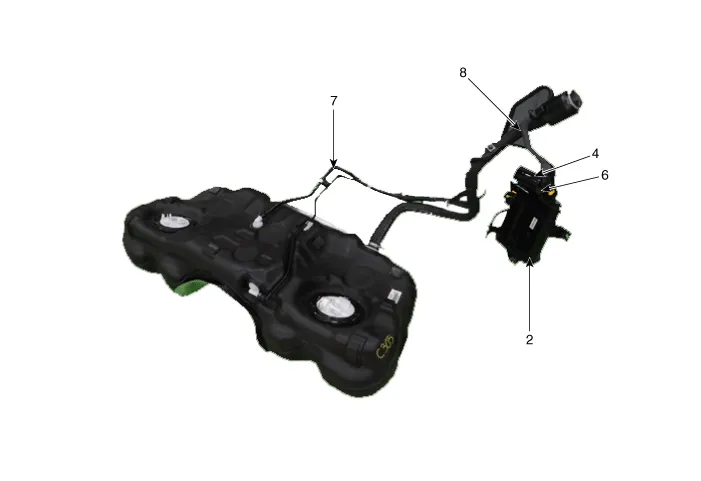
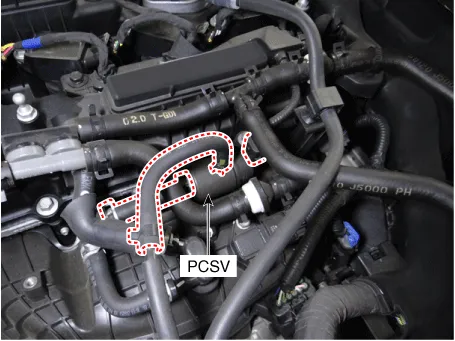
| 1. PCV Valve 2. Canister 3. Purge control solenoid valve (PCSV) 4. Fuel tank air filter |
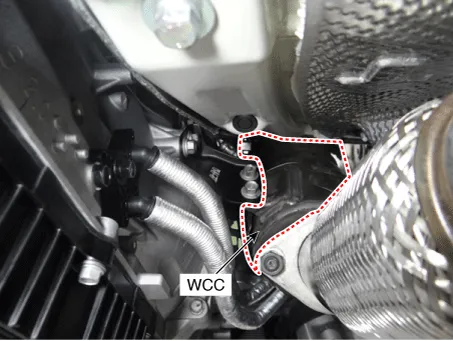
5. Catalytic converter (WCC)
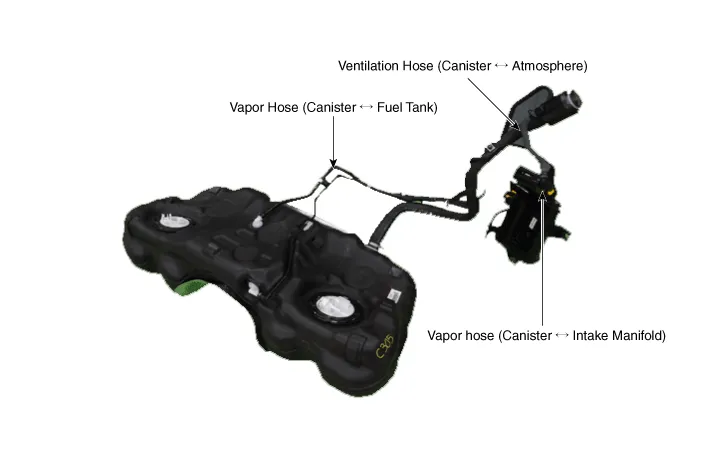
6. Vapor hose (Canister ↔ Intake Manifold) 7. Vapor Hose (Canister ↔ Fuel Tank) 8. Ventilation Hose (Canister ↔ Atmosphere) |
|
1. PCV valve |
2. Canister 4. Fuel tank air filter |
|
|
|
|
3. Purge control solenoid valve (PCSV) |
5. catalytic converter (WCC) |
|
|
|
|
6. Vapor hose (Canister ↔ Intake Manifold) 7. Vapor Hose (Canister ↔ Fuel Tank) 8. Ventilation Hose (Canister ↔ Atmosphere) |
|
|
|
|
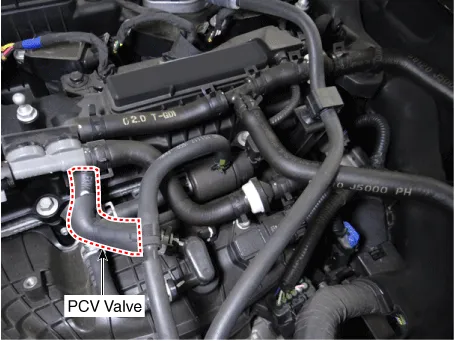
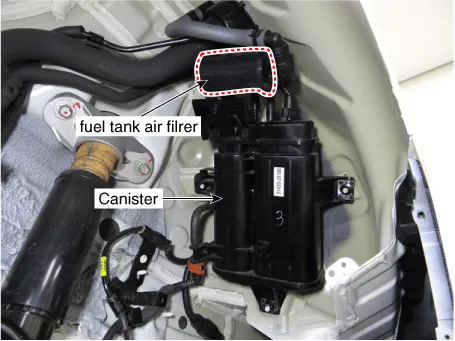
Description and operation
| Description |
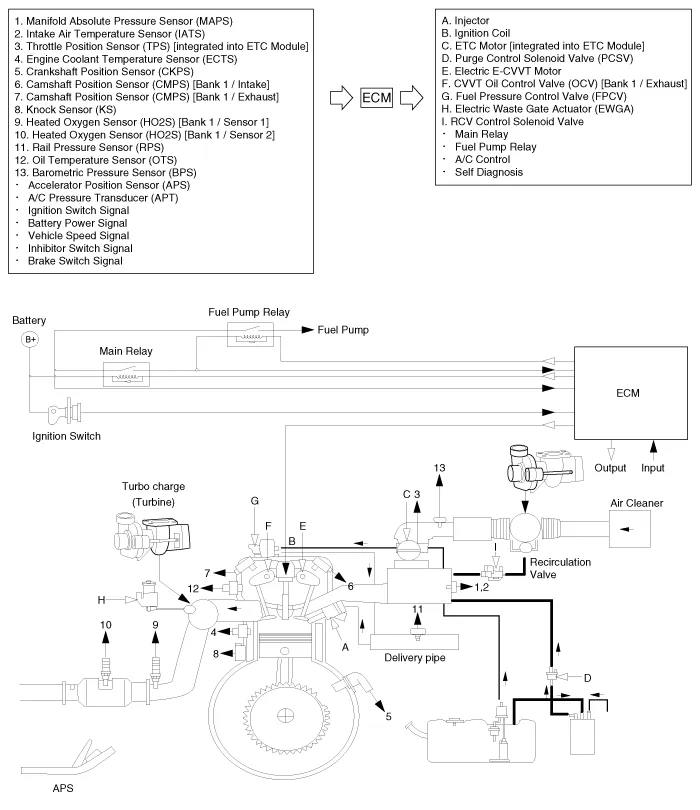
Emissions Control System consists of three major systems.
| • |
The Crankcase Emission Control System prevents blow-by gas from releasing into the atmosphere. This system recycles gas back into the intake manifold (Closed Crankcase Ventilation Type). |
| • |
The Evaporative Emission Control System prevents evaporative gas from releasing into the atmosphere. This system burns gas at appropriate engine operating condition after gathering it in the canister. |
| • |
The Exhaust Emission Control System converts the three pollutants [hydrocarbons (HC), carbon monoxide (CO), and oxides of nitrogen (NOx)] into harmless substances by using the 3-way catalytic converter. |
Schematic diagrams
| Schematic Diagram |
Troubleshooting
| Troubleshooting |
|
Symptom |
Suspected area |
|
Engine does not start or struggles to start |
Vapor hose damaged or disconnected |
|
Engine struggles to start |
Malfunctioning Purge Control Solenoid Valve |
|
Rough idle or engine stalls |
Vapor hose damaged or disconnected |
|
Malfunctioning PCV valve |
|
|
Rough idle |
Malfunctioning Evaporative Emission Control System |
|
Excessive oil consumption |
Positive crankcase ventilation line clogged |
Specifications ➤
Crankcase Emission Control System ➤
Evaporative Emission Control System ➤
Exhaust Emission Control System ➤


Other information:
Specifications Lubricant Item Defined lubricant Capacity Transfer oil Exclusive oil for transfer case ATF SHELL TF0870B 0.820L (0.217 U.S gal., 0.87 U.S.qt., 0.72 Imp.qt.) Repair procedures Inspection Prohibition on checking, refilling and replacing the transfer case oil – Do not check, refill and replace the transfer case oil because transfer case (ATF SHELL TF0870B) is filled when coming out of the factory.Components and components location Components Location 1. Blower Unit Components 1. Inlet seal 2. Inlet duct case [Upper] 3. Inlet door assembly 4. Inlet case [Lower] 5. Air filter cover 6. Blower case [Upper] 7. Blower case [Lower] 8. Blower motor seal 9.Categories
- Manuals Home
- Kia Stinger Owners Manual
- Kia Stinger Service Manual
- Specifications
- Crankcase Emission Control System
- Evaporative Emission Control System
- Exhaust Emission Control System
- New on site
- Most important about car
Contents

Copyright © 2026 www.kstinger.com 0.0134