
Kia Stinger CK: Curtain air bag / Air bag inflation conditions
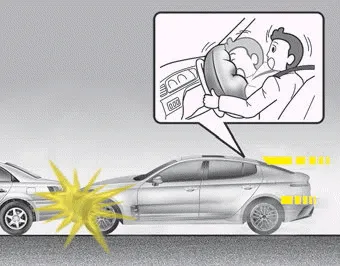
Front air bags
Front air bags are designed to inflate in a frontal collision depending on the intensity, speed or angles of impact of the front collision.
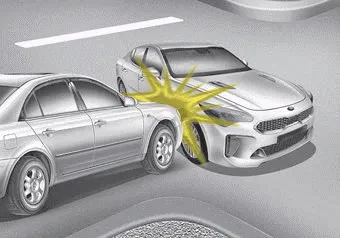
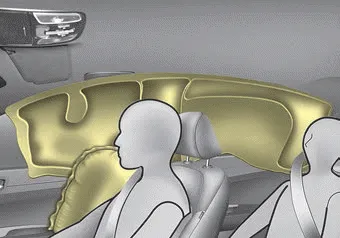
Side and/or curtain air bags
Side and/or curtain air bags are designed to inflate when an impact is detected by side collision sensors depending on the strength, speed or angles of impact resulting from a side impact collision.
Also, the side and curtain air bags are designed to inflate when a rollover is detected by a rollover sensor.
Although the front air bags (driver’s and front passenger’s air bags) are designed to inflate in frontal collisions, they also may inflate in other types of collisions if the front impact sensors detect a sufficient frontal force in another type of impact. Side and curtain air bags are designed to inflate in certain side impact collisions. They may inflate in other types of collisions where a side force is detected by the sensors. Side air bag and/or curtain air bags may also inflate where rollover sensors indicate the possibility of a rollover occurring (even if none actually occurs) or in other situations, including when the vehicle is tilted while being towed.
Even where side and/or curtain air bags would not provide impact protection in a rollover, however, they will deploy to prevent ejection of occupants, especially those who are restrained with seat belts.
If the vehicle chassis is impacted by bumps or objects on unimproved roads, the air bags may deploy. Drive carefully on unimproved roads or on surfaces not designed for vehicle traffic to prevent unintended air bag deployment.


Other information:
Kia Stinger (CK) 2018-2023 Owner's Manual: Console Armrest
Components and components location Component Location 1. Front console armrest Repair procedures Replacement Put on gloves to protect your hands. • Use a plastic panel removal tool to remove interior trim pieces without marring the surface.Kia Stinger (CK) 2018-2023 Owner's Manual: Electric Waste Gate Actuator (EWGA)
Description and operation Desrcription Installed on the turbocharger, the Electric Waste Gate Actuator (EWGA) operates the vane in the Waste Gate Turbocharger (WGT) and regulates the compressed air amount based on the PWM signal from the ECM. This actuator consists of a DC motor which actuates the vane, a 2-step gear which increases torque of the DC motor, a position sensor which detects status of the vane, and an electric control unit which drives the DC motor.Categories
- Manuals Home
- Kia Stinger Owners Manual
- Kia Stinger Service Manual
- New on site
- Most important about car
