
Kia Stinger CK: Maintenance / Light bulbs
Contents:
Bulb replacement precaution ➤
Light bulb position (Front)
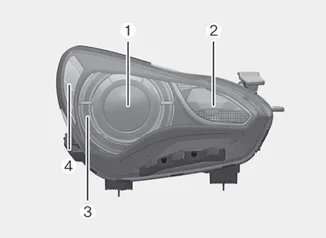
■ Head lamp - Type A
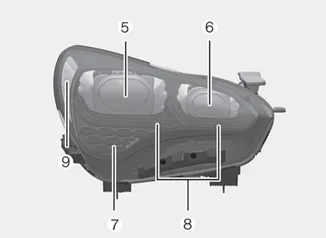
■ Head lamp - Type B
(1) Headlamp (Low/High) (bulb type)
(2) Front turn signal lamp (bulb type)
(3) Day time running lamp / Position lamp (LED type)
(4) Side marker (bulb type)
(5) Headlamp (Low/High) (LED type)
(6) Headlamp (Low/High assist) (LED type)
(7) Front turn signal lamp (LED type)
(8) Day time running lamp / Position lamp (LED type)
(9) Side marker (LED type)
Light bulb position (Rear)

■ Rear combination lamp - Type A

■ Rear combination lamp - Type B
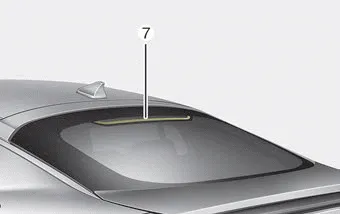
■ High mounted stop lamp

■ License plate lamp
(1) Stop and tail lamp (LED type)
(2) Stop lamp (LED type)
(3) Back-up lamp (bulb type)
(4) Rear turn signal lamp (bulb type)
(5) Side marker (LED type)
(6) Rear turn signal lamp (LED type)
(7) High mounted stop lamp (LED type)
(8) License plate lamp (LED type)


Other information:
Kia Stinger (CK) 2018-2023 Owner's Manual: Active hood lift system
Description and operation Description The system reduces injury of pedestrians by lifting the hood when a accident occurs between the pedestrian and vehicle. It may prevent a secondary impact between the pedestrian's head and engine components. Components and components location Components Location 1.Kia Stinger (CK) 2018-2023 Owner's Manual: Fuel Pressure Sensor (FPS)
Specifications Specification Pressure [kPa (kgf/cm², psi)] Output Voltage (V) [Vref = 5V] 50 (0.51, 7.3) 0.3 600 (6.12, 87.0) 2.5 1100 (11.2, 159.5) 4.5 Description and operation Description Installed on top of the low pressure fuel pump, the fuel pressure sensor (FPS) measures the pressure in the low pressure line.Categories
- Manuals Home
- Kia Stinger Owners Manual
- Kia Stinger Service Manual
- New on site
- Most important about car
Contents
