Kia Stinger CK: Rear Suspension System / Rear Assist Arm

Repair procedures
Removal
1.

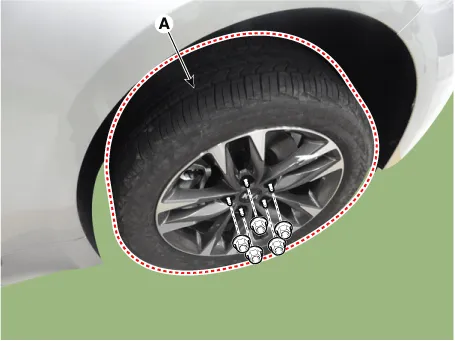
Remove wheel nuts, wheel and tire (A) from hub.

Tightening torque:

107.9 - 127.5 N·m (11.0 - 13.0 kgf·m, 79.6 - 94.0 lb·ft)


Be careful not to damage the wheel bolts when removing the wheel and tire (A).

2.

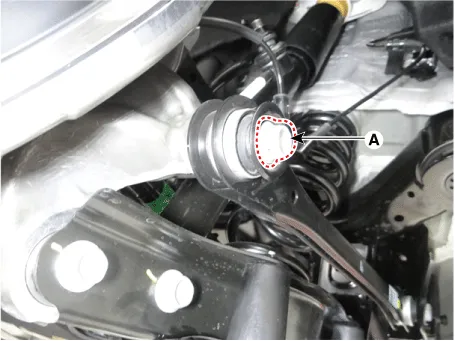
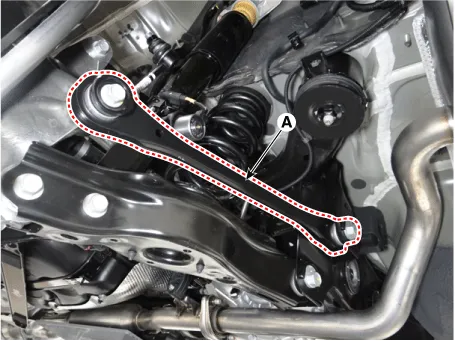
Loosen the bolt (A) and then separate the rear assist arm from the rear axle.

Tightening torque:

117.7 - 132.4 N·m (12.0 - 13.5 kgf·m, 86.8 - 97.6 lb·ft)


Up the transmission jack under the lower arm in order to remove the rear assist arm in no-load condition.

3.

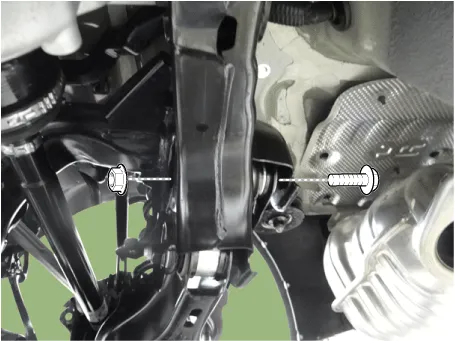
Loosen the bolt & nut and then remove the rear assist arm from the rear cross member.

Tightening torque :

137.3 - 156.9 N·m (14.0 - 16.0 kgf·m, 101.3 - 115.7 lb·ft)

4.

Install in the reverse order of removal.


Install at the empty vehicle height when it is assembled.

5.

Check the alignment.

(Refer to Suspension System - "Alignment")

Inspection
1.

Check the bushing for wear and deterioration.

2.

Check for all bolts and nuts.

Other information:

Kia Stinger (CK) 2018-2023 Service Manual: Integrated Memory Seat (IMS) System

Specifications Specifications Memory Power Seat Unit Item Specifications Rated voltage DC 12 V Operating voltage DC 9 - 16 V Operating temperature range -22 - 167°F (-30 - 75°C) Dark current Max.

Kia Stinger (CK) 2018-2023 Service Manual: SRS Control Module (SRSCM)

Description and operation Description The primary purpose of the SRSCM (Supplemental Restraints System Control Module) is to discriminate between an event that warrants restraint system deployment and an event that does not. The SRSCM must decide whether to deploy the restraint system or not. After determining that pretensioners and/or airbag deployment is required, the SRSCM must supply sufficient power to the pretensioners and airbag igniters to initiate deployment.

Categories

 
Copyright © 2026 www.kstinger.com 0.0075