
Kia Stinger CK: Cylinder Head Assembly / Cylinder Head Cover
Repair procedures
| Removal |
|

Mark all wiring and hoses to avoid misconnection. |

| 1. |
Disconnect the battery negative terminal. |
| 2. |
Remove the engine cover. (Refer to Engine and Transmission Assembly - "Engine Cover") |
| 3. |
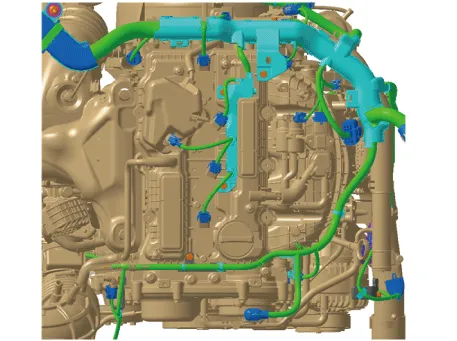
Disconnect the wiring connectors and harness clamps and remove the connector brackets around the cylinder head cover.
|
| 4. |
Remove the ignition coils. (Refer to Engine Electrical System - “Ignition Coil”) |
| 5. |
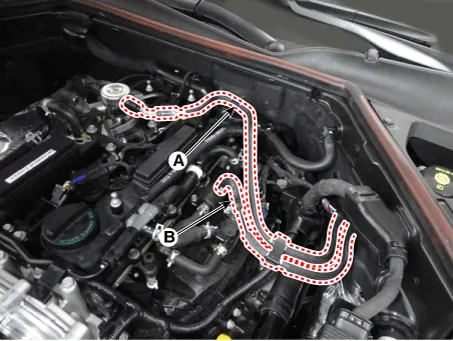
Disconnect the fuel hose (A) and PCSV (Purge control solenoid valve) hose (B).
|
| 6. |
Remove the high pressure fuel pump. (Refer to Engine Control/Fuel System - "High Pressure Fuel Pump") |
| 7. |
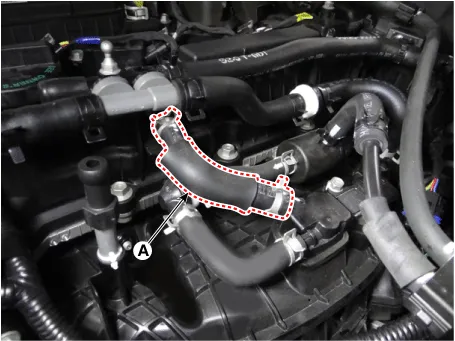
Disconnect the positive crankcase ventilation (PCV) hose (A).
|
| 8. |
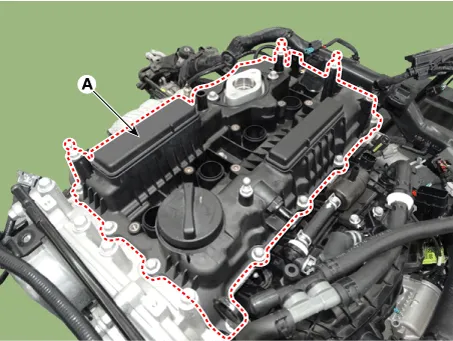
Remove the cylinder head cover (A).
|
| Installation |
| 1. |
Install cylinder head cover.
|
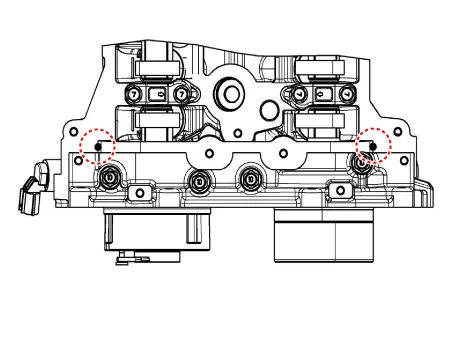

| 2. |
Install the other parts in the reverse order of removal. |


Other information:
Kia Stinger (CK) 2018-2023 Service Manual: Power Door Locks
Components and components location Component Location 1. Driver power window switch 2. Assist power window switch 3 . Integrated central control unit (ICU) 4 . Door lock knob 5 . Tailgate actuator 6. Door latch assembly 7 . Door lock/unlock switch 8 . Rear left power window switch 9 .Kia Stinger (CK) 2018-2023 Service Manual: Air Cleaner Filter
Repair procedures Inspection 1. Remove the air cleaner element. 2. Check that the air filter is excessively dirty. If the air filter is excessively dirty, replace the air cleaner element. 3. If the air cleaner element needs to be cleaned, blow compressed air as shown in the illustration to clean it.Categories
- Manuals Home
- Kia Stinger Owners Manual
- Kia Stinger Service Manual
- New on site
- Most important about car
