
Kia Stinger CK: Windshield Wiper/Washer / Head Up Display (HUD) System
Contents:
Components and components location
| Components Location |
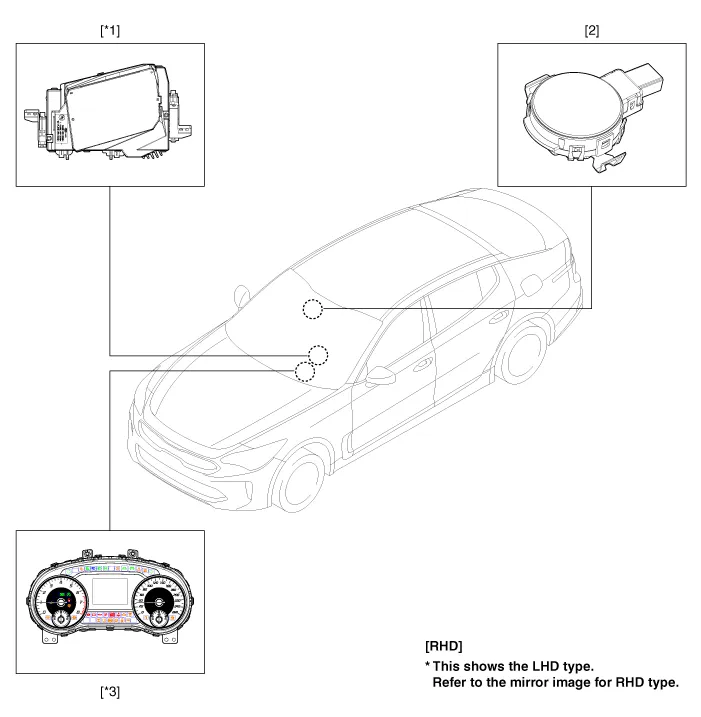
| 1. Head Up Display (HUD) 2. Ambient light sensor |
3. Cluster (User setting menu
ON/OFF, Display brightness) |
Description and operation
| Description |
| 1. |
System operation
HUD system displays various information on the windshield glass which minimizes the driver’s eye movement to enhance safety and convenience. The Head Up Display reflects the TFT LCD images to two mirrors (flat/concave) and displays them 2.2m ahead from the driver's eye. Information provided by HUD ;
|

| 2. |
HUD Display Contents
|

| 3. |
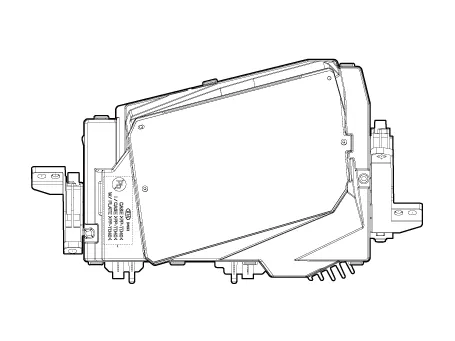
HUD Unit Head Up Display : Output various vehicle system information on windshield glass via CAN
|
| 4. |
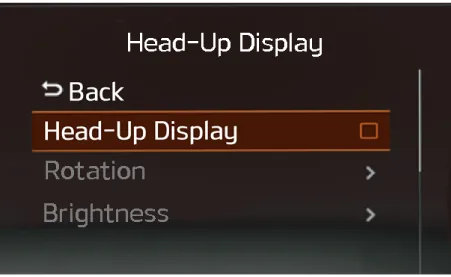
Cluster : Select display function in content setting in [Head Up Display] menu. [ON/OFF Setting]
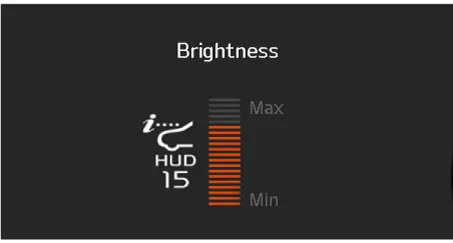
[Display brightness]
|

| 5. |
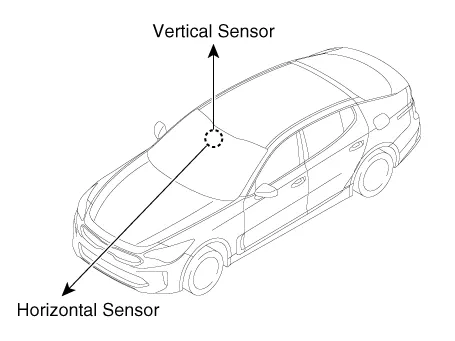
Illumination Sensor : It is equipped with bidirectional (vertical and horizontal) sensor. HUD brightness is controlled depending on horizontal measurement (ambient brightness).
|
| 6. |
Windshield glass : Windshield glass exclusive for Head Up Display is built in with double image removal film.
|

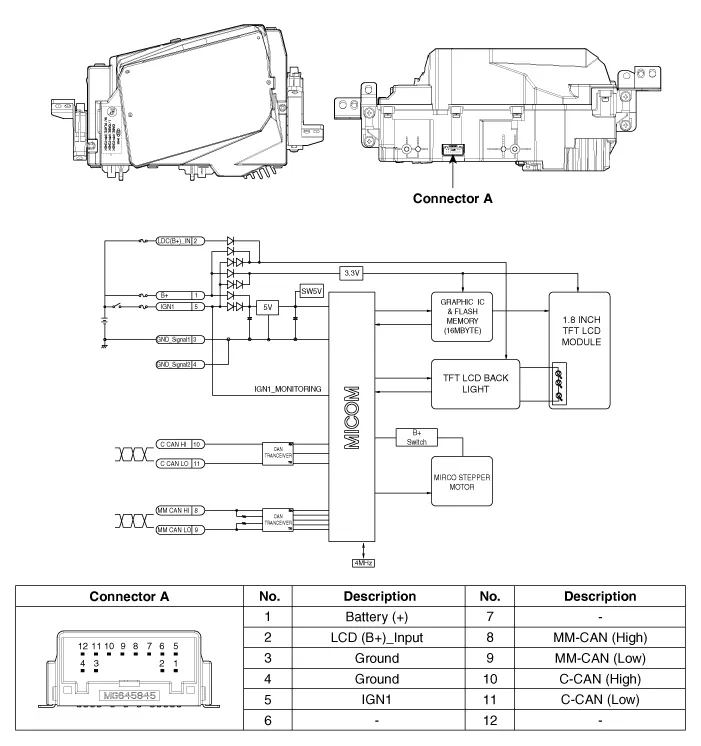
Head Up Display (HUD) Unit
Components and components location
| Component |
Repair procedures
| Removal |
Put on gloves to prevent hand injuries. |
|
| 1. |
Disconnect the negative (-) battery terminal. |
| 2. |
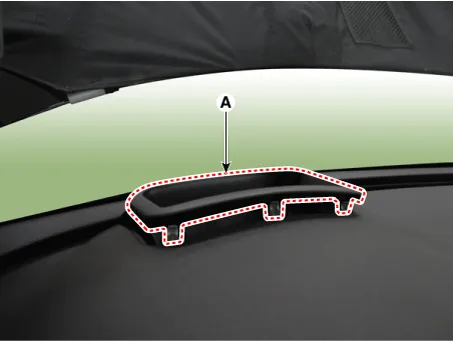
Remove the head up display bezel (A) by using a remover.
|
| 3. |
Remove the instrument cluster. (Refer to Indicators And Gauges - "Instrument Cluster") |
| 4. |
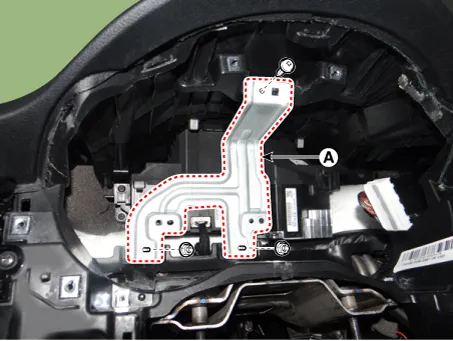
Remove the head up display unit bracket (A) after loosening the mounting screw and nuts.
|
| 5. |
Disconnect the head up display unit connector (A).
|
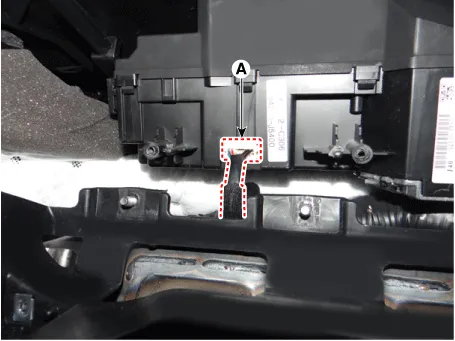
| 6. |
Remove the head up display unit (A) after loosening the mounting screws.
|
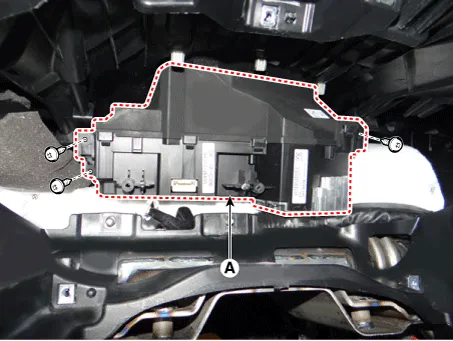
| Installation |
| 1. |
Connect the connector after installing the head up display unit. |
| 2. |
Install the head up display unit bracket. |
| 3. |
Install the instrument cluster. |
| 4. |
Install the head up display bezel. |
| 5. |
Connect the negative (-) battery terminal. |
| Inspection |
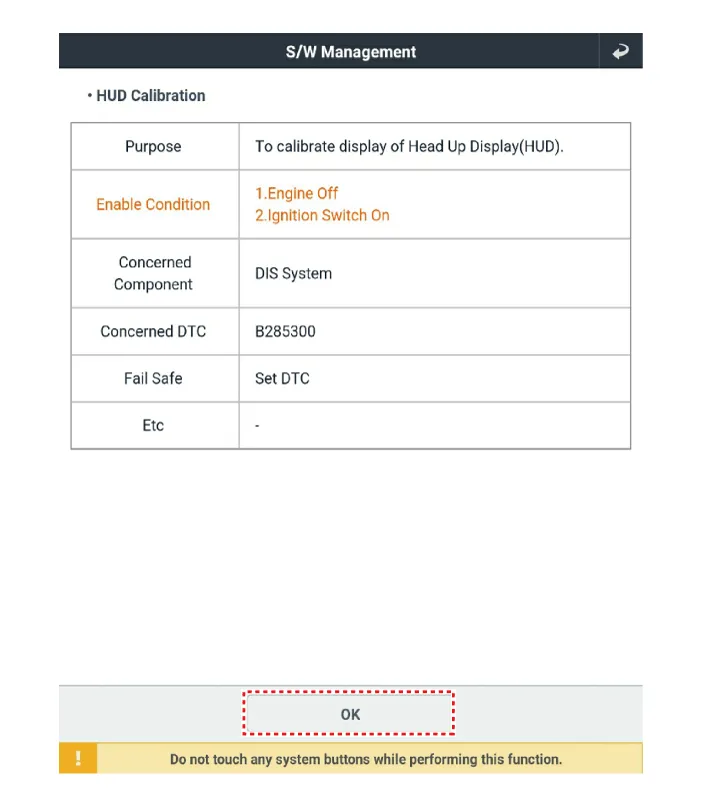
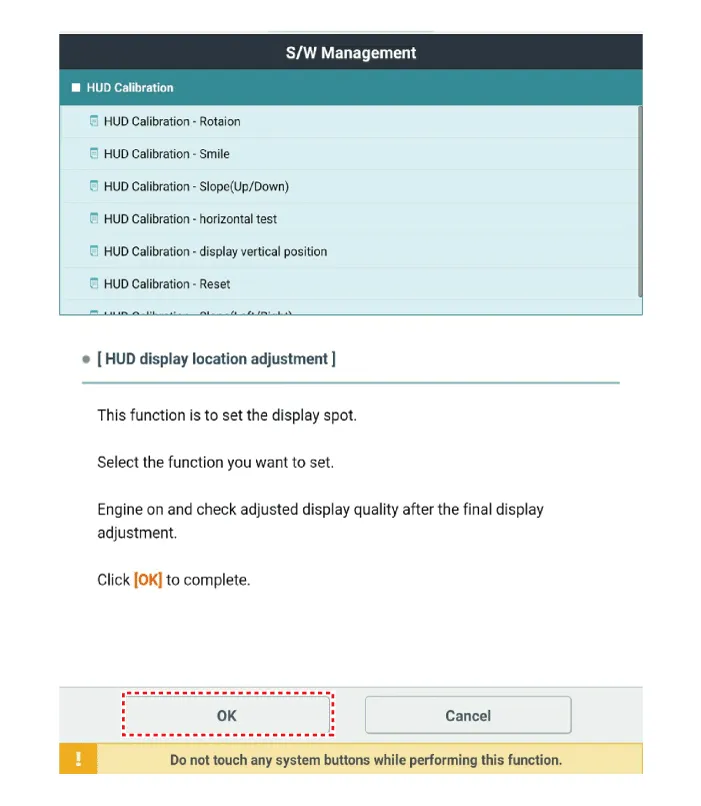
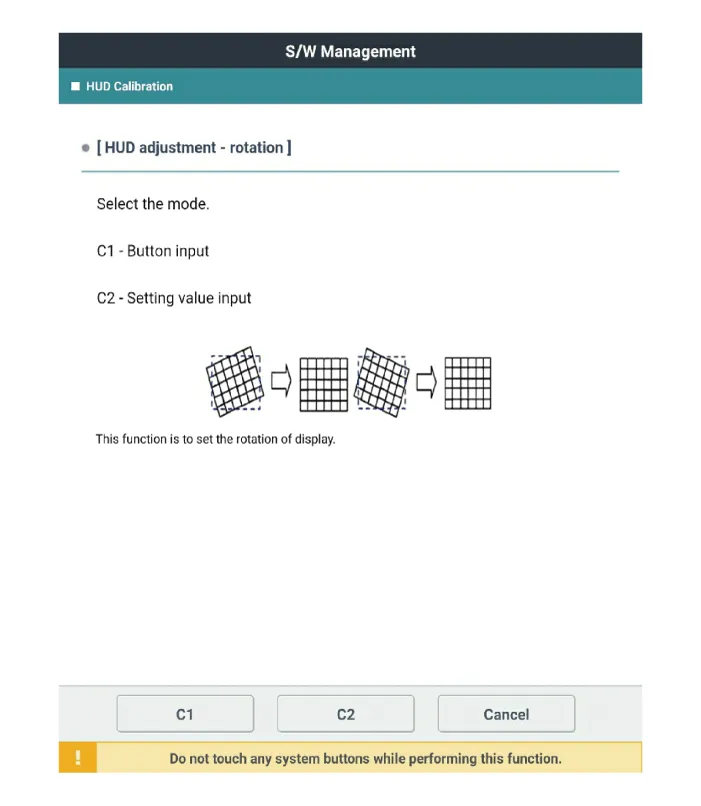
If a part of the head up display footage is distorted or it is not at eye level with the driver a Global Diagnostic System (KDS) can be used to carry out calibration.
| 1. |
Calibration is required:
|
| 2. |
Calibration items
|


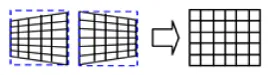


| 3. |
Process of calibration
|
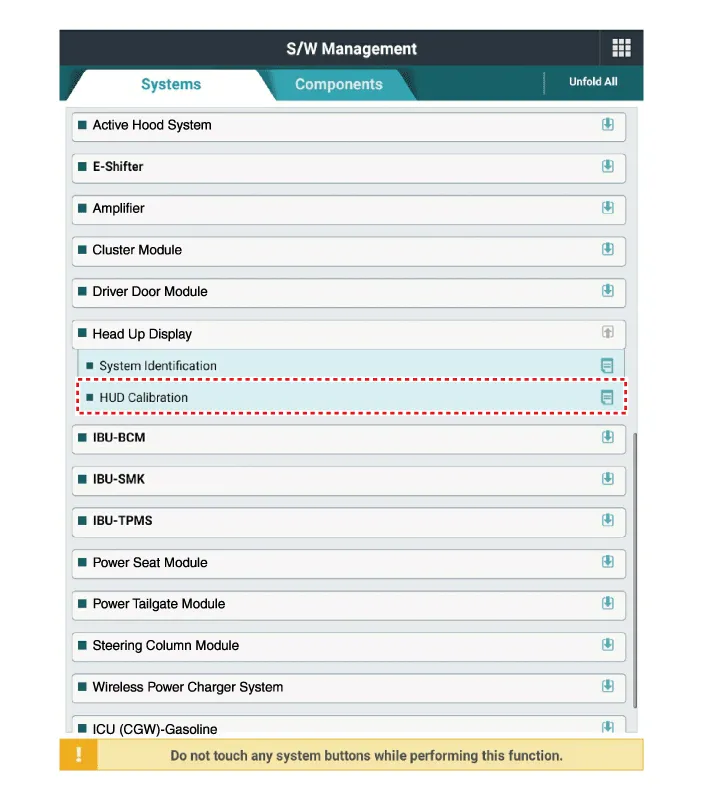

Troubleshooting
| Troubleshooting |
|
Category |
Error symptoms |
Inspection item |
Detailed inspection item |
Related parts |
||||||||||||||
|
Lighting |
|
|
|
Light sensor CGW Cluster |
||||||||||||||
|
Adjustment function |
|
|
|
HUD Cluster |


Other information:
Kia Stinger (CK) 2018-2023 Service Manual: Engine Oil and Filter
Repair procedures Inspection [Theta-II 2.0 T-GDI / Lambda-II 3.3 T-GDI] Engine Oil Level Be sure that the vehicle is on level ground. 1. Warm up and stop the engine, and then wait for 5 minutes. 2. Turn the engine off and wait for a few minutes (about 5 minutes) for the oil to return to the oil pan.Specifications Specification ▷ 13.5V, 150A Item Specification Rated voltage 13.5V , 150A Speed in use 0 - 18,000 rpm Pin 1 Voltage regulator IC Regulator built in type Default regulated voltage (V) [COM terminal] 14.Categories
- Manuals Home
- Kia Stinger Owners Manual
- Kia Stinger Service Manual
- New on site
- Most important about car
Contents
