
Kia Stinger CK: Controller / Heater Control Unit
Description and operation
| Description |
Smart Ventilation
It is a system that actively ventilates when the humidity inside the passenger compartment increases with the air conditioning OFF.
| 1. |
Entry condition
|
| 2. |
Release condition
|
| 3. |
Operation Specifications When the humidity in the passenger compartment increases, the system below will be activated in the following order.
|
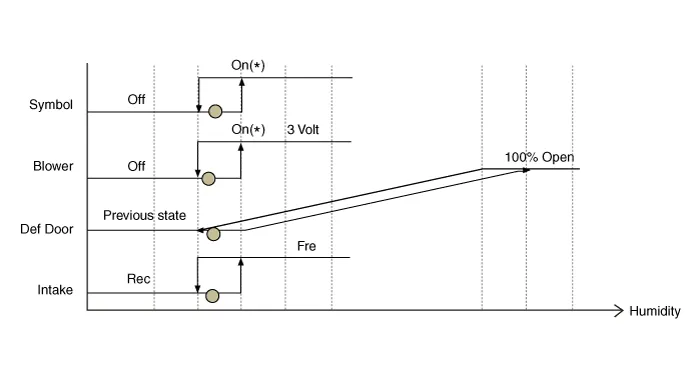

Components and components location
| Components |
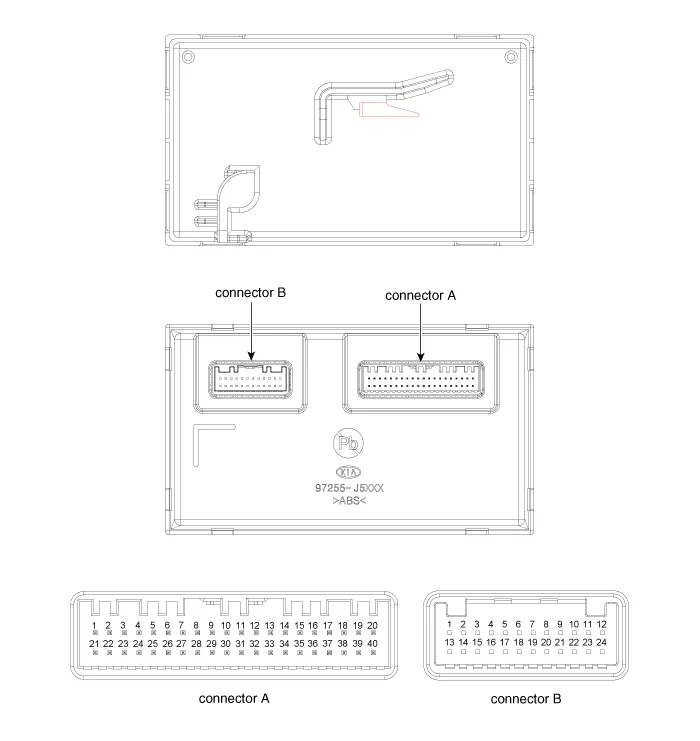
| Connector Pin Function |
[Connector A]
|
Pin NO |
Function |
Pin NO |
Function |
|
1 |
Mode Control Actuator (F/B) |
21 |
Mode Control Actuator (VENT) |
|
2 |
Intake Actuator (F/B) |
22 |
Mode Control Actuator (DEF) |
|
3 |
Passenger Side Temperature Control Actuator (F/B) |
23 |
Intake Actuator (FRE) |
|
4 |
Driver Side Temperature Control Actuator (F/B) |
24 |
Intake Actuator (REC) |
|
5 |
Auto Defogging Actuator (F/B) |
25 |
Passenger Side Temperature Control Actuator (COOL) |
|
6 |
- |
26 |
Passenger Side Temperature Control Actuator (WARM) |
|
7 |
Incar sensor (+) |
27 |
Driver side Temperature Control Actuator (COOL) |
|
8 |
Left Photo Sensor (-) |
28 |
Driver side Temperature Control Actuator (WARM) |
|
9 |
Right Photo Sensor (-) |
29 |
Auto Defogging Actuator (OPEN) |
|
10 |
Console Temperature Control Actuator (F/B) |
30 |
Auto Defogging Actuator (CLOSE) |
|
11 |
Console ON/OFF Actuator (F/B) |
31 |
- |
|
12 |
Console Switch (F/B) |
32 |
- |
|
13 |
Auto Defogging signal |
33 |
- |
|
14 |
Ambient Temperature Sensor (+) |
34 |
P CAN LOW |
|
15 |
Evaporator Temperature Sensor (+) |
35 |
P CAN HIGH |
|
16 |
- |
36 |
- |
|
17 |
Console Temperature Control Actuator (COOL) |
37 |
- |
|
18 |
Console Temperature Control Actuator (WARM) |
38 |
- |
|
19 |
Console ON/OFF Actuator (OPEN) |
39 |
- |
|
20 |
Console ON/OFF Actuator (CLOSE) |
40 |
Ground |
[Connector B]
|
Pin NO |
Function |
Pin NO |
Function |
|
1 |
Ground |
13 |
Ground |
|
2 |
Sensor Ground |
14 |
ECV (-) |
|
3 |
FET (GATE) |
15 |
ECV (+) |
|
4 |
FET Drain (F/B) |
16 |
- |
|
5 |
Blower Motor (+) |
17 |
- |
|
6 |
- |
18 |
PTC ON Signal |
|
7 |
- |
19 |
PTC Relay 2 |
|
8 |
- |
20 |
PTC Relay 3 |
|
9 |
Sensor REF (5V) |
21 |
- |
|
10 |
- |
22 |
LIN BUS |
|
11 |
- |
23 |
IGN1 |
|
12 |
Battery (+) |
24 |
IGN2 |
Repair procedures
| Replacement |
| 1. |
Disconnect the negative (-) battery terminal. |
| 2. |
Remove the glove box hoursing. (Refer to Body - "Glove Box Hoursing") |
| 3. |
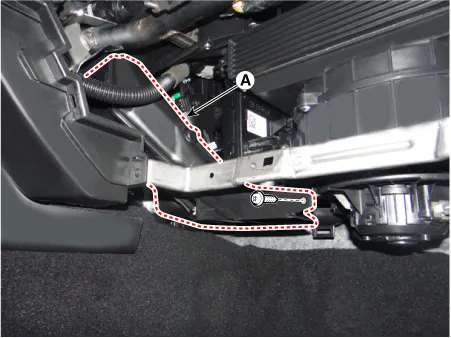
Remove the shower duct (A) after loosening the screw.
|
| 4. |
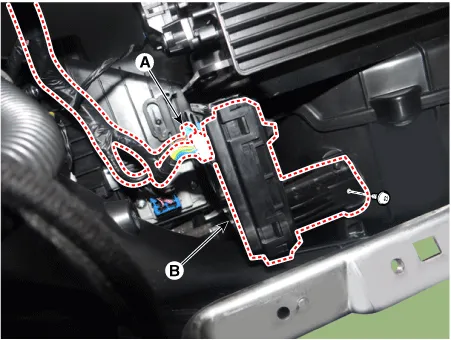
Disconnect the heater control unit connectors (A). |
| 5. |
Remove the heater control unit (B) after loosening the screws.
|
| 6. |
Install in the reverse order of removal. |


Other information:
Kia Stinger (CK) 2018-2023 Service Manual: Air bag inflation conditions
Front air bags Front air bags are designed to inflate in a frontal collision depending on the intensity, speed or angles of impact of the front collision. Side and/or curtain air bags Side and/or curtain air bags are designed to inflate when an impact is detected by side collision sensors depending on the strength, speed or angles of impact resulting from a side impact collision.Kia Stinger (CK) 2018-2023 Service Manual: Rear Door Outside Handle
Components and components location Component Location 1. Rear door outside handle Repair procedures Replacement Put on gloves to protect your hands. • Use a plastic panel removal tool to remove interior trim pieces without marring the surface.Categories
- Manuals Home
- Kia Stinger Owners Manual
- Kia Stinger Service Manual
- New on site
- Most important about car
