Kia Stinger CK: Intake And Exhaust System / Intake Manifold
Components and components location
| Components |
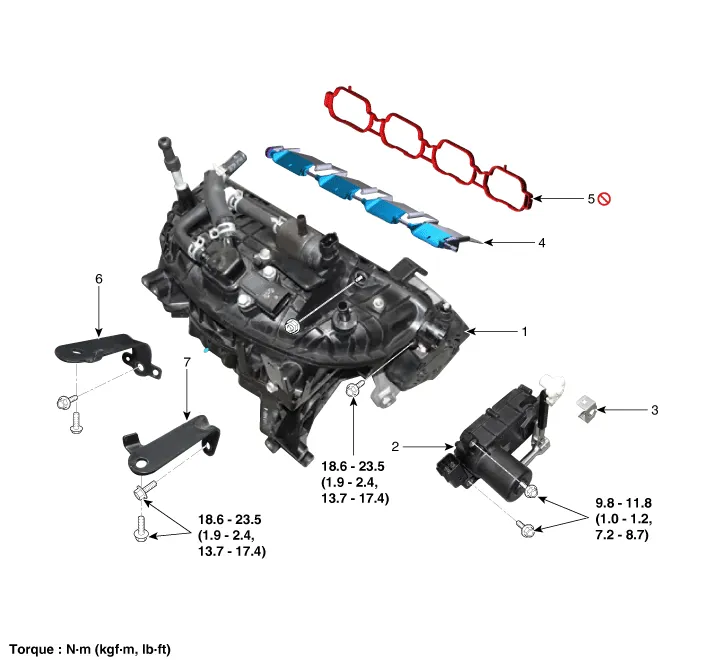
| 1. Intake manifold 2. VCM actuator 3. Clip 4. VCM shaft |
5. Intake manifold gasket 6. Intake manifold bracket (LH) 7. Intake manifold bracket (RH) |
Repair procedures
| Removal and Installation |
| 1. |
Disconnect the negative battery terminal. |
| 2. |
Remove the engine room front under cover. (Refer to Engine and Transmission Assembly - "Engine Room Under Cover") |
| 3. |
Drain the coolant. (Refer to Cooling System - "Coolant") |
| 4. |
Remove the engine cover. (Refer to Engine and Transmission Assembly - "Engine Cover") |
| 5. |
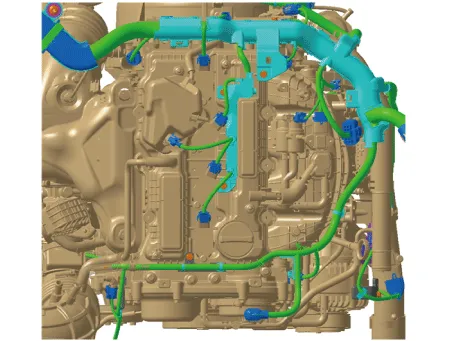
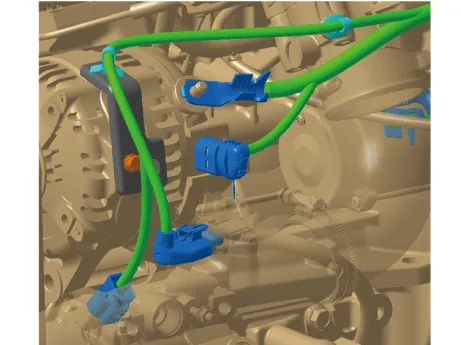
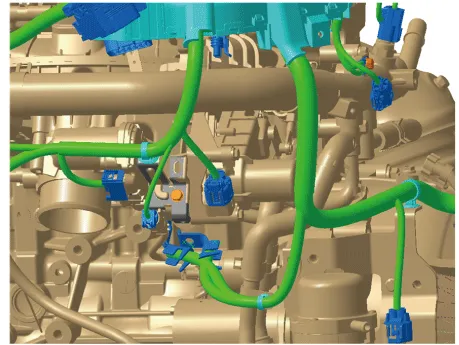
Disconnect the wiring connectors and harness clamps and remove the connector brackets around the intake manifold.
|
| 6. |
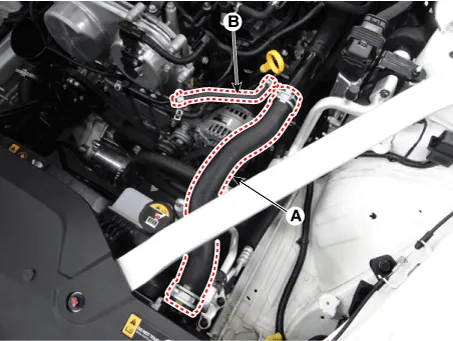
Disconnect the radiator upper hose (A) and water hose (B).
|
| 7. |
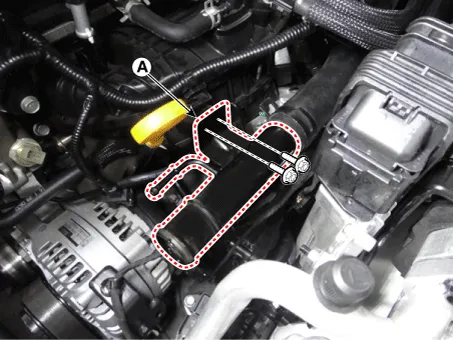
Remove the water outlet pipe assembly (A).
|
| 8. |
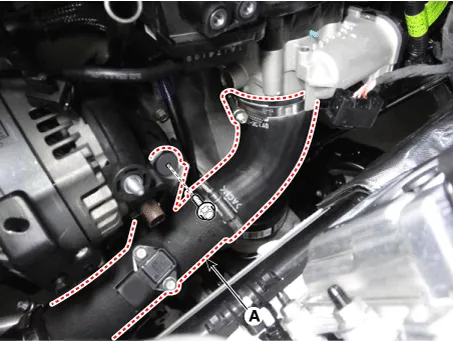
Remove the intercooler outlet hose & pipe assembly (A).
|
| 9. |
Disconnect the positive crankcase ventilation (PCV) hose (A).
|
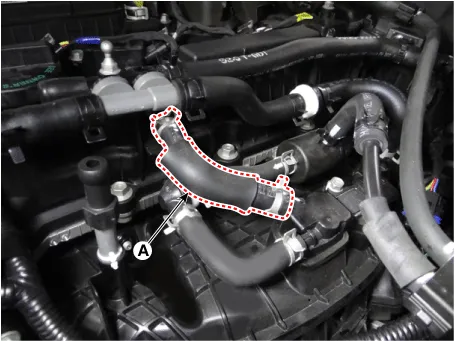
| 10. |
Disconnect the purge control solenoid valve (PCSV) hose (A).
|
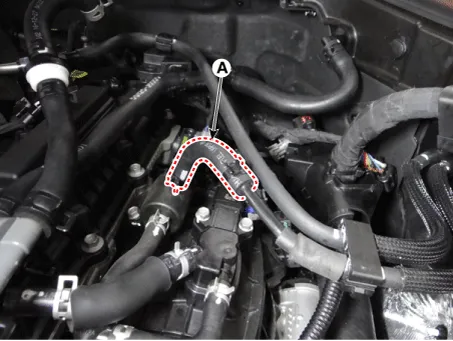
| 11. |
Disconnect the vacuum hose (A).
|
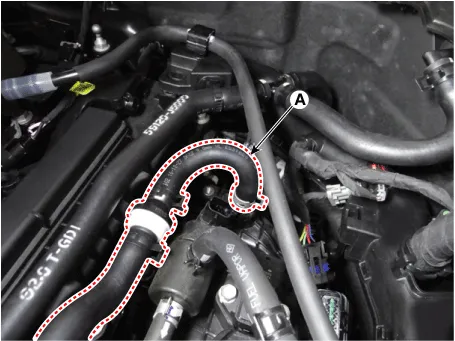
| 12. |
Remove the alternator. (Refer to Engine Electrical System - "Alternator") |
| 13. |
Unfasten the electric throttle body control (ETC) module bolts. (Refer to Engine Control / Fuel System - "Electric Throttle Body Control System (ETC)") |
| 14. |
Remove the oil level pipe. (Refer to Lubrication System - "Oil Level Gauge & Pipe") |
| 15. |
Remove the intake manifold stay (A).
|
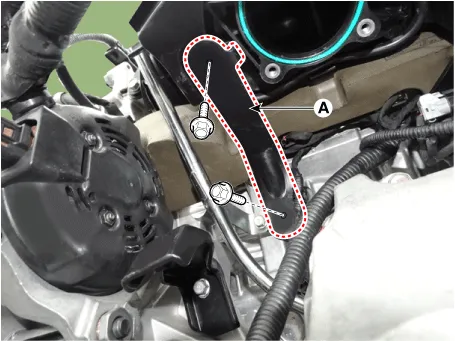
| 16. |
Remove the intake manifold stay bolt (A).
|
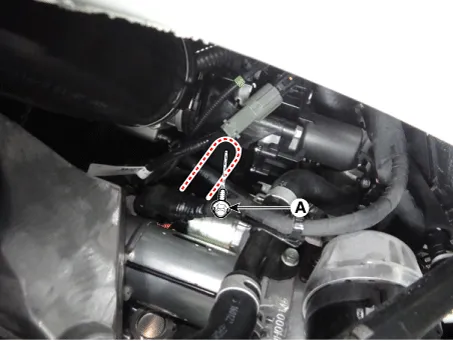
| 17. |
Disconnect the vacuum hose (A).
|
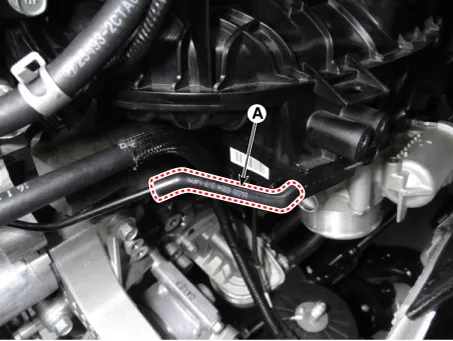
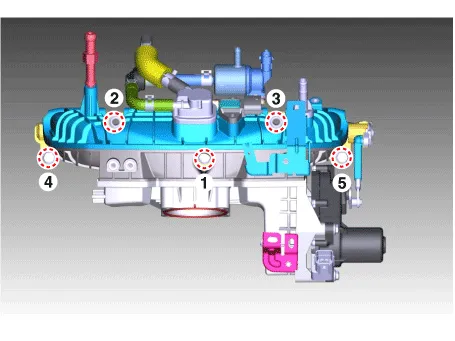
| 18. |
Remove the intake manifold (A).
|
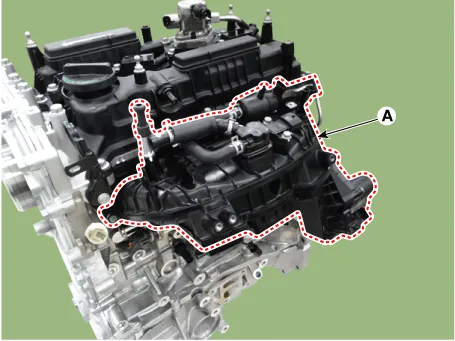
| 19. |
Remove the intake manifold stay (A).
|
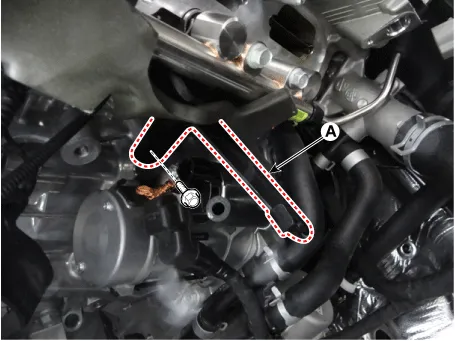
| 20. |
Install in the reverse order of removal.
|



Other information:
Kia Stinger (CK) 2018-2023 Service Manual: Specifications
Service data Service Data Fuel Delivery System Items Specification Fuel Tank Capacity 60 L (15.8 U.S.gal., 63.4 U.S.qt., 52.7 Imp.qt.) Fuel Filter Type Paper type Fuel Pressure Low Pressure Fuel Line Over 290 kPa (Over 2.Kia Stinger (CK) 2018-2023 Service Manual: Corrosion protection
Protecting your vehicle from corrosion By using the most advanced design and construction practices to combat corrosion, we produce vehicles of the highest quality. However, this is only part of the job. To achieve the long-term corrosion resistance your vehicle can deliver, the owner's cooperation and assistance is also required. Common causes of corrosion The most common causes of corrosion on your vehicle are: Road salt, dirt and moisture that is allowed to accumulate underneath the vehicle.Categories
- Manuals Home
- Kia Stinger Owners Manual
- Kia Stinger Service Manual
- New on site
- Most important about car
