
Kia Stinger CK: Lighting System / Rear Combination Lamp
Repair procedures
| Removal |
Rear Combination Lamp (Outside)
| 1. |
Disconnect the negative (-) battery terminal. |
| 2. |
Using a screwdriver or remover, remove the rear combination lamp cover (A).
|

| 3. |
Remove the rear combination lamp (A) after loosening the mounting screw and nut.
|
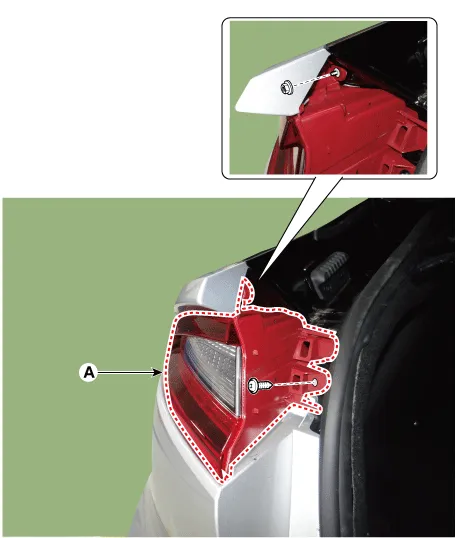
| 4. |
Disconnect the rear combination lamp connector (A).
|
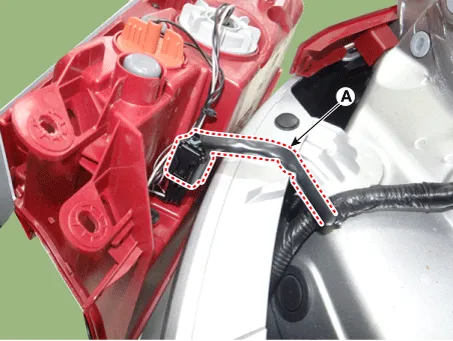
| Bulb Replacement |
Turn signal lamp
| 1. |
Turn the headlamp switch off. |
| 2. |
Remove the rear combination lamp (outside). |
| 3. |
Remove the turn signal lamp bulb (B) by turning the socket (A) counterclockwise.
|

Rear Combination Lamp (Inside)
| 1. |
Disconnect the negative (-) battery terminal. |
| 2. |
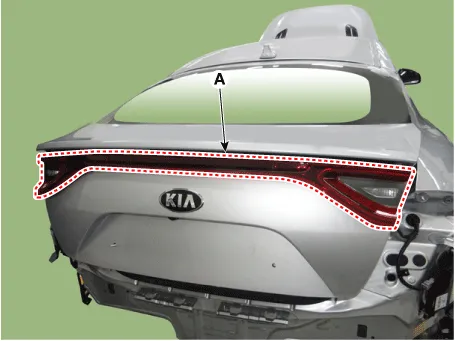
Using a screwdriver or remover, remove the rear combination lamp cover (A).
|
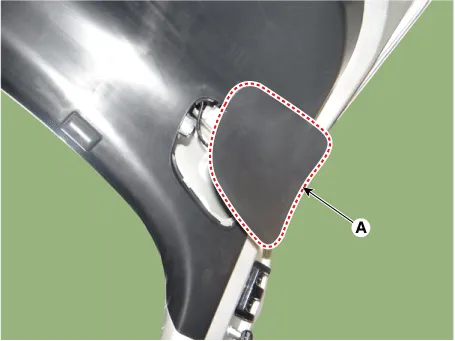
| 3. |
Disconnect the connector (B) and then remove the rear combination lamp (A) after loosening the nuts.
|
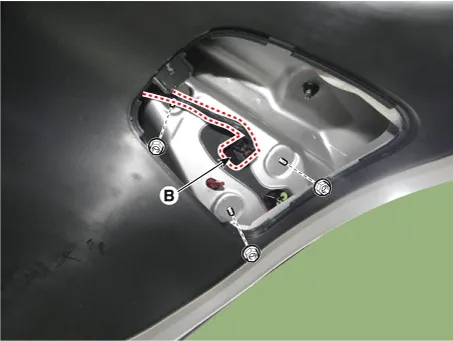
| Bulb Replacement |
Back up lamp
| 1. |
Remove the rear combination lamp. (Inside) |
| 2. |
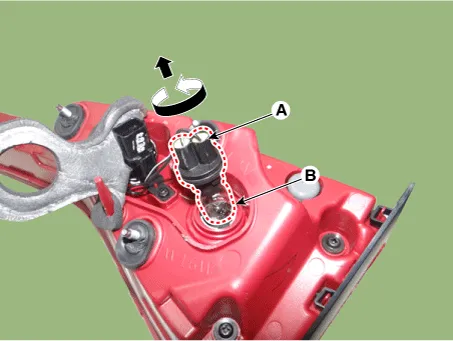
Remove the back up lamp bulb (B) by turning the socket (A) counterclockwise.
|
| Installation |
Rear Combination Lamp (Outside)
| 1. |
Connect the rear combination lamp connector. |
| 2. |
Install the rear combination lamp. |
| 3. |
Install the rear combination lamp cover. |
| 4. |
Connect the negative (-) battery terminal. |
Rear Combination Lamp (Inside)
| 1. |
Install the rear combination lamp. |
| 2. |
Connect the rear combination lamp connector. |
| 3. |
Install the rear combination lamp cover. |
| 4. |
Connect the negative (-) battery terminal. |


Other information:
Kia Stinger (CK) 2018-2023 Service Manual: CVVT Oil Control Valve (OCV) [Bank1/Exhaust]
Specifications Specification Item Specification Coil Resistance (Ω) 6.9 - 7.9 [20°C(68°F)] Description and operation Description Continuous Variable Valve Timing (CVVT) system advances or retards the valve timing of the exhaust valve in accordance with the ECM control signal which is calculated by the engine speed and load.Kia Stinger (CK) 2018-2023 Service Manual: Recognizing vehicles
The sensor may be limited when: - The radar or the camera is contaminated with foreign substances. - It heavily rains or snows. - There is electromagnetic interference. - Something in the path of travel deflects the radar waves. - The vehicle in front has a narrow body. (i.e. motor cycle and bicycle) - The driver's view is not clear due to backlight, reflected light, or darkness.Categories
- Manuals Home
- Kia Stinger Owners Manual
- Kia Stinger Service Manual
- New on site
- Most important about car
