
Kia Stinger CK: Chassis / Tire (pressure & tread wear)
Repair procedures
| Inspection |
| 1. |
Check the tire pressure. 17(inch) : 245 + 7.0 kPa (36 + 1 psi) 18(inch) : 245 + 7.0 kPa (36 + 1 psi) 19(inch) : 245 + 7.0 kPa (36 + 1 psi) |
Tire Rotation
Checking For Pull And Wander
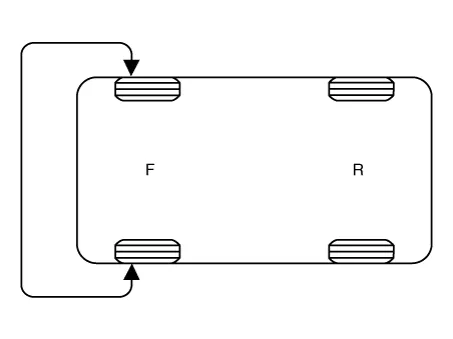
If the steering pulls to one side, rotate the tires according to the following wheel rotation procedure.
| 1. |
Rotate the front right and front left tires, and perform a road test in order to confirm vehicle stability.
|
| 2. |
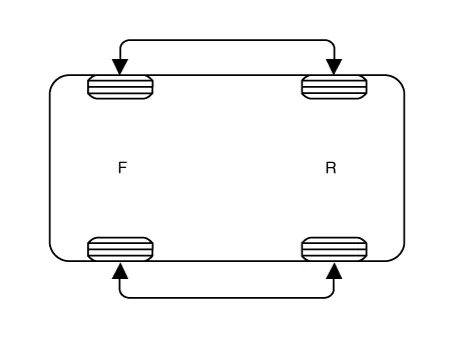
If the steering pulls to the opposite side, rotate the front and rear tires, and perform a road test again.
|
| 3. |
If the steering continues to pull to one side, rotate the front right and left tires again, and perform a road test.
|
| 4. |
If the steering continues to pull to the opposite side, replace the front wheels with new ones.
|

Tire Wear
|

| 1. |
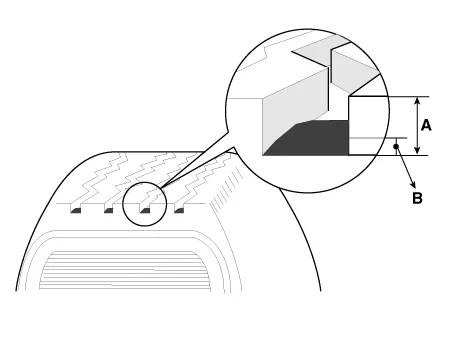
Measure the tread depth of the tires.
|
| 2. |
If the remaining tread depth (A) is less than the limit, replace the tire.
|



Other information:
Kia Stinger (CK) 2018-2023 Service Manual: Low Pressure Fuel Pump
Repair procedures Inspection [Fuel sender] 1. Switch "OFF" the ignition and disconnect the negative (-) battery terminal. 2. Remove the fuel pump assembly. 3. Using an ohmmeter, measure the resistance between terminals 1 and 2 of sender connector (A) at each float level.Kia Stinger (CK) 2018-2023 Service Manual: Inside rearview mirror
Adjust the rearview mirror so that the center view through the rear window is seen. Make this adjustment before you start driving. Do not place objects in the rear seat or cargo area which would interfere with your vision through the rear window. WARNING - Mirror adjustment Do not adjust the rearview mirror while the vehicle is moving. This could result in loss of control.Categories
- Manuals Home
- Kia Stinger Owners Manual
- Kia Stinger Service Manual
- New on site
- Most important about car
