
Kia Stinger CK: Intake And Exhaust System / Air Cleaner
Components and components location
| Components |
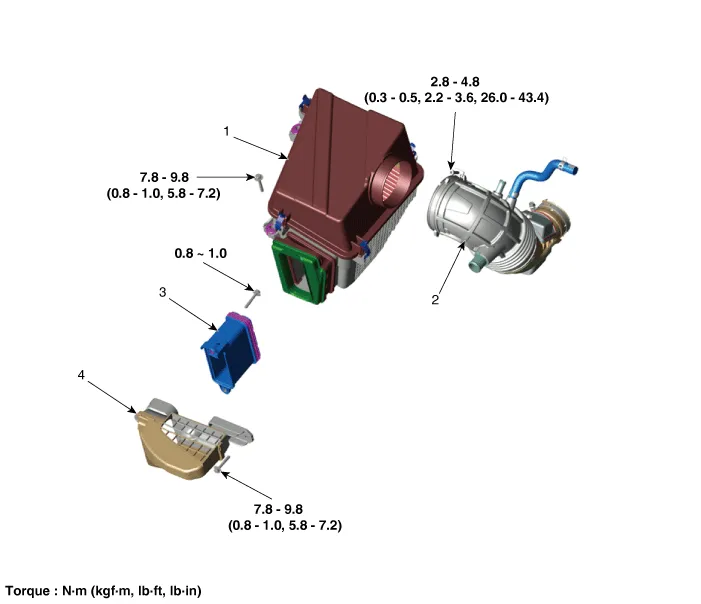
| 1. Air cleaner assembly 2. Air intake hose |
3. Air cleaner adapter 4. Air duct |
Repair procedures
| Removal and Installation |
| 1. |
Remove the engine cover. (Refer to Engine and Transmission Assembly - "Engine Cover") |
| 2. |
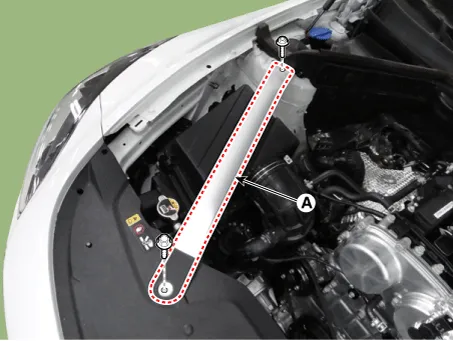
Remove the RH front strut bar (A).
|
| 3. |
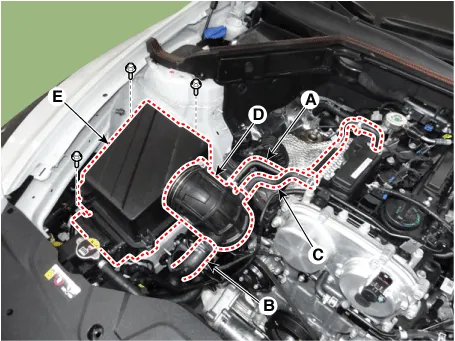
Remove the air cleaner assembly.
|
| 4. |
Install in the reverse order of removal. |
| Replacement |
Air Cleaner Element
| 1. |
Remove the RH front strut bar (A).
|
| 2. |
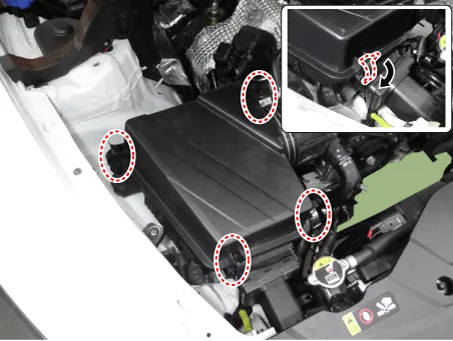
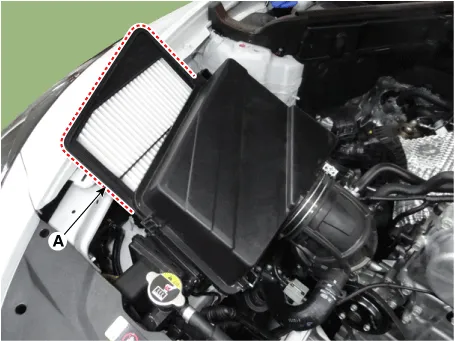
Open the air cleaner element cover by unlocking the clamp.
|
| 3. |
Replace the air cleaner element (A) with a new one.
|

| 4. |
Close the air cleaner cover by hooking the clamps. |
| Inspection |
| 1. |
Remove the air cleaner element. |
| 2. |
Check if the air filter is excessively dirty. If so, replace the air cleaner element. |
| 3. |
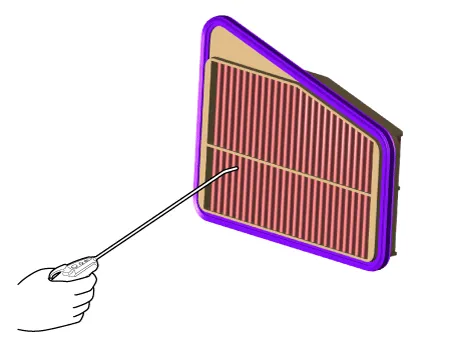
If the air cleaner element needs to be cleaned, blow compressed air as shown in the illustration to clean it.
|


Other information:
Kia Stinger (CK) 2018-2023 Service Manual: Tail Gate Trim
Components and components location Component Location 1. Tailgate trim 2. Tailgate side trim [LH] 3. Tailgate upper trim 4. Tailgate side trim [RH] Repair procedures Replacement Wear gloves to protect hands from injury.Kia Stinger (CK) 2018-2023 Service Manual: Air bag non-inflation conditions
• In certain low-speed collisions the air bags may not deploy. The air bags are designed not to deploy in such cases because they may not provide benefits beyond the protection of the seat belts in such collisions. • Air bags are not designed to inflate in rear collisions, because occupants are moved backward by the force of the impact.Categories
- Manuals Home
- Kia Stinger Owners Manual
- Kia Stinger Service Manual
- New on site
- Most important about car
