
Kia Stinger CK: Exhaust Emission Control System / Catalytic Converter
Description and operation
| Description |
The catalytic converter of the gasoline engine is a three way catalyst. It oxidizes carbon monoxide and hydrocarbons (HC), and separates oxygen from the oxides of nitrogen (NOx).
Catalytic Converter (WCC)
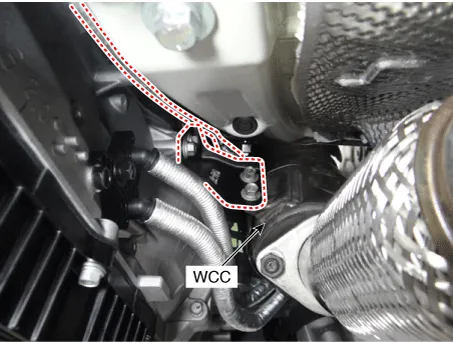
Repair procedures
| Removal |
| 1. |
Remove the engine cover. (Refer to Engine Mechanical System - "Engine Cover") |
| 2. |
Disconnect the negative battery terminal. |
| 3. |
Remove the engine room front under cover. (Refer to Engine Mechanical System - "Engine Room Under Cover") |
| 4. |
Drain the coolant. (Refer to Engine Mechanical System - "Coolant") |
| 5. |
Remove the air intake hose. (Refer to Engine Mechanical System - "Air Cleaner") |
| 6. |
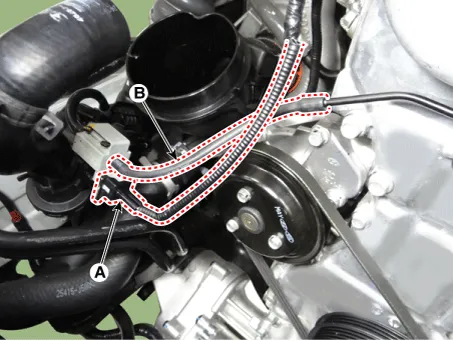
Disconnect the recirculation valve connector (A) and the vacuum hose (B).
|
| 7. |
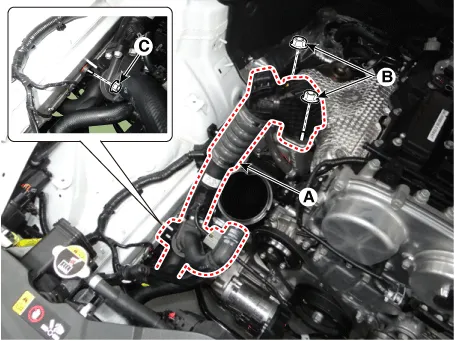
Remove the intercooler inlet hose & pipe assembly (A).
|

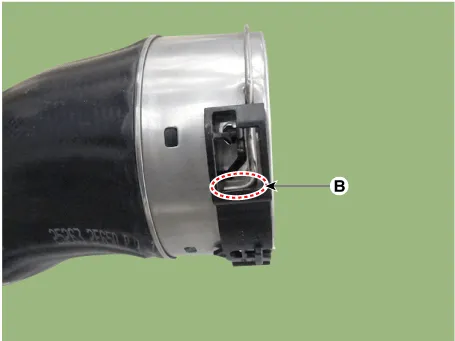
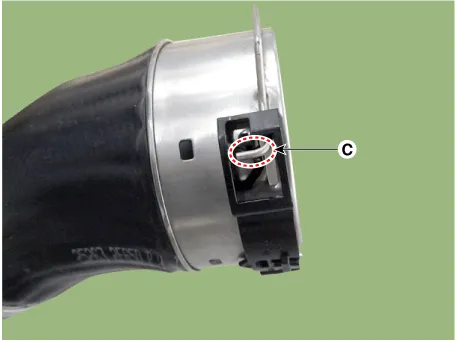
| 8. |
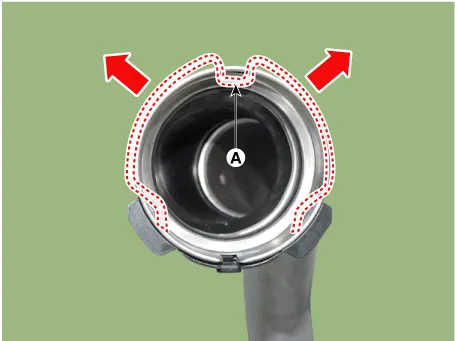
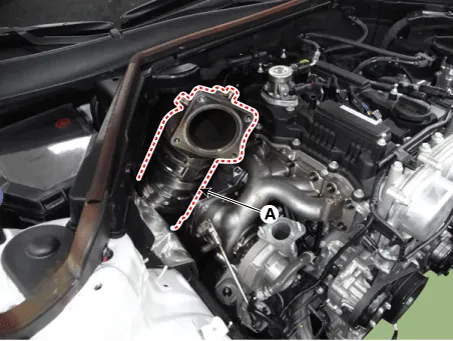
Remove the turbocharger inlet hose (A).
|
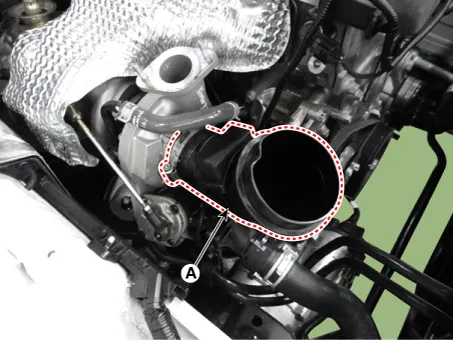
| 9. |
Remove the heat protector (A).
|
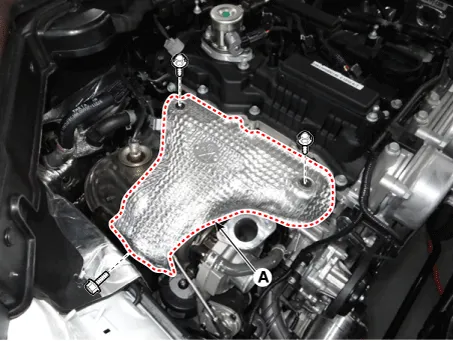
| 10. |
Remove the heated oxygen sensor. (Refer to Engine Control / Fuel System - " Heated Oxygen Sensor ( HO2S)") |
| 11. |
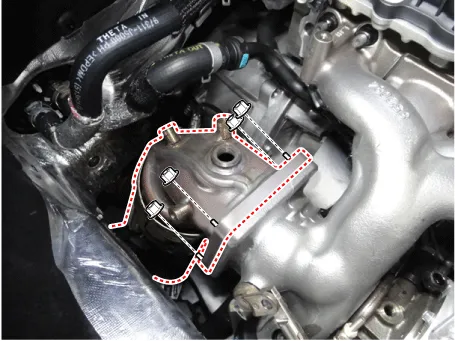
Remove the warm-up catalytic converter (WCC) heat protector (A).
|
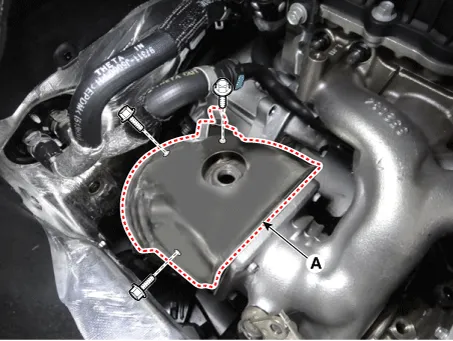
| 12. |
Remove the front muffler. (Refer to Engine Mechanical System - "Muffler") |
| 13. |
Remove the warm-up catalytic converter (WCC) stay (A).
|
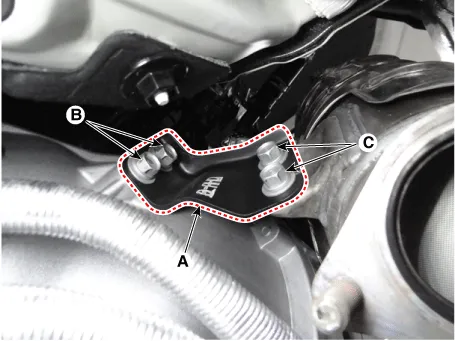
| 14. |
Remove the RH hood sealing cover (A).
|
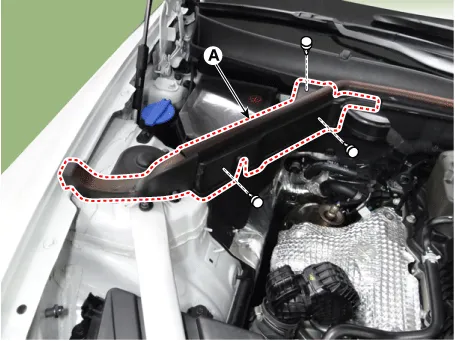
| 15. |
Disconnect the heater hose (A).
|
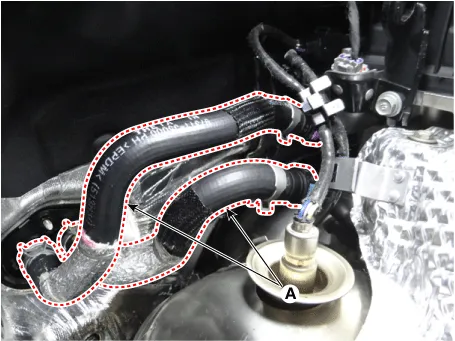
| 16. |
Remove the warm-up catalytic converter (WCC) (A) and gasket.
|
| Installation |
| 1. |
Install in the reverse order of removal. |


Other information:
Kia Stinger (CK) 2018-2023 Service Manual: Using All Wheel Drive (AWD)
The All Wheel Drive (AWD) System delivers engine power to front and rear wheels for maximum traction. AWD is useful when extra traction is required, such as when driving slippery, muddy, wet, or snow-covered roads. If the system determines there is a need for four wheel drive, the engine's driving power is distributed to all four wheels automatically.Repair procedures Removal 1. Remove the cylinder head cover. (Refer to Cylinder Head Assembly - "Cylinder Head Cover") 2. Turn the crankshaft pulley and align its groove with the timing mark of the timing chain cover to set the piston of No.1 cylinder to the top dead center on compression stroke.Categories
- Manuals Home
- Kia Stinger Owners Manual
- Kia Stinger Service Manual
- New on site
- Most important about car
