
Kia Stinger CK: Rear Suspension System / Rear Lower Arm
Repair procedures
| Removal |
| 1. |
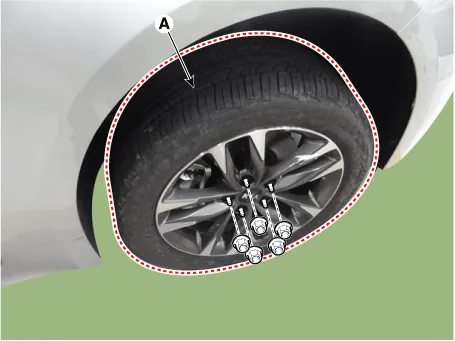
Remove wheel nuts, wheel and tire (A) from hub.
|

| 2. |
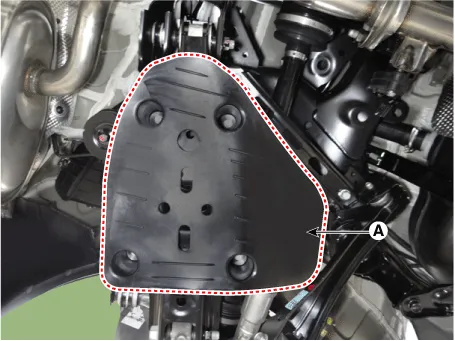
Remove the rear lower arm cover (A).
|
| 3. |
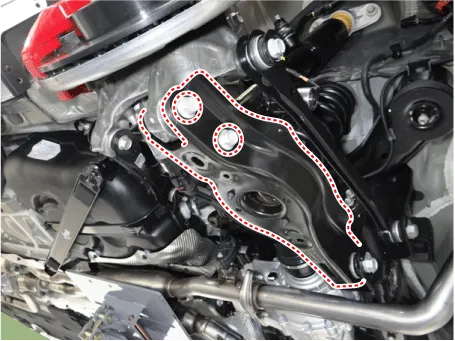
Loosen the rear lower arm bolt & nut and then separate the lower arm from the rear axle.
|
| 4. |
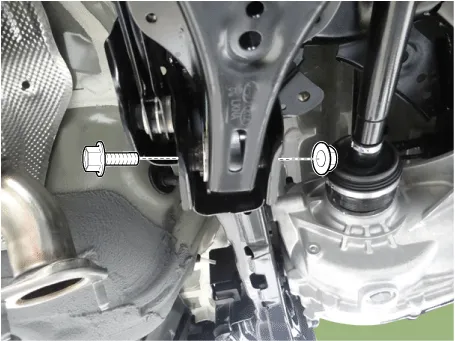
Loosen the bolt & nut and then remove the rear lower arm.
|
| 5. |
Install in the reverse order of removal.
|
| 6. |
Check the alignment. (Refer to Suspension System - "Alignment") |
| Inspection |
| 1. |
Check the bushing for wear and deterioration. |
| 2. |
Check the rear lower arm for deformation. |
| 3. |
Check the coil spring and spring pad for deterioration and deformation. |
| 4. |
Check for all bolts and nuts. |


Other information:
Kia Stinger (CK) 2018-2023 Service Manual: Good driving practices
Never move the shift lever from P (Park) or N (Neutral) to any other position with the accelerator pedal depressed. Never move the shift lever into P (Park) when the vehicle is in motion. Be sure the vehicle is completely stopped before you attempt to shift into R (Reverse) or D (Drive). Do not move the shift lever to N (Neutral) when driving.Kia Stinger (CK) 2018-2023 Service Manual: Rear Cross Member
Repair procedures Removal 1. Remove wheel nuts, wheel and tire (A) from hub. Tightening torque: 107.9 - 127.5 N·m (11.0 - 13.0 kgf·m, 79.6 - 94.0 lb·ft) Be careful not to damage the wheel bolts when removing the wheel and tire (A).Categories
- Manuals Home
- Kia Stinger Owners Manual
- Kia Stinger Service Manual
- New on site
- Most important about car
