
Kia Stinger CK: Drive Belt System / Drive Belt
Repair procedures
| Removal |
| 1. |
Remove the engine room front under cover. (Refer to Engine and Transmission Assembly - "Engine Room Under Cover") |
| 2. |
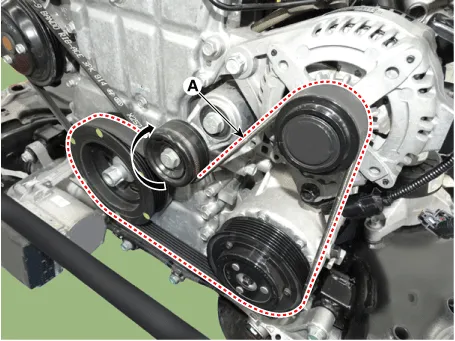
For release the tension, turn the drive belt tensioner (A) counterclockwise then remove the drive belt (B).
|
| 3. |
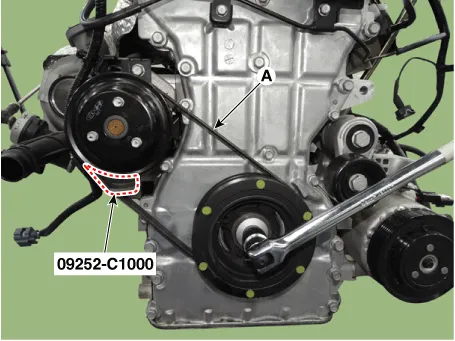
Remove the water pump belt.
|
| Inspection |
| 1. |
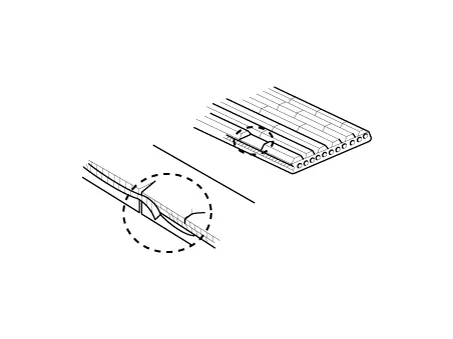
Visually check the belt for excessive wear, frayed cords etc. If any defect has been found, replace the drive belt.
|

| Installation |
| 1. |
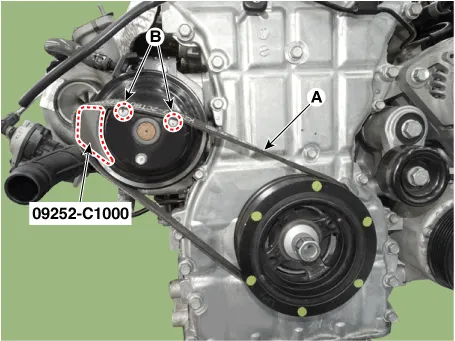
Install the water pump belt.
|
| 2. |
For release the tension, turn the drive belt tensioner (A) counterclockwise then install the drive belt (B).
|
| 3. |
Install the other parts in the reverse order of removal. |


Other information:
Kia Stinger (CK) 2018-2023 Service Manual: Integrated Body Control Unit (IBU)
Specifications Specifications Items Specifications Rated voltage DC 12 V Operating voltage DC 9 - 16 V Operating temperature -40 - 176°F (-40 - 80°C) Dark current Max. 4.0 mA Components and components location Components Connector Pin Information No.Components and components location Components 1. Front oil seal 2. E-CVVT cover plug 3. E-CVVT assembly cover 4. Timing chain cover 5. Timing chain tensioner 6. Timing chain tensioner arm 7. Timing chain 8. Timing chain guide 9. Timing chain sprocket 10. Balance shaft chain tensioner 11.Categories
- Manuals Home
- Kia Stinger Owners Manual
- Kia Stinger Service Manual
- New on site
- Most important about car
