
Kia Stinger CK: Seat Electrical / Seat Heater Unit
Components and components location
| Component Location |
| Front Seat Heater |
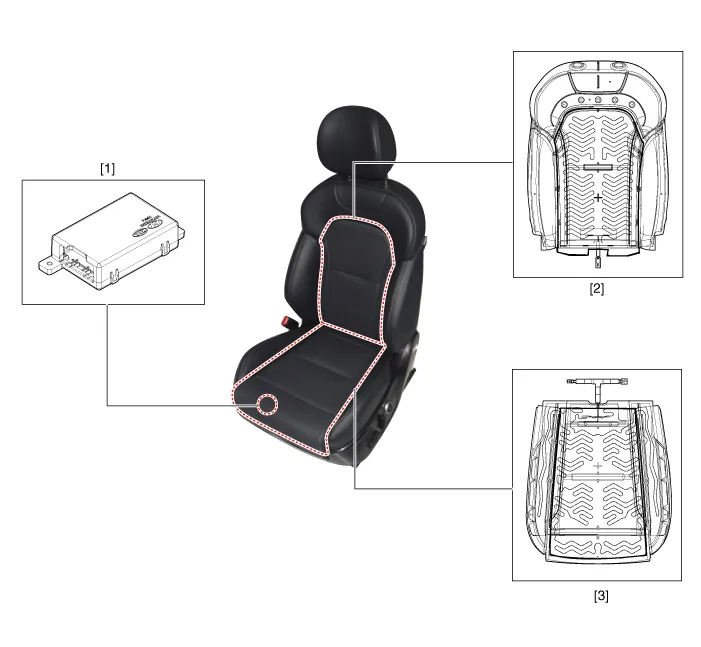
| 1. Front seat heater unit (Assist
seat only) 2. Front seat heater (Back) |
3. Front seat heater (Cushion)
|
| Front Seat Heater (Air Ventilation) |

| 1. Air ventilation seat unit
(Assist seat only) 2. Front seat heater (Back) |
3. Front seat heater (Cushion)
|
| Rear Seat Heater |
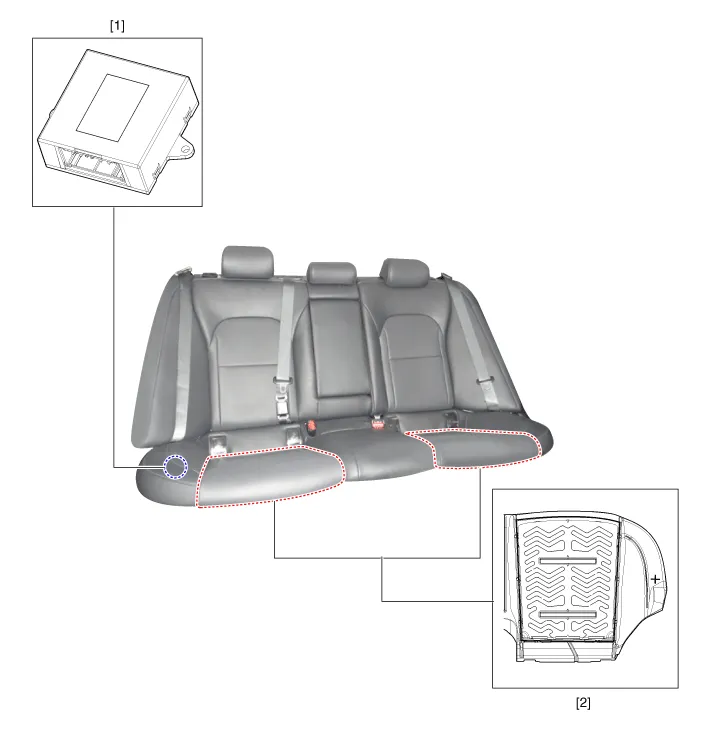
| 1. Rear seat heater unit |
2. Rear seat heater (Cushion)
|
Schematic diagrams
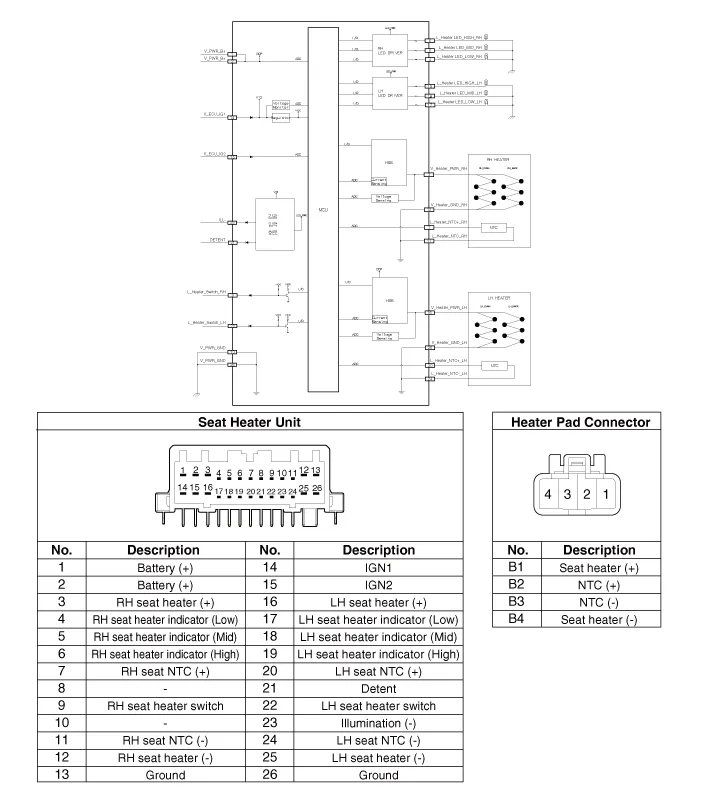
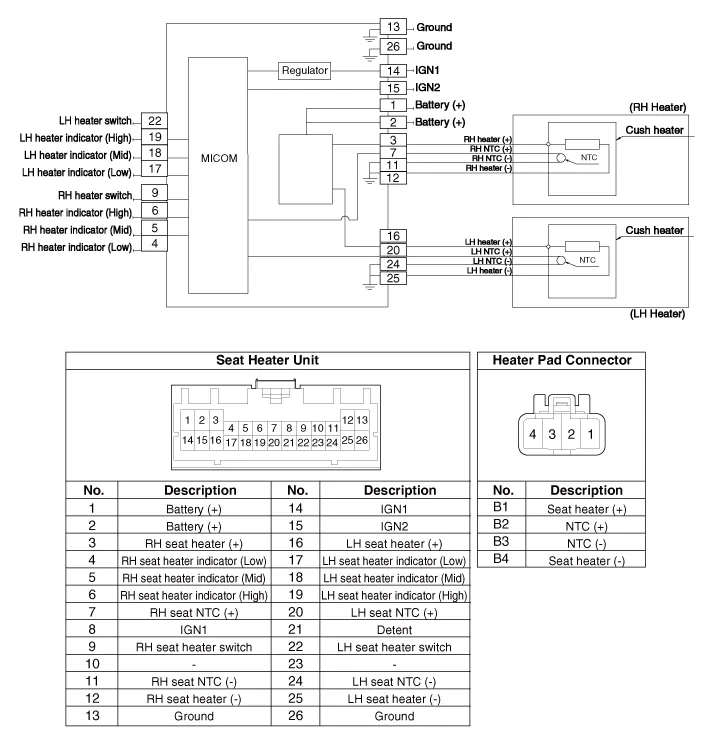
| Circuit Diagram |
| Front Seat Heater |
| Rear Seat Heater |
Repair procedures
| Inspection |
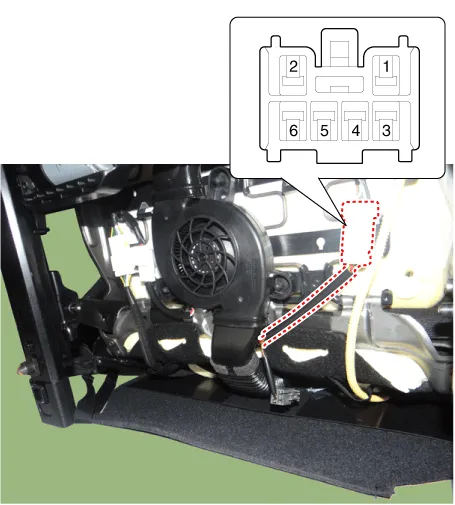
Front Seat Heater
| 1. |
Check for continuity and measure the resistance between terminals No 3 and No 6.
|
| 2. |
Operate the seat heater after connecting the connector, and then check the thermostat by measuring the temperature of seat surface.
|
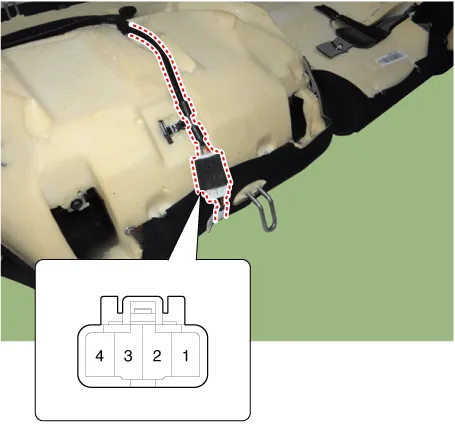
Rear Seat Heater
| 1. |
Check for continuity and measure the resistance between terminals No 1 and No 4.
|
| 2. |
Operate the seat heater after connecting the connector, and then check the thermostat by measuring the temperature of seat surface.
|


Other information:
Kia Stinger (CK) 2018-2023 Service Manual: 35R Clutch Control Solenoid Valve (35R/C_VFS)
Specifications Specifications Item Specification Control type N/H (Normal High) Control pressure kpa (kgf/cm², psi) 0 - 1,569.06 (0 - 16, 0 - 227.57) Current (mA) 0 - 1,100 Coil resistance (Ω) 5.Description and operation Description The ISG OFF switch on the floor console can be used to deactivate the ISG function. Repair procedures Removal Put on gloves to protect your hands. • When prying with a flat-tip screwdriver or use a prying trim tool, wrap it with protective tape, and apply protective tape around the related parts, to prevent damage.Categories
- Manuals Home
- Kia Stinger Owners Manual
- Kia Stinger Service Manual
- New on site
- Most important about car
