
Kia Stinger CK: Emission Control System / Crankcase Emission Control System
Contents:
Schematic diagrams
| Schematic Diagram |
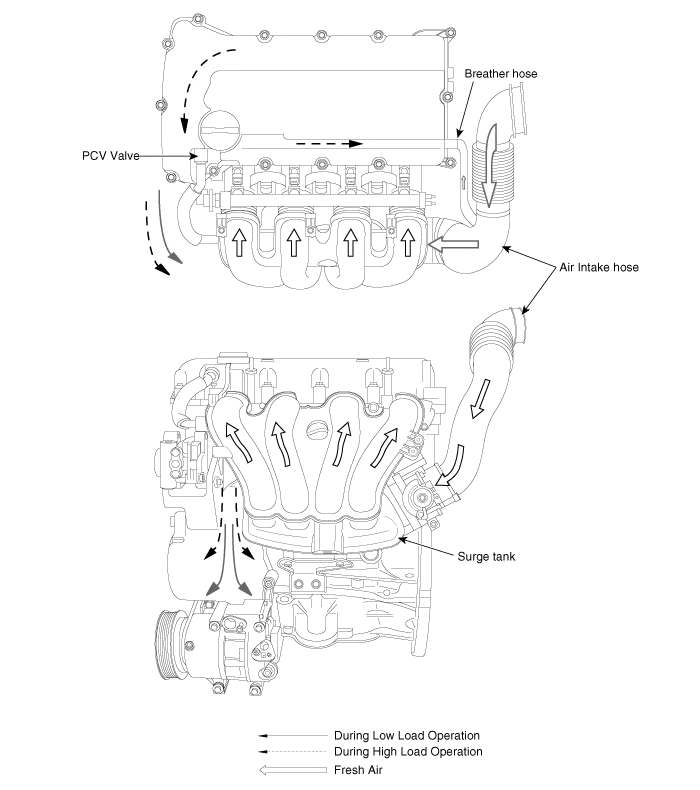
Repair procedures
| Inspection |
| 1. |
After disconnecting the vapor hose from the PCV valve, remove the PCV valve. |
| 2. |
Reconnect the PCV valve to the vapor hose. |
| 3. |
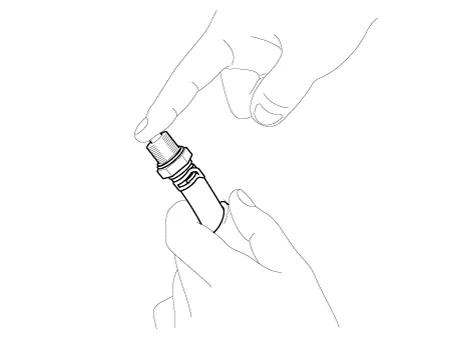
Run the engine at idle, then put a finger over the open end of the PCV valve and make sure that intake manifold vacuum can be felt.
|

| 4. |
If vacuum could not be felt, inspect the PCV operation. If operating correctly, clean or replace the vapor hose. |
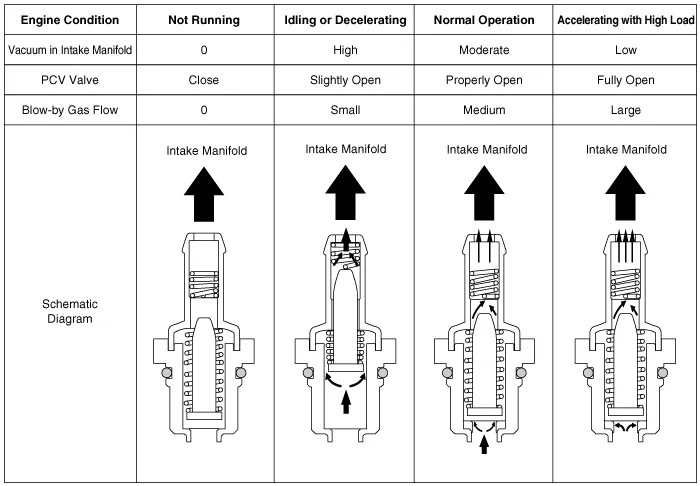
Positive Crankcase Ventilation (PCV) Valve
Description and operation
| Operation Principle |
Repair procedures
| Removal |
| 1. |
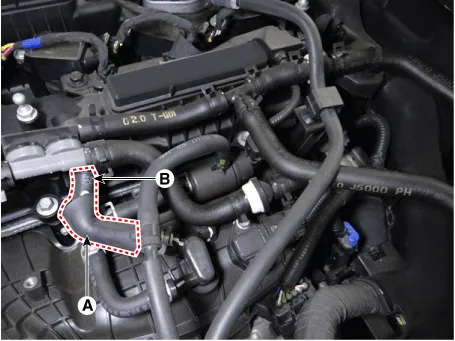
Disconnect the PCV hose (A). |
| 2. |
Remove the PCV valve (B).
|
| Inspection |
| 1. |
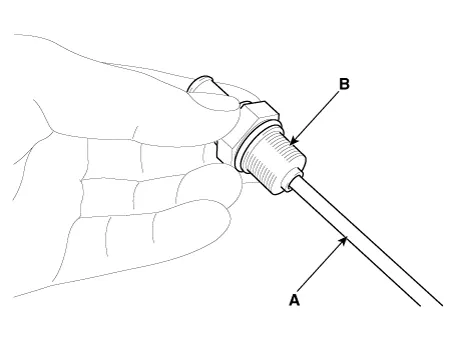
Insert a thin stick (A) into the PCV valve (B) from the threaded side to check for the plunger movement.
|
| Installation |
| 1. |
Install in the reverse order of removal.
|


Other information:
Description and operation Description The photo sensor is located at the center of the defrost nozzles. The photo sensor contains a photovoltaic (sensitive to sunlight) diode. The solar radiation received by its light receiving portion, generates an electromotive force in proportion to the amount of radiation received which is then transferred to the automatic temperature control module so that the solar radiation compensation can be performed.Components and components location Components 1. Front seat belt retractor 2. Rear seat belt retractor [RH] 3. Rear center seat belt retractor 4. Rear seat belt retractor[LH] 5.Rear seat belt buckle 6. Emergency fastening device (EFD) Front Seat Belt Retractor Components and components location Component Location 1.Categories
- Manuals Home
- Kia Stinger Owners Manual
- Kia Stinger Service Manual
- New on site
- Most important about car
Contents
