
Kia Stinger CK: Cylinder Head Assembly / Cylinder Head
Repair procedures
| Removal |
In case of removing the high pressure fuel pump, high pressure fuel pipe, delivery pipe, and injector, there may be injury caused by leakage of the high pressure fuel. So don’t do any repair work right after engine stops. |

|

Mark all wiring and hoses to avoid misconnection. |

| 1. |
Disconnect the battery negative terminal. |
| 2. |
Remove the engine cover. (Refer to Engine and Transmission Assembly - "Engine Cover") |
| 3. |
Remove the air cleaner assembly. (Refer to Intake and Exhaust System - "Air Cleaner") |
| 4. |
Remove the engine room front under cover. (Refer to Engine and Transmission Assembly - "Engine Room Under Cover") |
| 5. |
Drain the coolant. (Refer to Cooling System - "Coolant") |
| 6. |
Drain the engine oil. (Refer to Lubrication System - "Engine Oil") |
| 7. |
Remove the cylinder head cover. (Refer to Cylinder Head Assembly - "Cylinder Head Cover") |
| 8. |
Remove the timing chain. (Refer to Timing System - "Timing Chain") |
| 9. |
Remove the intake manifold. (Refer to Intake and Exhaust System - "Intake Manifold") |
| 10. |
Remove the exhaust manifold. (Refer to Intake and Exhaust System - "Turbocharger & Exhaust Manifold") |
| 11. |
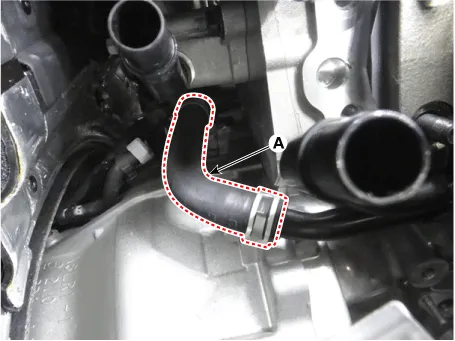
Disconnect the bypass hose (A).
|
| 12. |
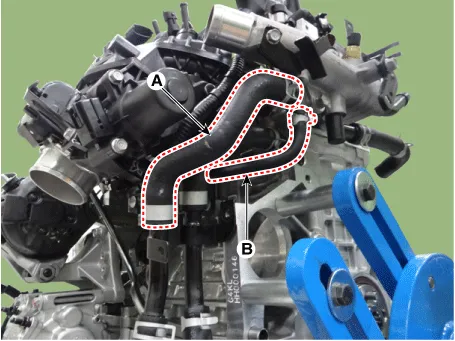
Disconnect the oil cooler hose (A) and electric throttle body control (ETC) module water hose (B).
|
| 13. |
Remove the delivery pipe. (Refer to Engine Control / Fuel System - "Delivery Pipe") |
| 14. |
Remove the camshaft. (Refer to Cylinder Head Assembly - "CVVT & Camshaft") |
| 15. |
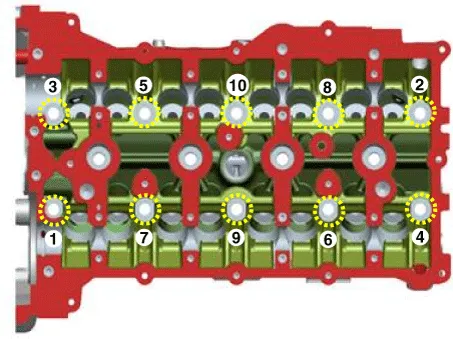
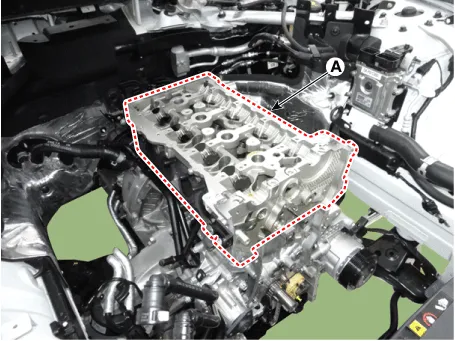
Remove the cylinder head.
|

| 16. |
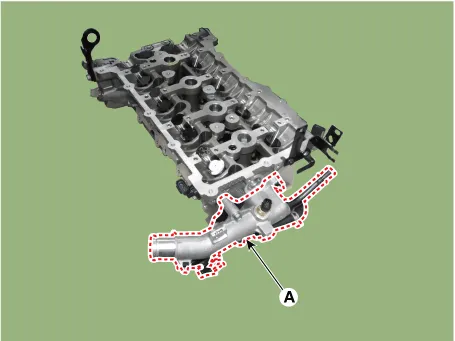
Remove the water temperature control assembly (A) from the cylinder head.
|
| Disassembly |
Identify mechanical lash adjuster (MLA), valves, valve springs as they are removed so that each item can be reinstalled in its original position. |
| 1. |
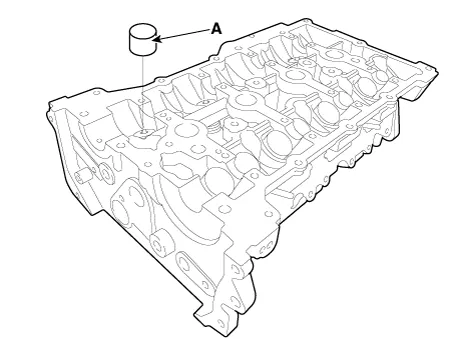
Remove the MLAs (A).
|
| 2. |
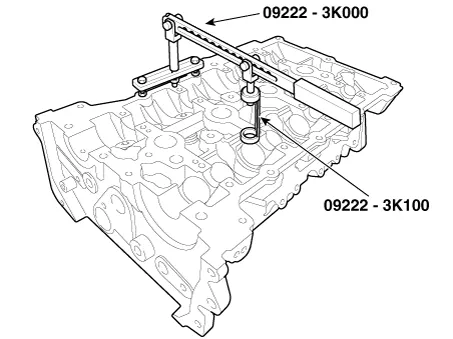
Remove the valves.
|
| Inspection |
Cylinder Head
| 1. |
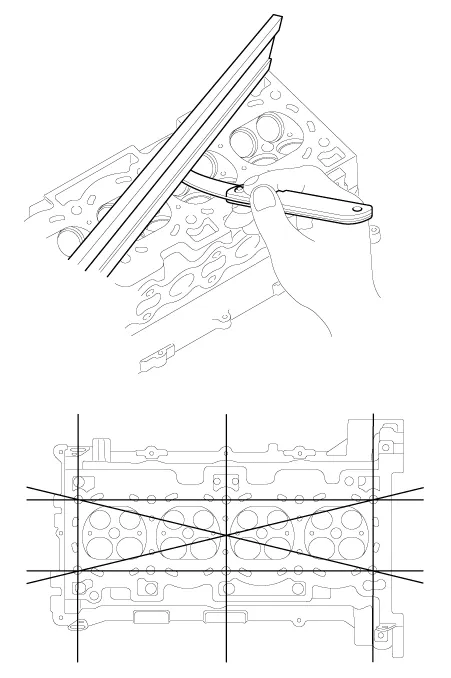
Inspect for flatness. Using a precision straight edge and feeler gauge, measure the surface the contacting the cylinder block and the manifolds for warpage. If the flatness is greater than maximum, replace the cylinder head.
|
| 2. |
Inspect for cracks. Check the combustion chamber, intake ports, exhaust ports and cylinder block surface for cracks. If cracked, replace the cylinder head. |
Valve And Valve Spring
| 1. |
Inspect valve stems and valve guides.
|
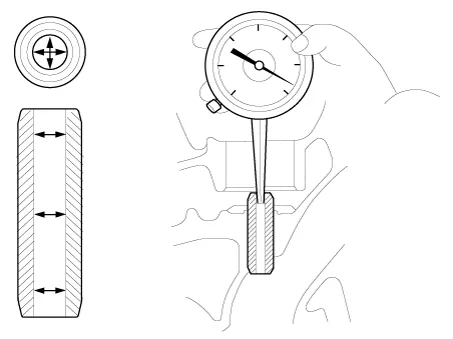
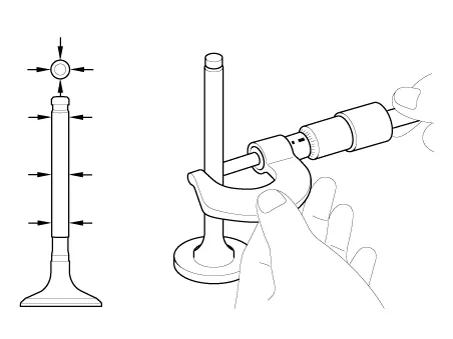
| 2. |
Inspect the valves.
|
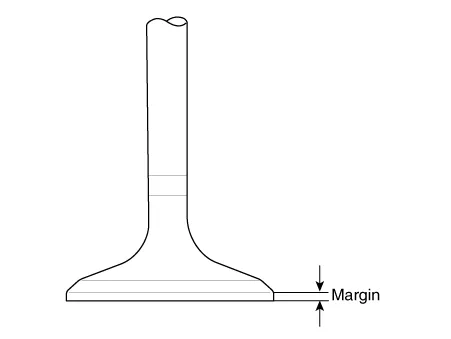
| 3. |
Inspect the valve seats
|
| 4. |
Inspect the valve springs.
|
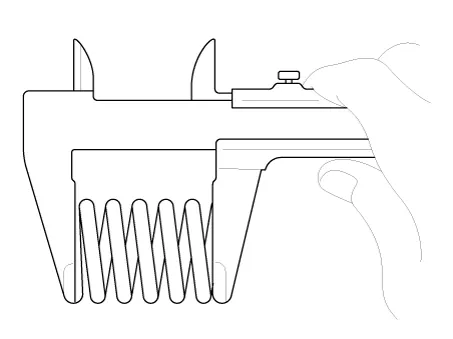
MLA (Mechanical Lash Adjuster)
| 1. |
Inspect the MLA. Using a micrometer, measure the MLA outside diameter.
|
| 2. |
Using a caliper gauge, measure MLA tappet bore inner diameter of cylinder head.
|
| 3. |
Subtract MLA outside diameter measurement from tappet bore inside diameter measurement.
|
| Reassembly |
Thoroughly clean all parts to be assembled. Before installing the parts, apply fresh engine oil to all sliding and rotating surfaces. Replace oil seals with new ones. |
| 1. |
Install valves.
|
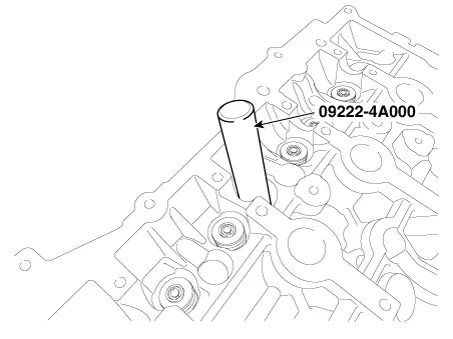
| 2. |
Install the MLAs after applying engine oil. Check that the MLA rotates smoothly by hand.
|
| Installation |
|
| 1. |
Install the water temperature control assembly (A) from the cylinder head.
|
| 2. |
Install the cylinder head gasket.
|
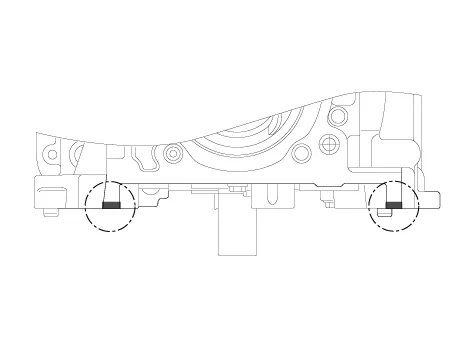
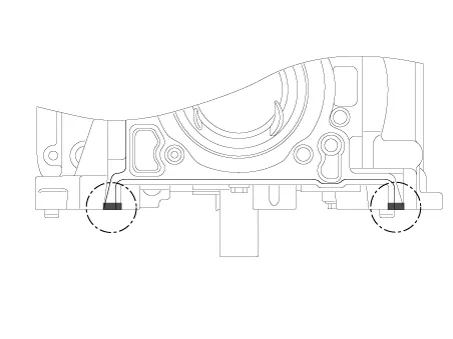
| 3. |
Place the cylinder head (A) carefully in order not to damage the gasket with the bottom part of the end.
|
| 4. |
Install cylinder head bolts.
|
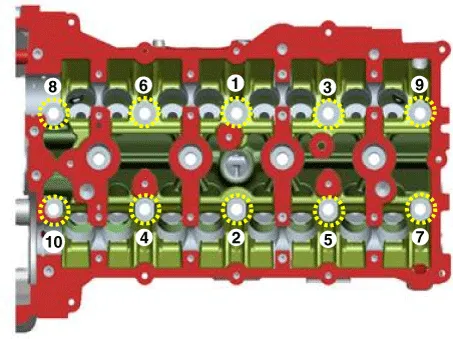
| 5. |
Install the order parts in the reverse order of removal. |


Other information:
Kia Stinger (CK) 2018-2023 Service Manual: Front Axle Assembly
Components and components location Components 1. Front brake disc 2. Hub assembly 3. Dust cover 4. Front knuckle Repair procedures Removal [2WD] 1. Remove wheel nuts, front wheel and tire (A) from front hub. Tightening torque: 107.Kia Stinger (CK) 2018-2023 Service Manual: Curtain Airbag (CAB) Module
Description and operation Description Installed inside the headliner, the curtain airbags (CAB) protect the driver and passengers from danger in the eThe SRSCM determines deployment of curtain airbag based on side impact sensor (SIS) signal.The SRSCM determines deployment of curtain airbag by using side impact sensor (SIS) signal.Categories
- Manuals Home
- Kia Stinger Owners Manual
- Kia Stinger Service Manual
- New on site
- Most important about car
