
Kia Stinger CK: ISG (Idle Stop & Go) System / DC/DC Converter
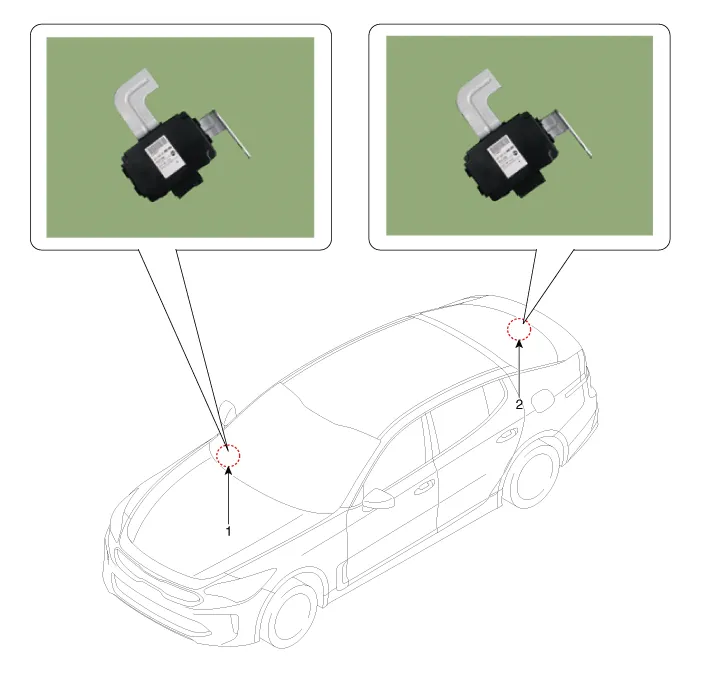
Components and components location
| Components Location |
Schematic diagrams
| Circuit Diagram |
| [200W] |
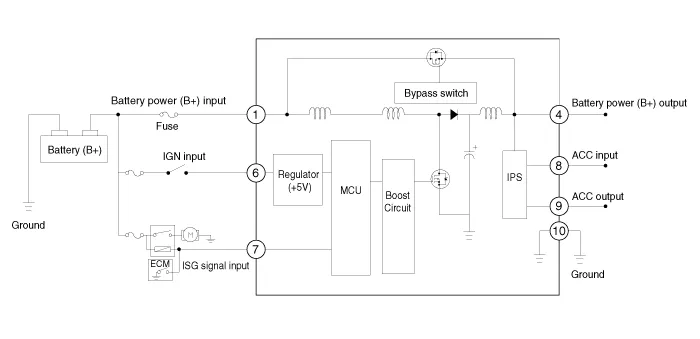
| [400W] |

| Terminal Function |
| [200W] |

|
PIn. |
Description |
PIn. |
Description |
|
1 |
Battery power (B+) input |
7 |
ISG signal input |
|
2 |
- |
8 |
ACC input |
|
3 |
- |
9 |
ACC output |
|
4 |
Battery power (B+) output |
10 |
Ground |
|
5 |
- |
11 |
- |
|
6 |
IGN1 input |
|
|
| [400W] |

|
PIn. |
Description |
PIn. |
Description |
|
1 |
Battery power (B+) input |
7 |
Battery power (B+) input |
|
2 |
- |
8 |
Battery power (B+) output |
|
3 |
Battery power (B+) output |
9 |
Battery power (B+) output |
|
4 |
Ground |
10 |
Ground |
|
5 |
IGN1 input |
11 |
ACC output |
|
6 |
ISG signal input |
12 |
ACC input |
Repair procedures
| Removal |
| [200W] |
| 1. |
Switch "OFF" the ignition and disconnect the negative (-) battery terminal. |
| 2. |
Remove the glove box housing. (Refer to Body (Interior and Exterior) - "Glove Box Housing") |
| 3. |
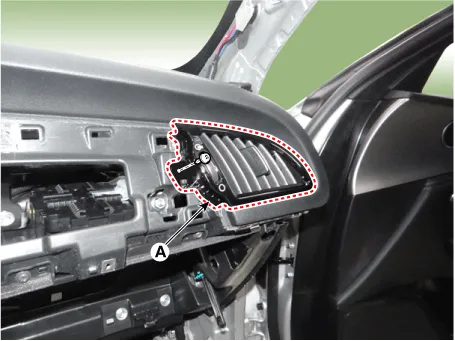
Remove the [RH] side air bant duct (A) after loosening the mounting screw.
|
| 4. |
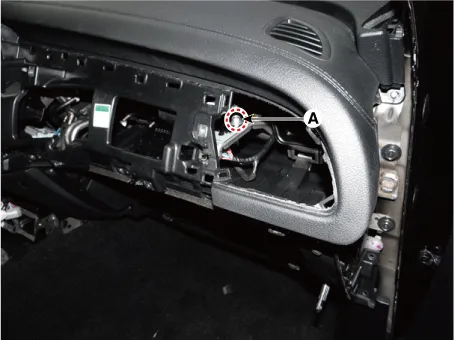
Remove the DC/DC converter after loosening the mounting bolt (A) and nut(B).
|
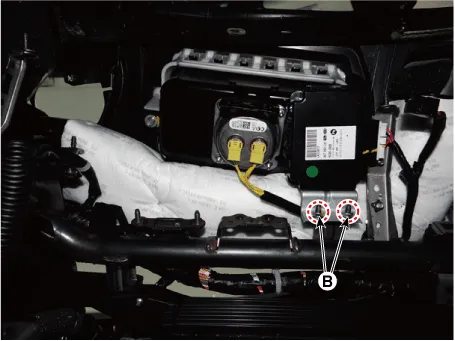
| [400W] |
| 1. |
Switch "OFF" the ignition and disconnect the negative (-) battery terminal. |
| 2. |
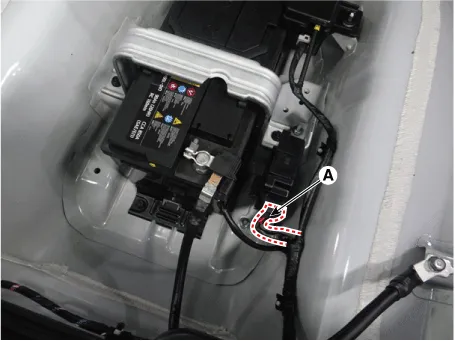
Disconnect the DC/DC converter connector (A).
|
| 3. |
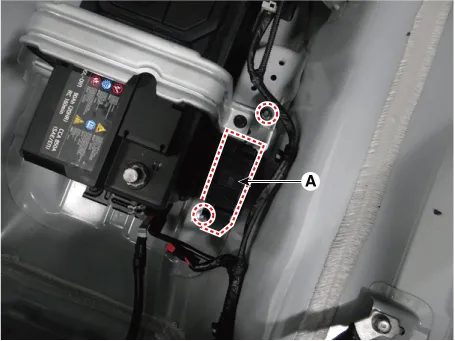
Remove the DC/DC converter (A) after loosening the mounting nuts.
|
| Installation |
After reconnecting the battery negative cable, ISG function does not operates until the system is stabilized, about 4 hours. If disconnecting the negative (-) battery cable from the battery during repair work for the vehicle equipped with AMS function, Battery sensor recalibration procedure should be performed after finishing the repair work. |

| 1. |
Install in the reverse order of removal. |


Other information:
Kia Stinger (CK) 2018-2023 Service Manual: Relay Box (Passenger Compartment)
Components and components location Component Location Integrated central control unit (ICU) Circuit (ICU Junction Block) Rear Sub Junction Block Description and operation Description Communication Network Diagram Abbreviation Explanation ACU Airbag Control Unit AFL Adaptive Front-Lighting System AMPKia Stinger (CK) 2018-2023 Service Manual: Front Wheel Guard
Repair procedures Replacement Put on gloves to protect your hands. • Use a plastic panel removal tool to remove interior trim pieces without marring the surface.Categories
- Manuals Home
- Kia Stinger Owners Manual
- Kia Stinger Service Manual
- New on site
- Most important about car
