
Kia Stinger CK: Instrument cluster / Gauges
Contents:
Speedometer

■ Type A
■ Type B
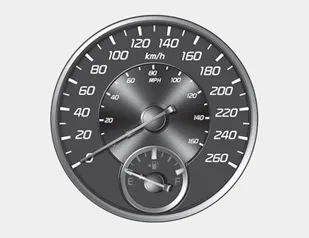
The speedometer indicates the speed of the vehicle and is calibrated in kilometers per hour (km/h) and/or miles per hour (mph).
Tachometer

The tachometer indicates the approximate number of engine revolutions per minute (rpm).
Use the tachometer to select the correct shift points and to prevent lugging and/or over-revving the engine.
CAUTION - Red zone
Do not operate the engine within the tachometer's RED ZONE. This may cause severe engine damage.
Engine Coolant Temperature Gauge

This gauge indicates the temperature of the engine coolant when the Engine Start/Stop button is ON.
If the gauge pointer moves beyond the normal range area toward the “H” position, it indicates overheating that may damage the engine.
Do not continue driving with an overheated engine. If your vehicle overheats, refer to “If the Engine Overheats” in chapter 6.
WARNING - Hot radiator
Never remove the radiator cap when the engine is hot. The engine coolant is under pressure and could cause severe burns. Wait until the engine is cool before adding coolant to the reservoir.
Fuel Gauge
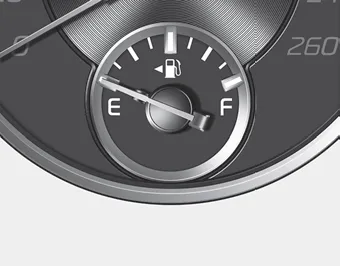
This gauge indicates the approximate amount of fuel remaining in the fuel tank.
✽ NOTICE
- The fuel tank capacity is given in chapter 8.
- The fuel gauge is supplemented by a low fuel warning light which will illuminate when the fuel tank is nearly empty.
- On inclines or curves, the fuel gauge pointer may fluctuate or the low fuel warning light may come on earlier than usual due to the movement of fuel in the tank.
✽ NOTICE - Fuel gauge
Running out of fuel can expose vehicle occupants to danger. You must top and obtain additional fuel as soon as possible after the warning light comes on or when the gauge indicator comes close to the “E (Empty)” level.
CAUTION - Low fuel
Avoid driving with an extremely low fuel level. Running out of fuel could cause the engine to misfire damaging the catalytic converter.
✽ NOTICE
The fuel display may not be accurate if the vehicle is on an incline.
Odometer
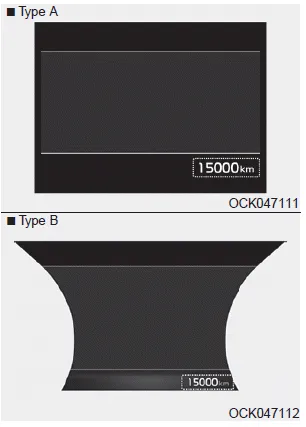
The odometer Indicates the total distance that the vehicle has been driven and should be used to determine when periodic maintenance should be performed.
- Odometer range : 0 ~ 1599999 kilometers or 0 ~ 999999 miles.
Outside Temperature Gauge
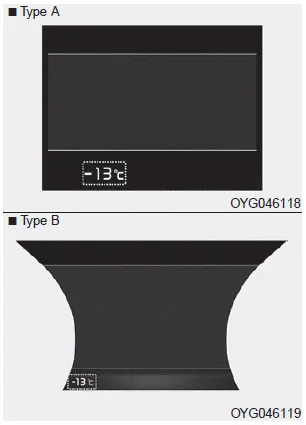
This gauge indicates the current outside air temperatures by 1°C (1°F).
- Temperature range : -40°C ~ 60°C (-40°F ~ 140°F)
The outside temperature on the display may not change immediately like a general thermometer to prevent the driver from being distracted.
The temperature unit can be changed (from °C to °F or from °F to °C) by using the "User Settings" mode of the LCD Window.


Other information:
Kia Stinger (CK) 2018-2023 Owner's Manual: Driver's and passenger's front air bag
■ Driver’s front air bag ■ Driver’s knee air bag ■ Passenger’s front air bag Your vehicle is equipped with an Advanced Supplemental Restraint (Air Bag) System and lap/shoulder belts at both the driver and passenger seating position. The indication of the system's presence are the letters “AIR BAG” located on the air bag pad cover on the steering wheel and the passenger's side front panel pad above the glove box.Kia Stinger (CK) 2018-2023 Owner's Manual: Emergency fuel filler lid release
If the fuel filler lid does not open using the fuel filler lid opener button, you can open it manually. Remove the panel in the cargo area. Pull the handle out slightly. CAUTION Do not pull the handle excessively, otherwise the luggage area trim or release handle may be damaged. WARNING - Refueling Always remove the fuel cap carefully and slowly.Categories
- Manuals Home
- Kia Stinger Owners Manual
- Kia Stinger Service Manual
- New on site
- Most important about car
Contents
