
Kia Stinger CK: Fuel Delivery System / Fuel Line
Repair procedures
| Removal |
Low Pressure Fuel Line [Engine Room <-> Extension Fuel Line]
| 1. |
Release the residual pressure in fuel line. (Refer to the Fuel Delivery System - "Release Residual Pressure in Fuel Line") |
| 2. |
Switch "OFF" the ignition and disconnect the negative (-) battery terminal. |
| 3. |
Remove the cowl top cover assembly. (Refer to Body (Interior and Exterior) - "Cowl Top Cover") |
| 4. |
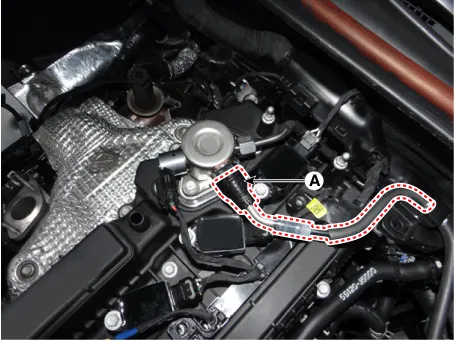
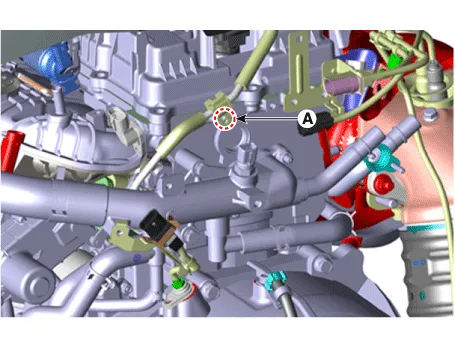
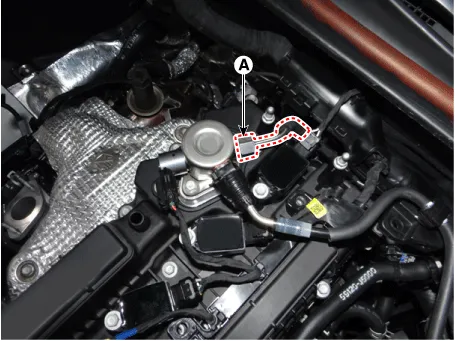
Disconnect the fuel feed tube quick-connector (A) which is connected from the high pressure fuel pump.
|
| 5. |
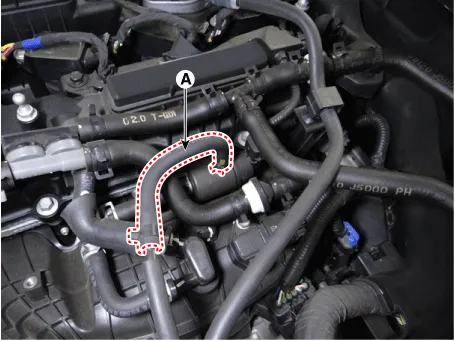
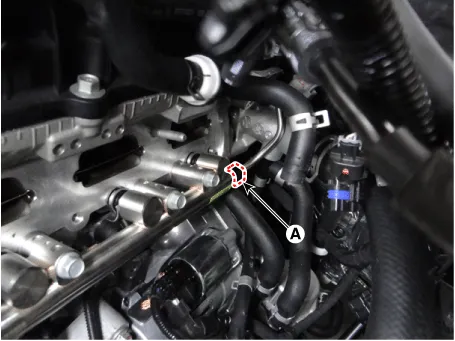
Disconnect the vapor hose (A) which is connected from the PCSV.
|
| 6. |
Remove the engine control module (ECM). (Refer to Engine Control System - "Engine Control Module (ECM)") |
| 7. |
Lift the vehicle. |
| 8. |
Remove the front-left wheel & tire and wheel house cover. |
| 9. |
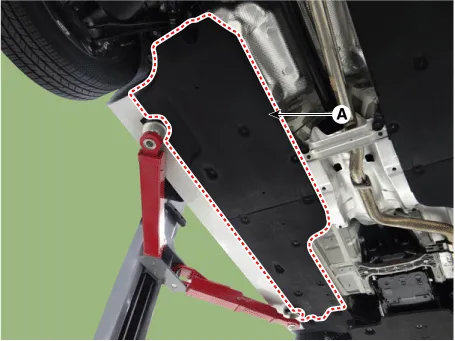
Remove the side under cover (A).
|
| 10. |
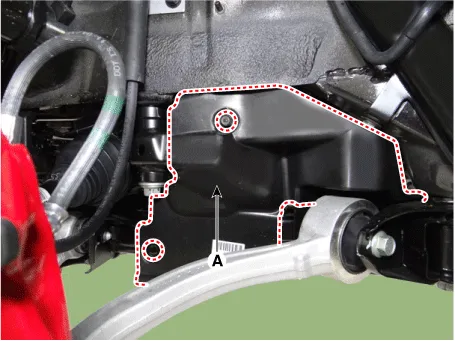
Remove the side cover (A).
|
| 11. |
Remove the brake line bracket (A) after removing mounting bolt.
|
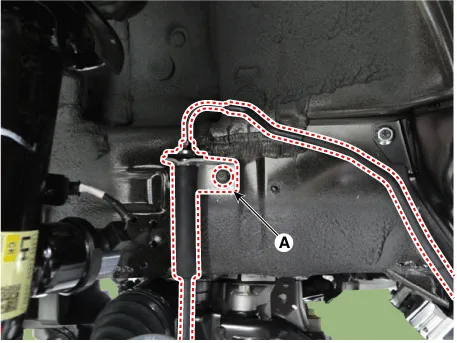
| 12. |
Remove the fuel line protector (A) after removing mounting nuts.
|
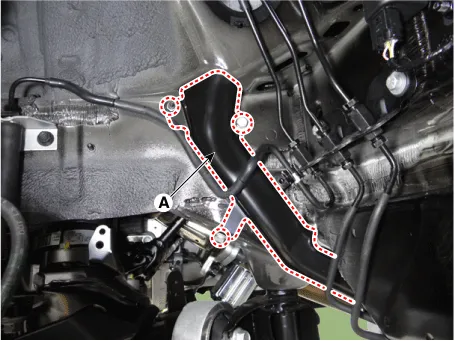
| 13. |
Disconnect the front vapor and fuel tube line quick-connector (A).
|
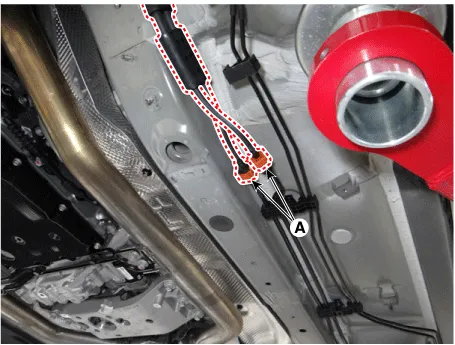
| 14. |
Down the vehicle. |
| 15. |
Remove the front vapor and fuel tube line. |
Low Pressure Fuel Line [Extension Fuel Line <-> Fuel Tank]
| 1. |
Release the residual pressure in fuel line. (Refer to the Fuel Delivery System - "Release Residual Pressure in Fuel Line") |
| 2. |
Switch "OFF" the ignition and disconnect the negative (-) battery terminal. |
| 3. |
Remove the side under cover (A).
|
| 4. |
Disconnect the front vapor and fuel tube line quick-connector (A).
|
| 5. |
Remove the fuel tank. (Refer to Fuel Delivery System - "Fuel Tank") |
| 6. |
Remove the vapor tube and fule feed tube line fixing clips (A) by using a common driver.
|
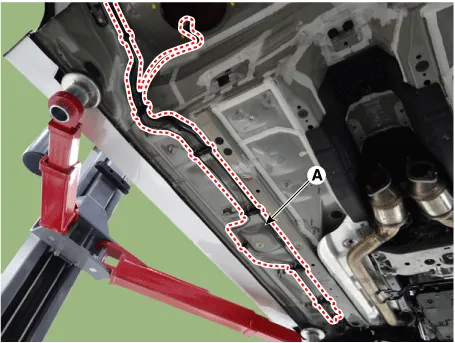
High Pressure Fuel Pipe [Extension Fuel Line <-> Fuel Tank]
| 1. |
Release the residual pressure in fuel line. (Refer to the Fuel Delivery System - "Release Residual Pressure in Fuel Line") |
| 2. |
Switch "OFF" the ignition and disconnect the negative (-) battery terminal. |
| 3. |
Remove the cowl top cover assembly. (Refer to Body (Interior and Exterior) - Cowl Top Cover") |
| 4. |
Remove the engine box cover (A).
|
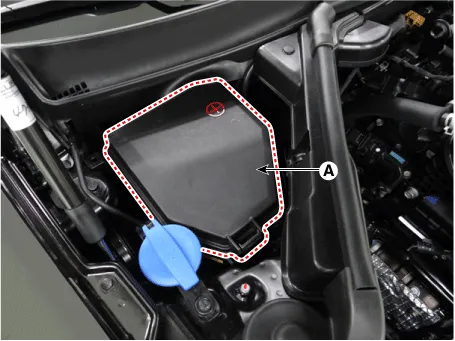
| 5. |
Disconnect the front control connector (A). |
| 6. |
Remove the groune terminal nuts (B).
|
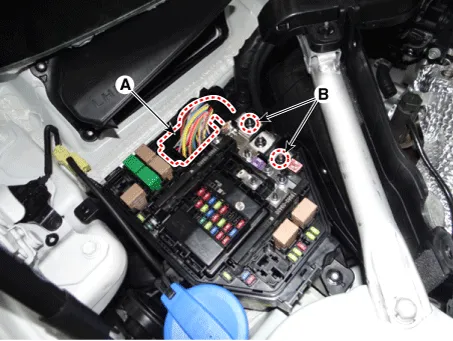
| 7. |
Remove the wiring protector (A).
|
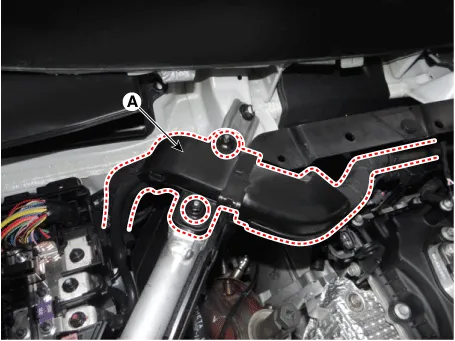
| 8. |
Remove the engine room panel (A).
|
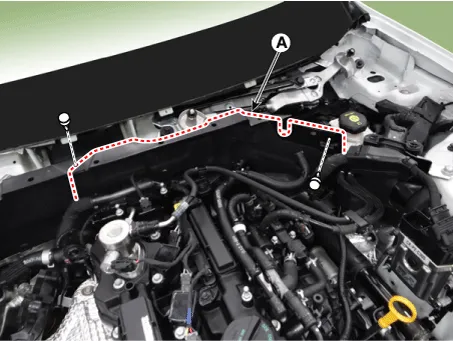
| 9. |
Remove the high pressure fuel pipe.
|
| Installation |
| 1. |
Install the fuel line in the reverse order of removal. |
| 2. |
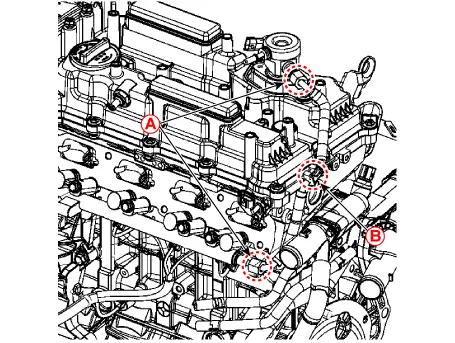
Install the high-pressure fuel pipe as follows.
|


Other information:
Kia Stinger (CK) 2018-2023 Service Manual: Alignment
Repair procedures Front wheel alignment When using a commercially available computerized wheel alignment equipment to inspect the front wheel alignment, always position the vehicle on a level surface with the front wheels facing straight ahead. Prior to inspection, make sure that the front suspension and steering system are in normal operating condition and that the tires are inflated to the specified pressure.Kia Stinger (CK) 2018-2023 Service Manual: Keyless Entry And Burglar Alarm
Specifications Specification Item Specification Power source 3 V Operating temperature 14 - 140°F (-10 - 60°C) RF Modulation FSK LF Modulation ASK RF frequency 433.Categories
- Manuals Home
- Kia Stinger Owners Manual
- Kia Stinger Service Manual
- New on site
- Most important about car
