
Kia Stinger CK: Power Tailgate System / Power Tailgate Spindle
Repair procedures
| Removal |
| 1. |
Disconnect the negative (-) battery terminal. |
| 2. |
Remove the rear pillar trim. (Refer to Body - "Rear Pillar Trim") |
| 3. |
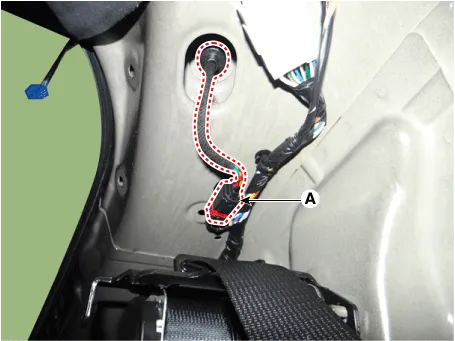
Disconnect the power tailgate spindle connector (A).
|
| 4. |
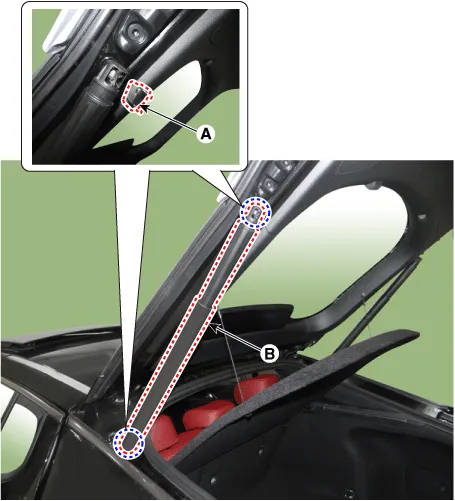
Using a screwdriver, lift the socket clips (A) up slightly. |
| 5. |
Remove the power tailgate spindle assembly (B).
|

| Installation |
| 1. |
Install the power tailgate spindle assembly. |
| 2. |
Connect the power tailgate spindle connector. |
| 3. |
Install the rear pillar trim. |
| 4. |
Connect the negative (-) battery terminal.
|
| Inspection |
Inspection of the PTG Spindle
Refer to Power Tailgate System - "Troubleshooting"


Other information:
Kia Stinger (CK) 2018-2023 Service Manual: Outside Rear View Mirror
Components and components location Component Location 1. Outside rear view mirror Repair procedures Replacement Put on gloves to protect your hands. • Use a plastic panel removal tool to remove interior trim pieces without marring the surface.Components and components location Components Location 1. Mechanism Rail Repair procedures Replacement Put on gloves to protect your hands. • Use a plastic panel removal tool to remove interior trim pieces without marring the surface.Categories
- Manuals Home
- Kia Stinger Owners Manual
- Kia Stinger Service Manual
- New on site
- Most important about car
