
Kia Stinger CK: Cooling System / Water Temperature Control Assembly
Components and components location
| Components |
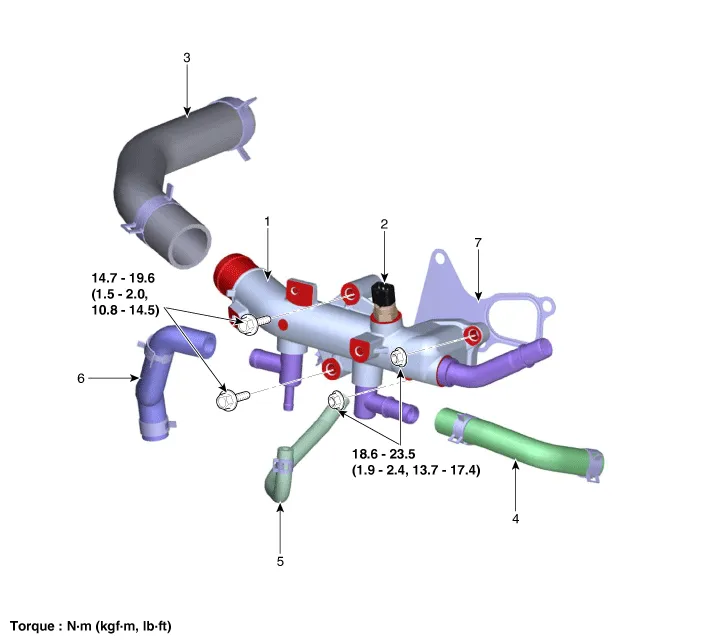
| 1. Water temperature control
assembly 2. Engine coolant temperature sensor 3. Water outlet hose |
4. Heater hose 5. Intake manifold water hose 6. Oil cooler hose |
Repair procedures
| Removal and Installation |
| 1. |
Disconnect the battery negative terminal. |
| 2. |
Remove the engine cover. (Refer to Engine and Transmission Assembly - "Engine Cover") |
| 3. |
Remove the engine room front under cover. (Refer to Engine and Transmission Assembly - "Engine Room Under Cover") |
| 4. |
Drain the coolant. (Refer to Cooling System - "Coolant") |
| 5. |
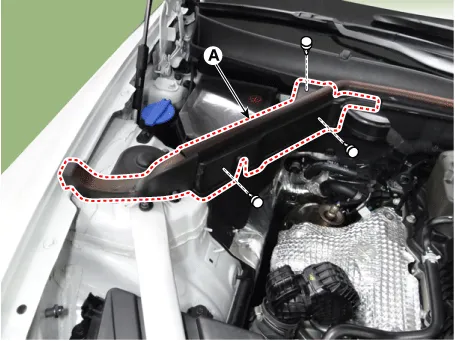
Remove the RH hood sealing cover (A).
|
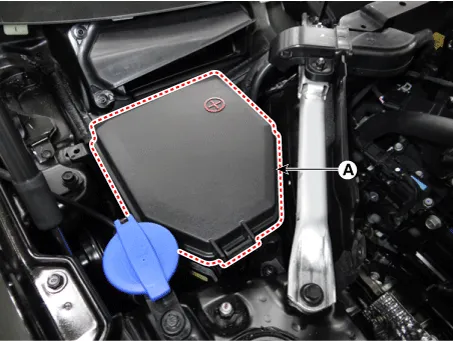
| 6. |
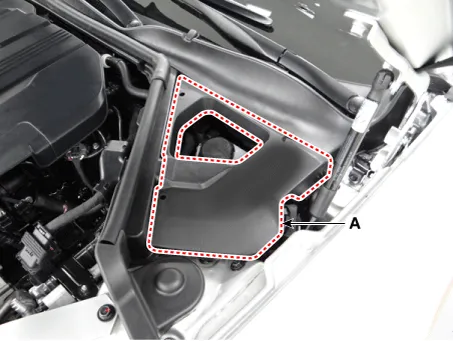
Remove the engine room cover (A).
|
| 7. |
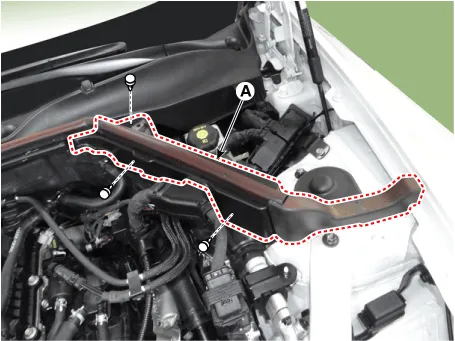
Remove the LH hood sealing cover (A).
|
| 8. |
Remove the cowl top cover. (Refer to Body (Interior and Exterior) -"Cowl Top Cover") |
| 9. |
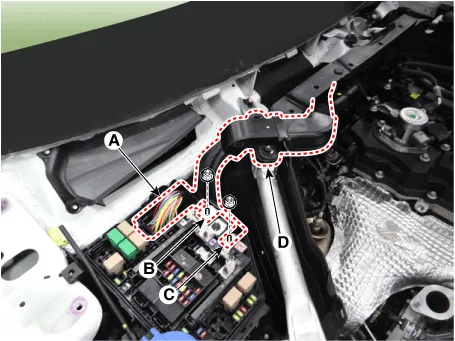
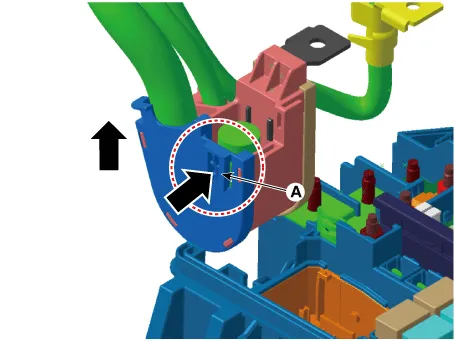
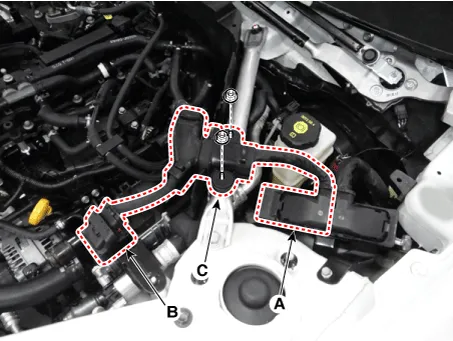
Disconnect the wiring connector and harness from the engine room.
|

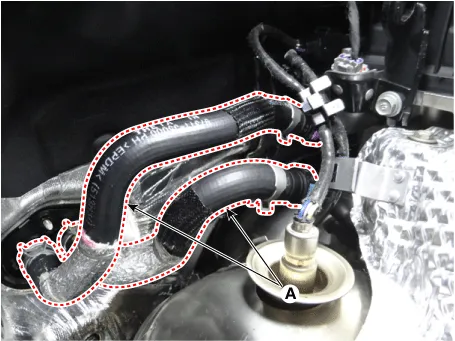
| 10. |
Disconnect the heater hoses (A).
|
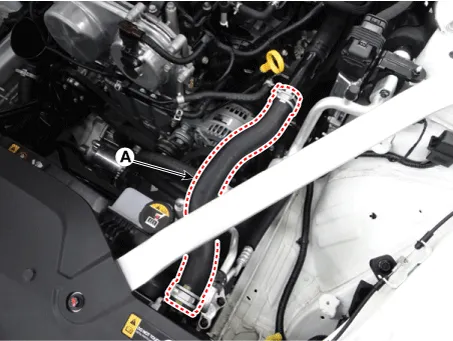
| 11. |
Disconnect the radiator upper hose (A).
|
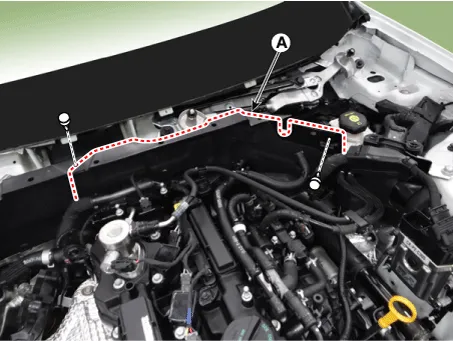
| 12. |
Remove the engine room panel (A).
|
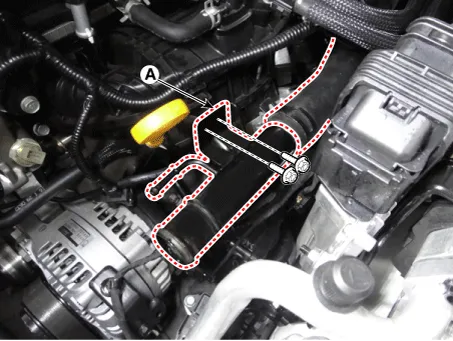
| 13. |
Remove the water outlet pipe (A).
|
| 14. |
Disconnect the wiring connectors and harness clamps and remove the wiring protector around the water temperature control assembly.
|
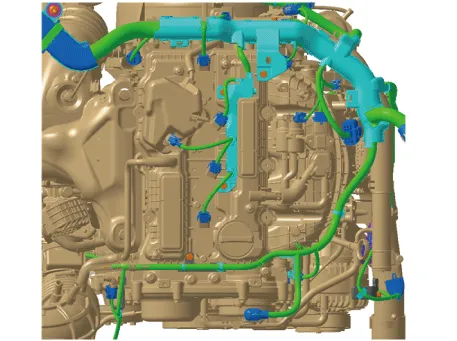
| 15. |
Disconnect the bypass hose (A).
|
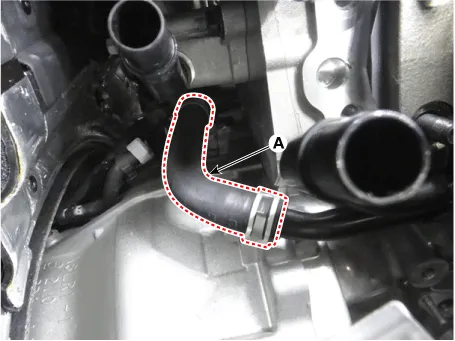
| 16. |
Disconnect the oil cooler hose (A) and electric throttle body control (ETC) module water hose (B).
|
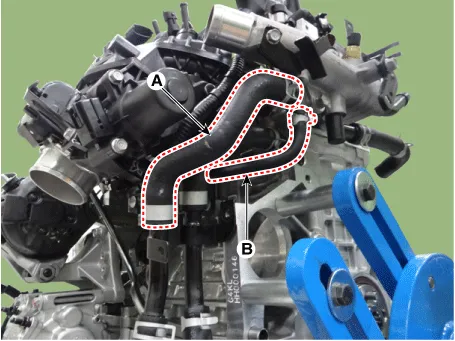
| 17. |
Remove the water temperature control assembly (A) with gasket.
|
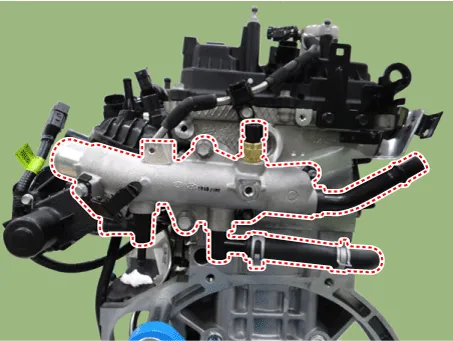
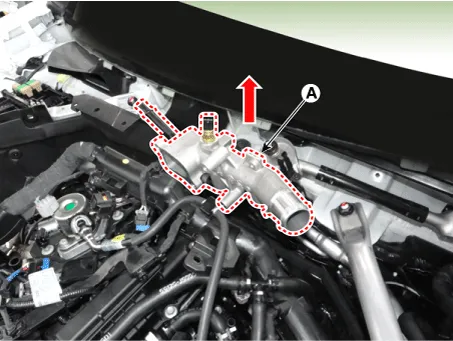

| 18. |
Install the other parts in the reverse order of removal. |
| 19. |
Fill the coolant. (Refer to Cooling system - "Coolant") |
| 20. |
Start engine and check for leaks. |
| 21. |
Recheck engine coolant level. |


Other information:
Kia Stinger (CK) 2018-2023 Service Manual: Cooling Fan
Components and components location Components [BLDC (Brushless DC) motor type] 1. Radiator 2. Cooling fan assembly 3. Reservoir tank [DC motor type] 1. Cooling fan 2. Cooling fan motor 3. Cooling fan shroud 4. Cooling fan controller 5. Reservoir tank Description and operation Description The cooling fan operates in 2 stages (HIGH/LOW).Kia Stinger (CK) 2018-2023 Service Manual: Cluster Fascia Panel
Components and components location Component Location 1. Cluster fascia panel Repair procedures Replacement Put on gloves to protect your hands. • Use a plastic panel removal tool to remove interior trim pieces without marring the surface.Categories
- Manuals Home
- Kia Stinger Owners Manual
- Kia Stinger Service Manual
- New on site
- Most important about car
