
Kia Stinger CK: Fuel Delivery System / Delivery Pipe
Repair procedures
| Removal |
| 1. |
Release the residual pressure in fuel line. (Refer to the Fuel Delivery System - "Release Residual Pressure in Fuel Line") |
| 2. |
Switch "OFF" the ignition and disconnect the negative (-) battery terminal. |
| 3. |
Remove the intake manifold. (Refer to Engine Mechanical System - “Intake Manifold”) |
| 4. |
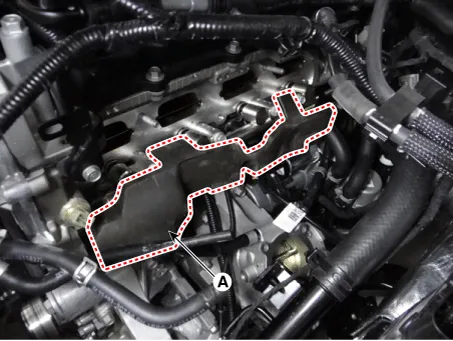
Remove the delivery pipe foam (A).
|
| 5. |
Remove the cowl top cover assembly. (Refer to Body (Interior and Exterior) - Cowl Top Cover") |
| 6. |
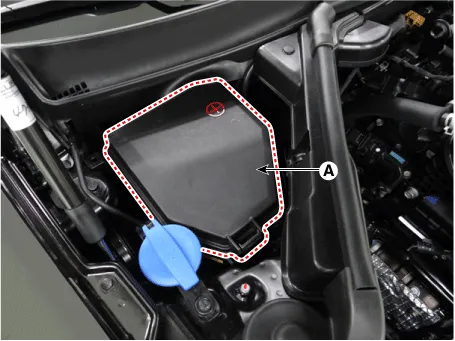
Remove the engine box cover (A).
|
| 7. |
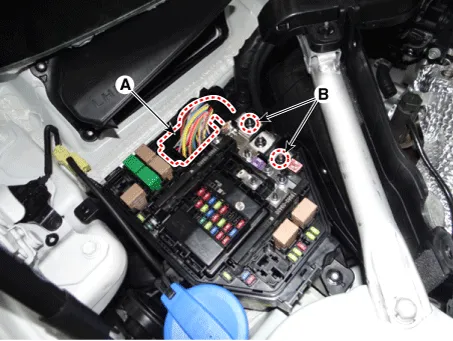
Disconnect the front control connector (A). |
| 8. |
Remove the groune terminal nuts (B).
|
| 9. |
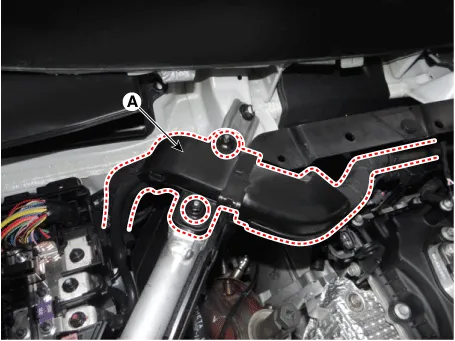
Remove the wiring protector (A).
|
| 10. |
Remove the high pressure fuel pipe.
|
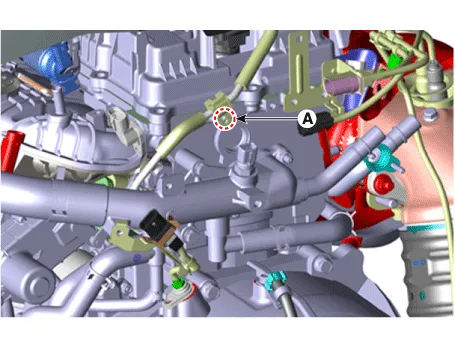
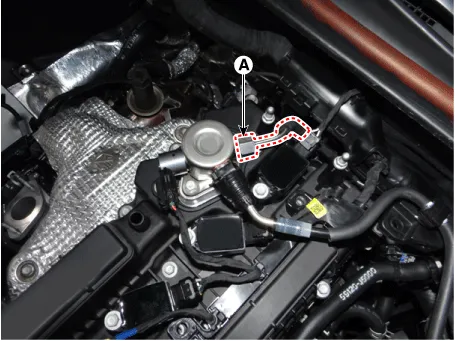
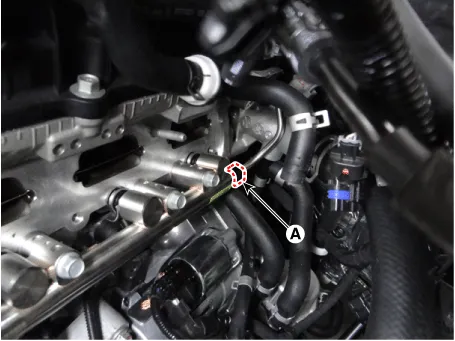
| 11. |
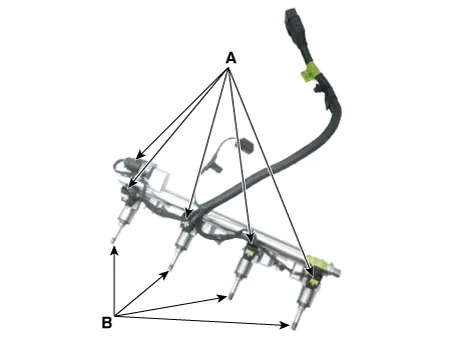
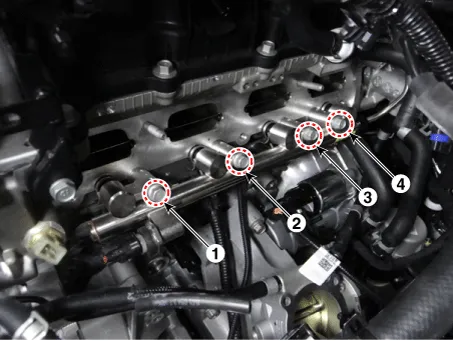
Remove the mounting bolts (A), and then remove the delivery pipe & injector assembly from the engine.
|
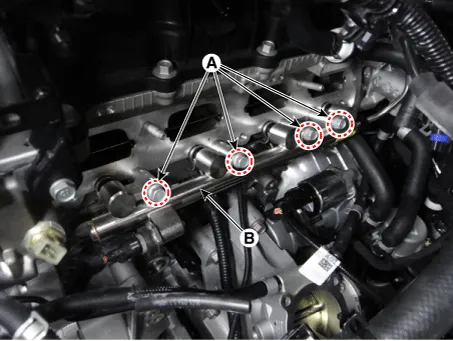
| 12. |
Disconnect the injector & rail pressure sensor connector (A). |
| 13. |
Remove the injector (B) from the delivery pipe.
|
| Installation |
|

|
| 1. |
Install in the reverse order of removal. |


Other information:
Kia Stinger (CK) 2018-2023 Service Manual: Rear Seat Belt Buckle
Components and components location Component Location 1. Rear seat belt buckle [RH] 2. Rear seat belt buckle [LH] Repair procedures Replacement Put on gloves to protect your hands. • Use a plastic panel removal tool to remove interior trim pieces without marring the surface.Kia Stinger (CK) 2018-2023 Service Manual: Console ON/OFF Actuator
Repair procedures Inspection 1. Turn the ignition switch OFF. 2. Disconnect the mode control actuator connector. 3. Verify that the mode control actuator operates to the defrost mode when 12V is connected to terminal 3 and ground to terminal 7. Verify that the mode control actuator operates to the vent mode when connected in reverse.Categories
- Manuals Home
- Kia Stinger Owners Manual
- Kia Stinger Service Manual
- New on site
- Most important about car
