
Kia Stinger CK: Blind-Spot Collision Warning (BCW) / Blind-Spot Collision Warning (BCW) Switch
Schematic diagrams
| Circuit Diagram |
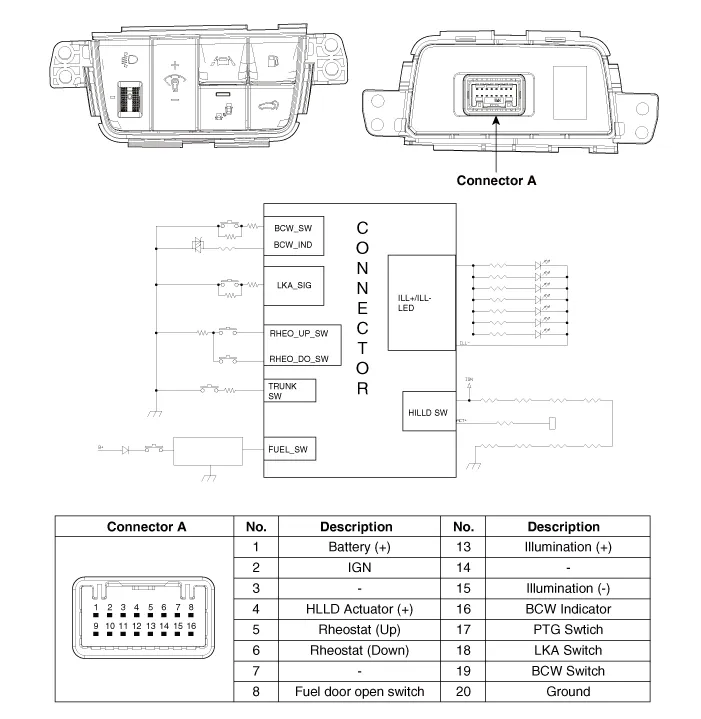
Repair procedures
| Removal |
| 1. |
Disconnect the negative (-) battery terminal. |
| 2. |
Remove the crash pad lower panel. (Refer to Body - "Crash Pad Lower Panel") |
| 3. |
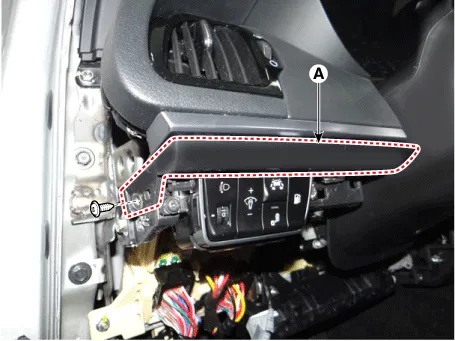
Remove the crash pad garnish [LH] (A) after loosening the mounting screw.
|
| 4. |
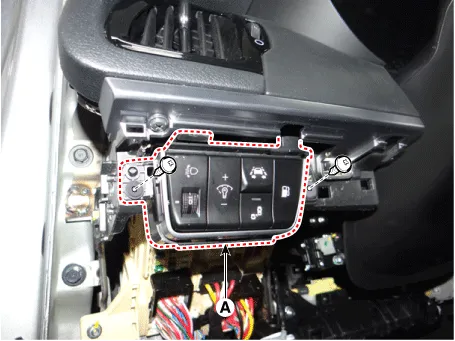
Remove the side crash pad switch (A) after loosening the mounting screws.
|
| 5. |
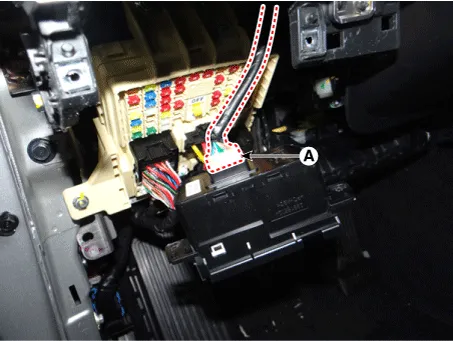
Disconnect the side crash pad switch connector (A).
|
| Installation |
| 1. |
Connect the side crash pad switch connector. |
| 2. |
Install the side crash pad switch. |
| 3. |
Install the crash pad garnish [LH]. |
| 4. |
Install the crash pad lower panel. |
| 5. |
Connect the negative (-) battery terminal. |
| Inspection |
| 1. |
Disconnect the BCW switch connector from the side crash pad switch.
|

| 2. |
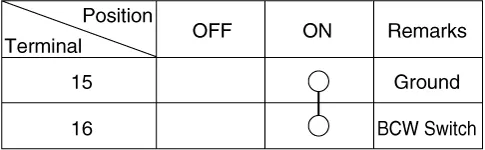
Operate the BCW switch, then check for continuity between terminals and BCW switch connector.
|


Other information:
Kia Stinger (CK) 2018-2023 Service Manual: Steering Column & Shaft
Components and components location Components 1. Steering column module (SCM) 2. Steering column module (SCM) bracket Specifications Specification Item Specifications Rated Voltage DC 12 V Operating Voltage Range DC 9 - 16 V Operating Temperature Range -30°C ~ +75°C Storage Temperature Range -40°C ~ +85°C Dark Current Max.Repair procedures Removal 1. Remove the cylinder head cover. (Refer to Cylinder Head Assembly - "Cylinder Head Cover") 2. Turn the crankshaft pulley and align its groove with the timing mark of the timing chain cover to set the piston of No.1 cylinder to the top dead center on compression stroke.Categories
- Manuals Home
- Kia Stinger Owners Manual
- Kia Stinger Service Manual
- New on site
- Most important about car
