
Kia Stinger CK: Hydraulic System / Damper Clutch Control Solenoid Valve (D/C_VFS)
Specifications
| Specifications |
|
Item |
Specification |
|
Control type |
N/L (Normal Low) |
|
Control pressure kpa (kgf/cm², psi) |
0 - 519.75 (0 - 5.3, 0 - 75.38) |
|
Current (mA) |
0 - 850 |
|
Coil resistance (Ω) |
5.1 ± 0.3 |
Components and components location
| Components Location |
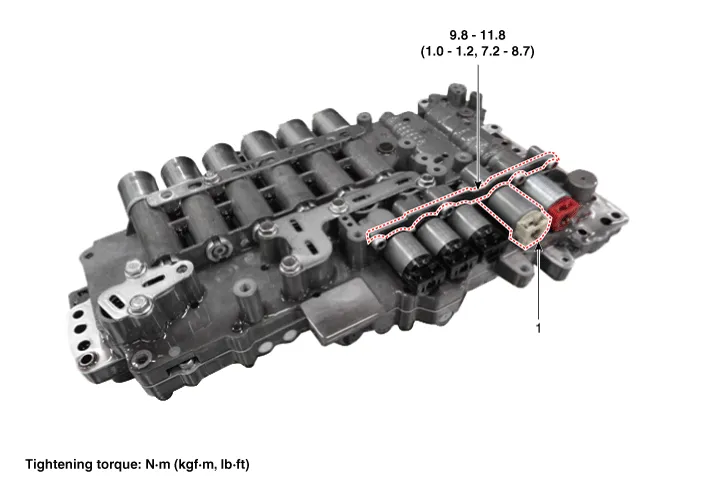
| 1. Damper clutch control solenoid
valve |
Solenoid valve support bracket
|
Description and operation
| Description |
| • |
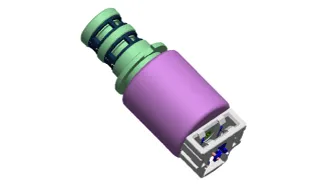
Damper clutch control solenoid valve is a Variable Force Solenoid (VFS) type. |
| • |
When TCM supplies variable current to solenoid valve, hydraulic pressure of damper clutch is controlled indirectly by solenoid valve. |
Schematic diagrams
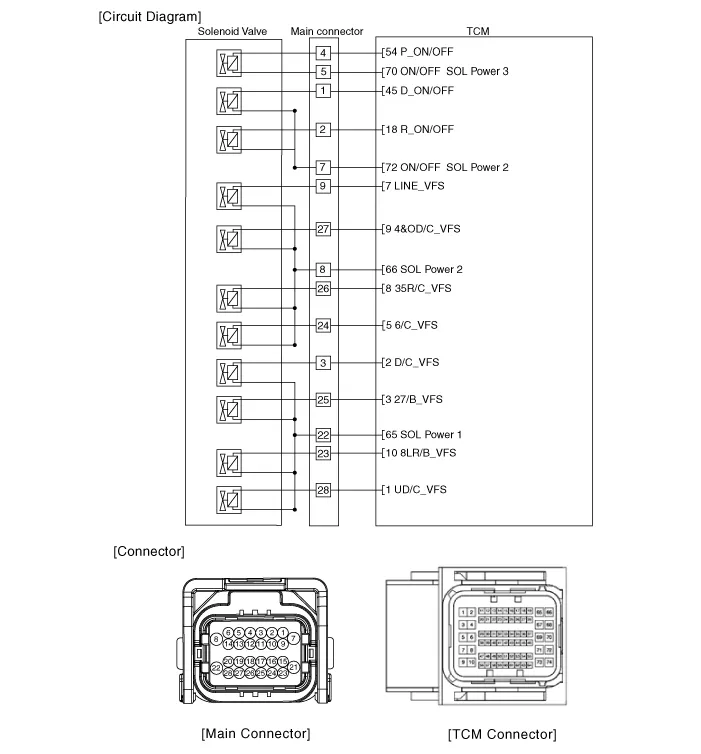
| Circuit Diagram |
Repair procedures
| Inspection |
| 1. |
Switch "OFF" ignition |
| 2. |
Disconnect the main connector (A).
|

| 3. |
Measure the resistance between power terminal (22) and signal terminal (3).
|
| Removal |
|

| 1. |
Remove the under cover. (Refer to Engine Mechanical System - "Engine Room Under Cover"). |
| 2. |
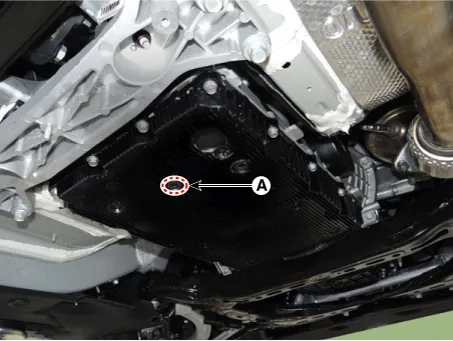
Remove the ATF drain plug (A), allow the fluid to drain out and then reinstall the drain plug.
|

| 3. |
Disconnect the main connector (A).
|
| 4. |
Remove the valve body cover.
|
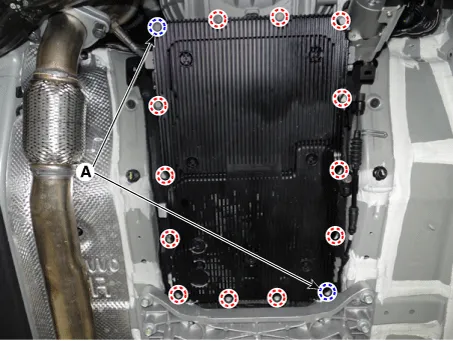
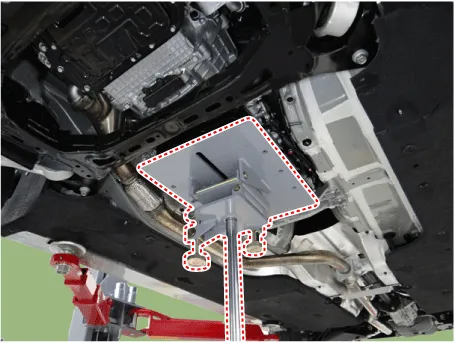
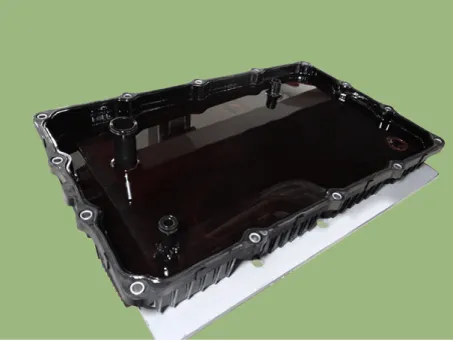
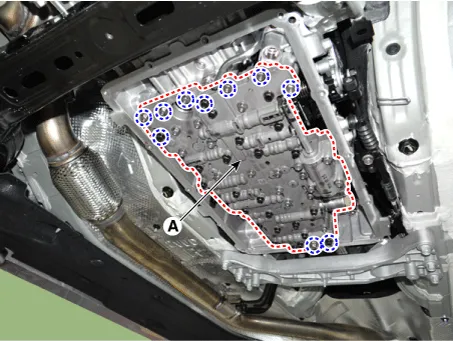
| 5. |
Remove the valve body assembly (A) after loosening the bolts.
|
| 6. |
Remove the E-module (A) after loosening the bolts.
|
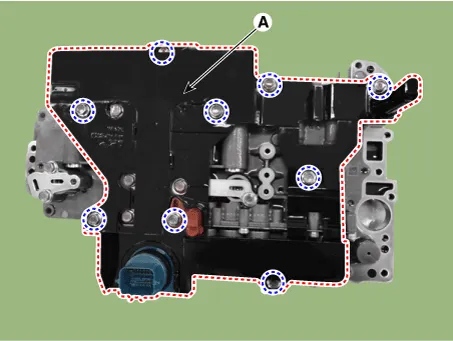
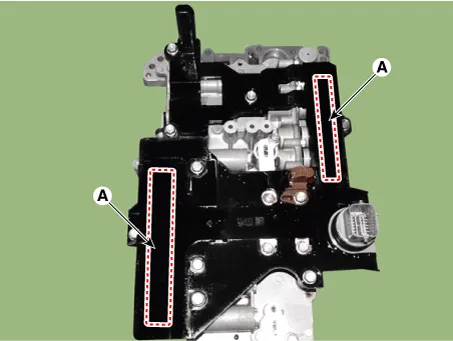
| 7. |
Remove the solenoid valve support bracket (A).
|
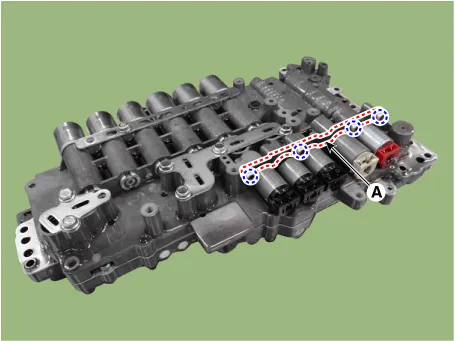
| 8. |
Remove the damper clutch control solenoid valve (A).
|

| Installation |
| 1. |
Install in the reverse order of removal.
|
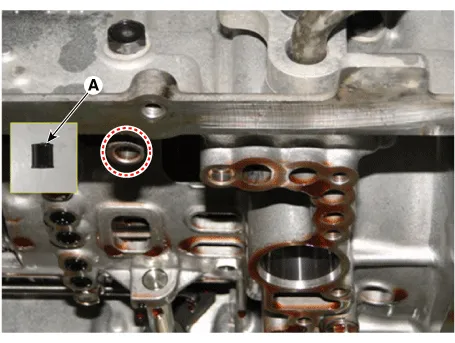
| 2. |
Perform the procedures below after installing.
|
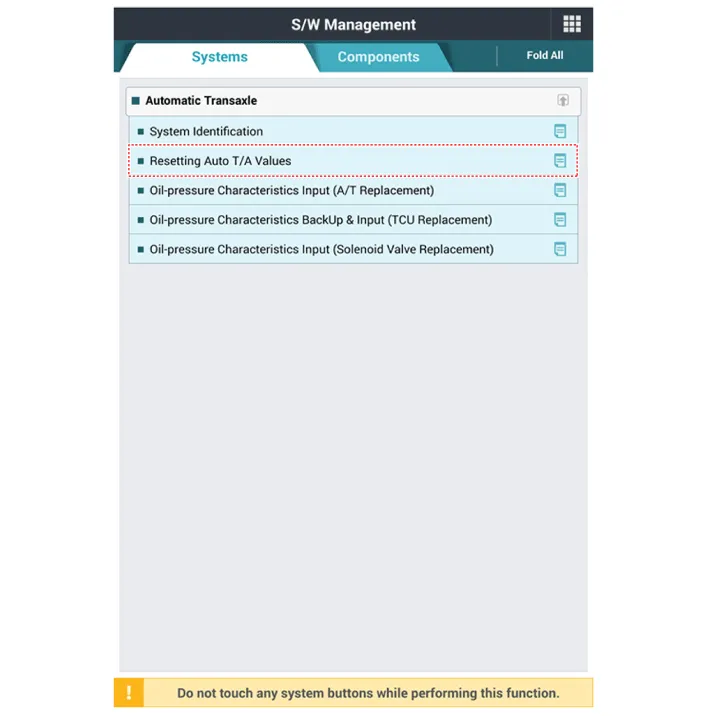


Other information:
Kia Stinger (CK) 2018-2023 Service Manual: Automatic Transmission System
Special service tools Special Service Tools Tool Name / Number Illustration Description Inhibitor switch guide pin (Parking switch guide pin) 09480-D2100 Used for fixing "N" range when installing inhibitor switch (Used for fixing "P" range when installing parking switch) Troubleshooting Troubleshooting Limp Home Mode Features a fail-safe function that prevents dangerous situations in the event of a transmission failure.Components and components location Components Connector Pin Information No. Connector A Connector B Connector C Connector D 1 Rear door left speaker (+) ⁻ ⁻ Ground 2 Rear door left speaker (-) MIC (+) ⁻ ⁻ 3 ⁻ ⁻ ⁻Categories
- Manuals Home
- Kia Stinger Owners Manual
- Kia Stinger Service Manual
- New on site
- Most important about car
