
Kia Stinger CK: ECS(Electronic Control Suspension) System / ECS-G Sensor
Repair procedures
| Removal |
[Body G Sensor]
| Front |
| 1. |
Turn ignition switch OFF and disconnect the negative (-) battery cable. |
| 2. |
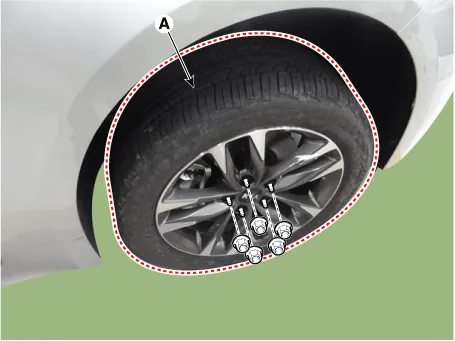
Remove wheel nuts, wheel and tire (A) from hub.
|

| 3. |
Remove the front wheel guard. (Refer to Body - "Front wheel guard") |
| 4. |
Disconnect the ECS-G sensor connector (A). |
| 5. |
Loosen the nut and then ECS-G sensor (B). [RH,LH]
|

| 6. |
Install in the reverse order of removal. |
| Rear |
| 1. |
Turn ignition switch OFF and disconnect the negative (-) battery cable. |
| 2. |
Remove wheel nuts, wheel and tire (A) from hub.
|
| 3. |
Remove the rear wheel guard. (Refer to Body - "Rear wheel guard") |
| 4. |
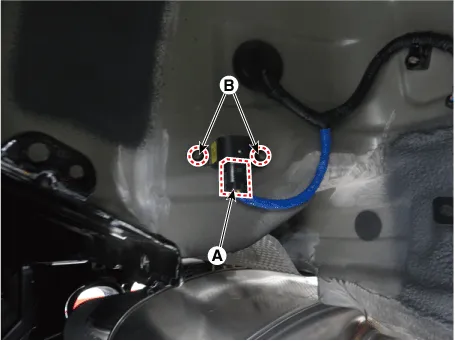
Disconnect the ECS-G sensor connector (A). |
| 5. |
Loosen the nut and then ECS-G sensor (B). [RH]
|
| 6. |
Install in the reverse order of removal. |
| [Wheel-G Sensor] |
| [Front] |
| 1. |
Turn ignition switch OFF and disconnect the negative (-) battery cable. |
| 2. |
Remove wheel nuts, wheel and tire (A) from hub.
|
| 3. |
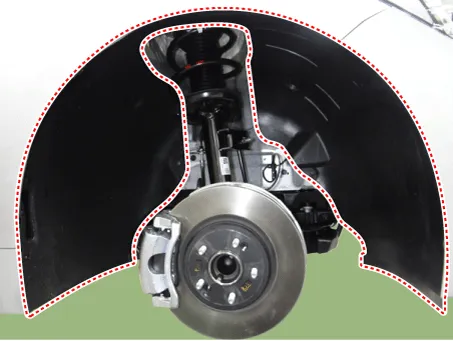
Remove the front wheel guard.
|
| 4. |
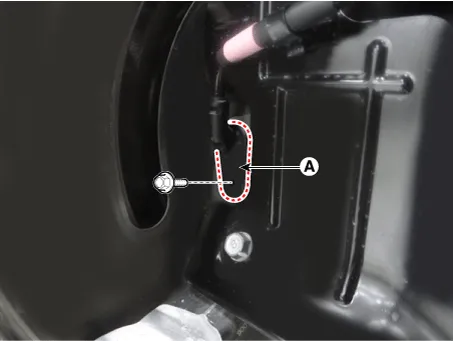
Loosen the wheel speed sensor bolt (A) and then disconnect the wheel speed sensor.
|
| 5. |
Remove the wheel speed sensor bracket (A).
|
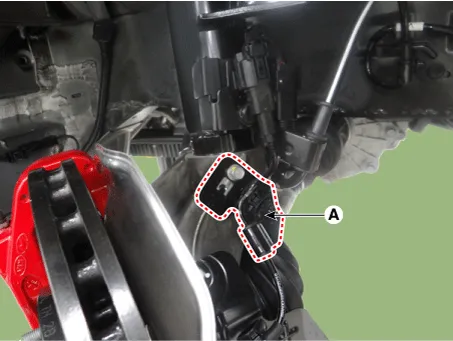
| 6. |
Disconnect the ECS connector (A) and then remove the wheel speed sensor bracket.
|
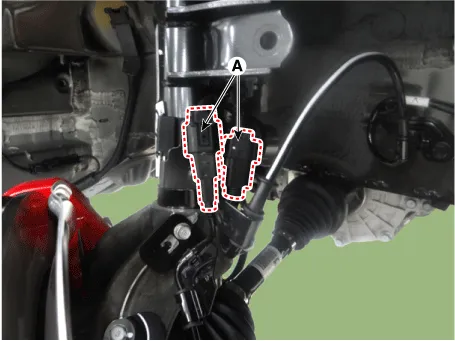
| 7. |
Remove the bracket (A) and then disconnect the connector (B).
|
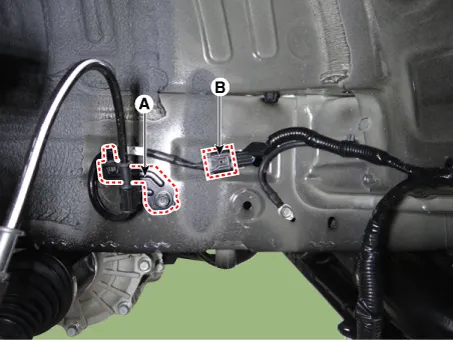
| 8. |
Install in the reverse order of removal. |
[Rear]
| 1. |
Turn ignition switch OFF and disconnect the negative (-) battery cable. |
| 2. |
Remove wheel nuts, wheel and tire (A) from hub.
|
| 3. |
Remove the rear wheel guard. (Refer to Body - "Rear wheel guard") |
| 4. |
Loosen the wheel speed sensor bolt and then remove the wheel speed sensor.
|

| 5. |
Disconnect the ECS sensor connector (A) and then remove the bracket (B).
|
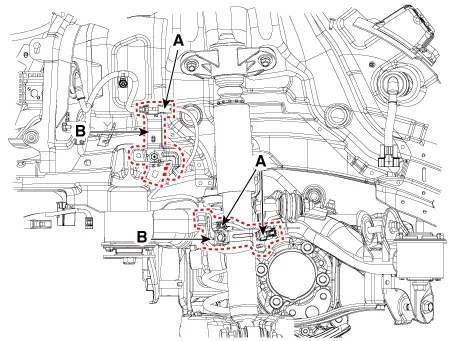
| 6. |
Install in the reverse order of removal. |


Other information:
Kia Stinger (CK) 2018-2023 Service Manual: AWD Control System
Components and components location Components Location 1. AWD ECU Description and operation Description The AWD ECU distributes the driving force to the front/rear wheel through controlling the multi plate clutch on the AWD transfer case by analyzing the input information, i.e. the wheel speed, accelerator and steering angle depending on the road condition and driving state.Kia Stinger (CK) 2018-2023 Service Manual: Power Door Mirror Actuator
Components and components location Components 1. Side repeater lamp 2. BCW Indicator 3. AVM Camera 4. Puddle lamp Repair procedures Inspection 1. Disconnect the negative (-) battery terminal. 2. Remove the outside mirror assembly. 3.Categories
- Manuals Home
- Kia Stinger Owners Manual
- Kia Stinger Service Manual
- New on site
- Most important about car
