
Kia Stinger CK: Lubrication System / Engine Oil
Flow diagram
| Flow Diagram |
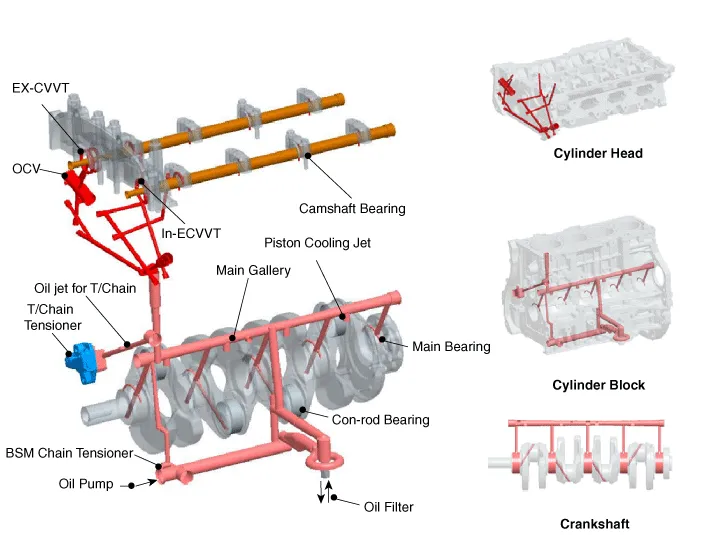
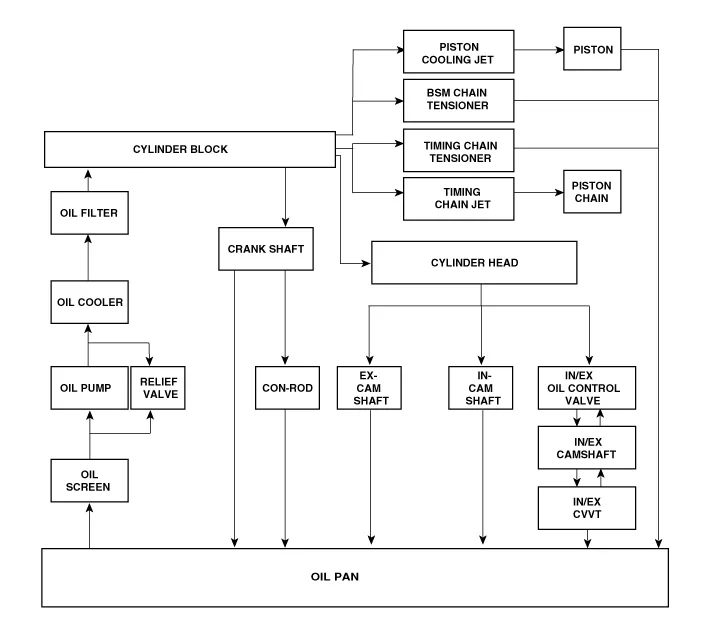
Repair procedures
| Oil and filter replacement |
|

| 1. |
Remove the engine room front and rear under cover. (Refer to Engine and Transmission Assembly - "Engine Room Under Cover") |
| 2. |
Drain the engine oil.
|
| 3. |
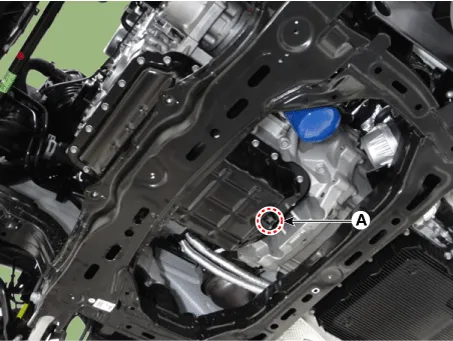
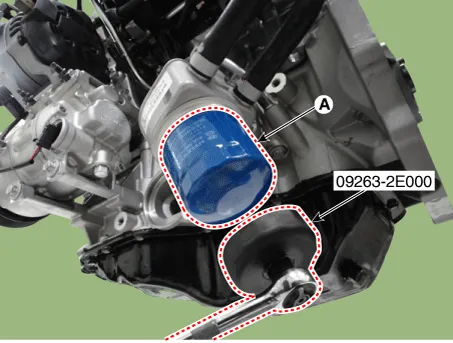
Remove the oil filter (A) with the SST (09263-2E000, the oil filter wrench).
|
| 4. |
Install the oil drain plug with a new gasket.
|
| 5. |
Fill with new engine oil, after removing the engine oil level gauge.
|
| 6. |
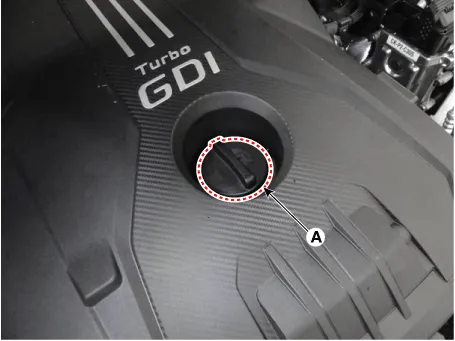
Install the oil filler cap. |
| 7. |
Start engine and check for oil leaks and check the oil gauge or light for an indication of oil pressure. |
| 8. |
Recheck the engine oil level. |
| 9. |
To reset the service interval to the recommended mileage, refer to the service mode section in the owner's manual for procedure (if applicable). |
| Inspection |
| 1. |
Check the engine oil quality. Check the oil deterioration, entry of water, discoloring of thinning. If the quality is visibly poor, replace the oil. |
| 2. |
Check the engine oil level. After engine warm up stop the engine wait 5 minutes then check the oil level. Oil level should be between the "L" and "F" marks on the dipstick. If low check for leakage and add oil up to the "F" mark.
|

Selection Of Engine Oil
Recommendation : ACEA C2 or above / 0W-30
Allowed oil grade
- API SL or above
- ILSAC GF-3 or above
- ACEA A3 or above
Allowed oil SAE viscosity
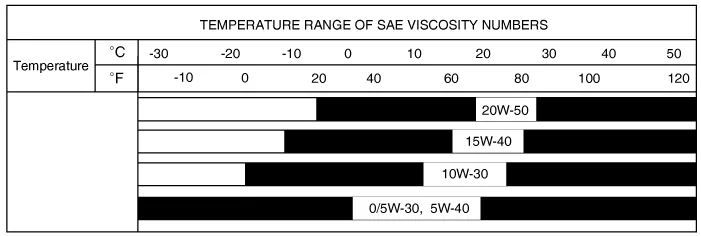
For best performance and maximum protection of all types of operation, select only those lubricants which :
|


Other information:
Description and operation Description • Engine coolant is used for circulating heat in order to heat and cool the transmission oil. • Rapidly elevates the transmission oil temperature during the initial cold start of the engine. • Prevents over heating of the transmission oil while the vehicle is moving.Components and components location Components 1. Manual control lever 2. Shift cable 3. Shift lever assembly 4. Knob Repair procedures Removal 1. Shift the gear to "N". 2. Loosen the nut (A) and remove the shift cable fixing clip (B).Categories
- Manuals Home
- Kia Stinger Owners Manual
- Kia Stinger Service Manual
- New on site
- Most important about car
