
Kia Stinger CK: Hydraulic System / R Position Solenoid Valve (ON/OFF)
Specifications
| Specifications |
|
Item |
Specification |
|
Control type |
ON/OFF |
|
Control pressure kpa (kgf/cm², psi) |
539.36 (5.5, 78.23) |
|
Current (mA) |
0 - 600 |
|
Coil resistance (Ω) |
10.5 ± 0.5 |
Components and components location
| Components Location |

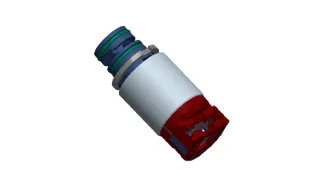
| 1. R position solenoid valve
|
2. Solenoid valve support bracket
|
Description and operation
| Description |
| • |
R position solenoid valve is ON/OFF type. |
| • |
When TCM supplies current to solenoid valve, the solenoid valve operates and controls the R range. |
Solenoid Valve Operation Table
|
|
ON/OFF |
|
(R) |
|
|
P |
|
|
N |
|
|
1 |
|
|
2 |
|
|
3 |
|
|
4 |
|
|
5 |
|
|
6 |
|
|
7 |
|
|
8 |
|
|
REV |
● |
Schematic diagrams
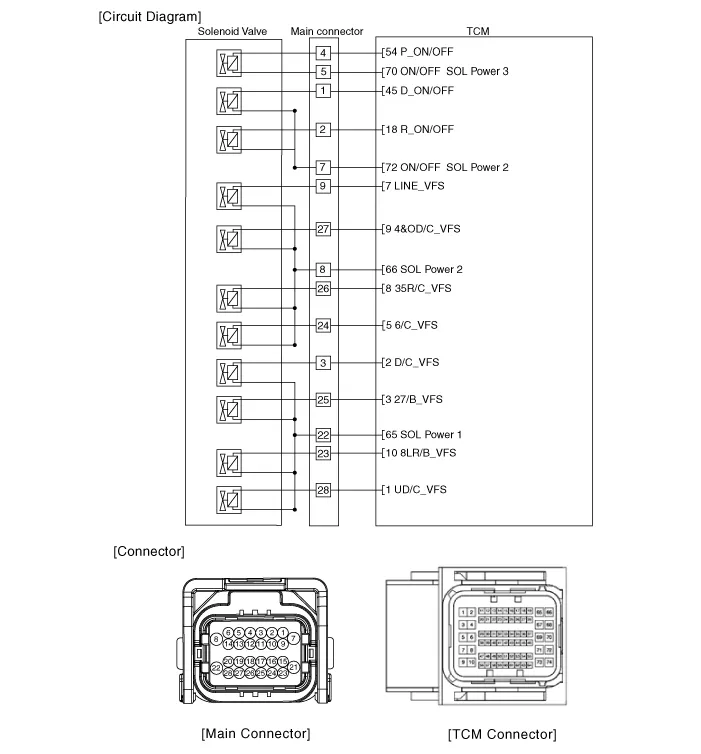
| Circuit Diagram |
Repair procedures
| Inspection |
| 1. |
Switch "OFF" ignition |
| 2. |
Disconnect the main connector (A).
|

| 3. |
Measure the resistance between power terminal (7) and signal terminal (2).
|
| Removal |
|

| 1. |
Remove the under cover. (Refer to Engine Mechanical System - "Engine Room Under Cover"). |
| 2. |
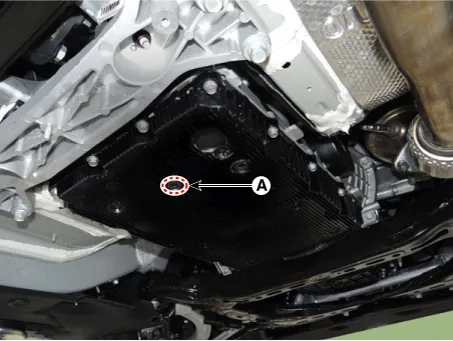
Remove the ATF drain plug (A), allow the fluid to drain out and then reinstall the drain plug.
|

| 3. |
Disconnect the main connector (A).
|
| 4. |
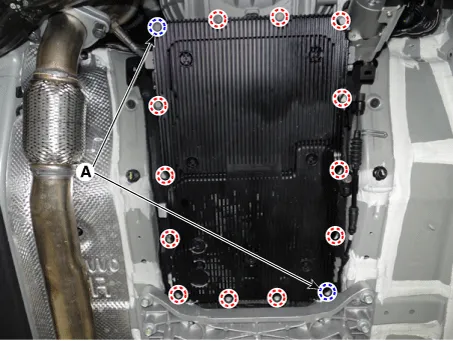
Remove the valve body cover.
|
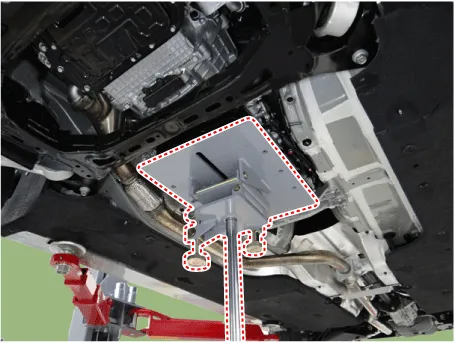
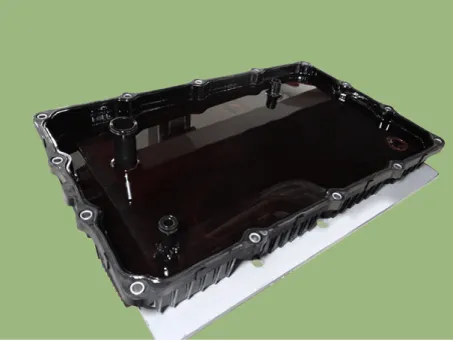
| 5. |
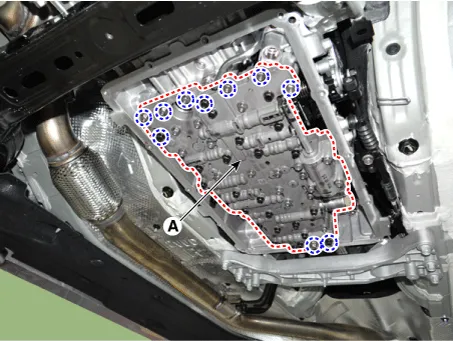
Remove the valve body assembly (A) after loosening the bolts.
|
| 6. |
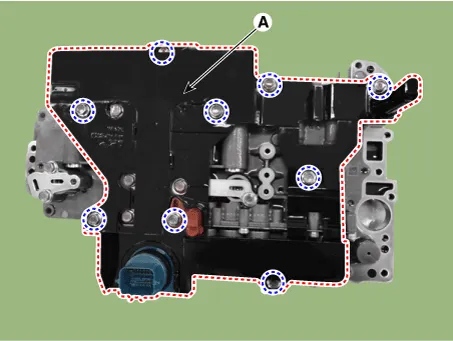
Remove the E-module (A) after loosening the bolts.
|
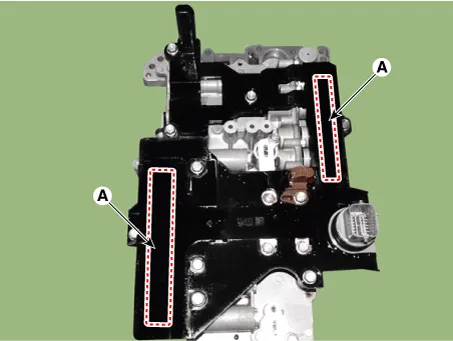
| 7. |
Remove the solenoid valve support bracket (A).
|
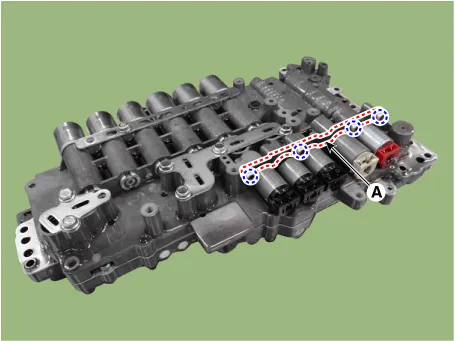
| 8. |
Remove the R position solenoid valve (A).
|
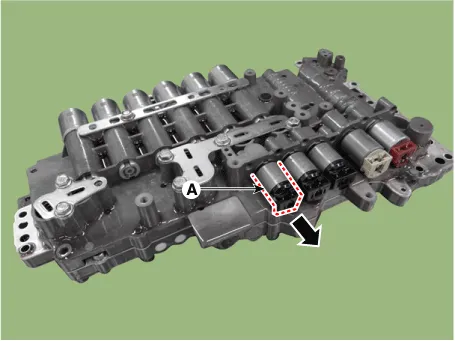
| Installation |
| 1. |
Install in the reverse order of removal.
|
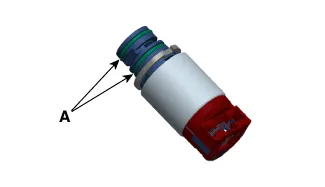
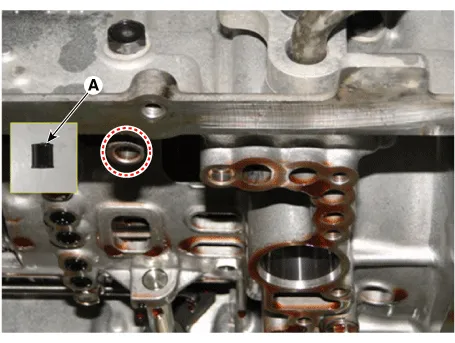
| 2. |
Perform the procedures below after installing.
|


Other information:
Kia Stinger (CK) 2018-2023 Service Manual: Audio Front Monitor
Components and components location Components Repair procedures Removal • When removing with a flat-tip screwdriver or remover, wrap protective tape around the tools to prevent damage to components. • When removing the interior trim pieces, use a plastic panel removal tool not to damage the surface.Description and operation Description The photo sensor is located at the center of the defrost nozzles. The photo sensor contains a photovoltaic (sensitive to sunlight) diode. The solar radiation received by its light receiving portion, generates an electromotive force in proportion to the amount of radiation received which is then transferred to the automatic temperature control module so that the solar radiation compensation can be performed.Categories
- Manuals Home
- Kia Stinger Owners Manual
- Kia Stinger Service Manual
- New on site
- Most important about car
