
Kia Stinger CK: Rear Seat / Rear Seat Assembly
Components and components location
| Component Location |
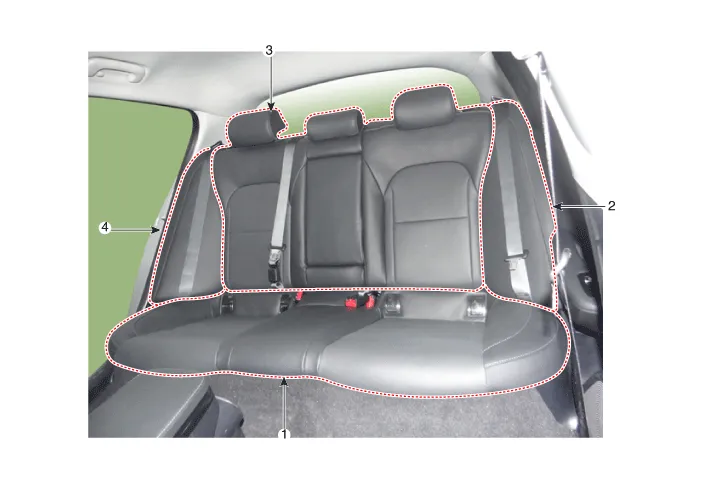
| 1. Rear seat cushion assembly
2. Rear back side seat assembly [LH] |
3. Rear seat back assembly
4. Rear back side seat assembly [RH] |
Repair procedures
| Replacement |
Put on gloves to protect your hands. |

|

| 1. |
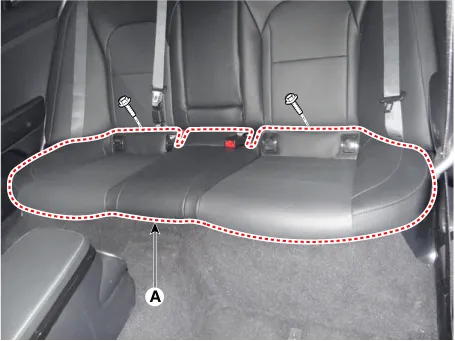
Separate the rear seat cushion assembly (A).
|
| 2. |
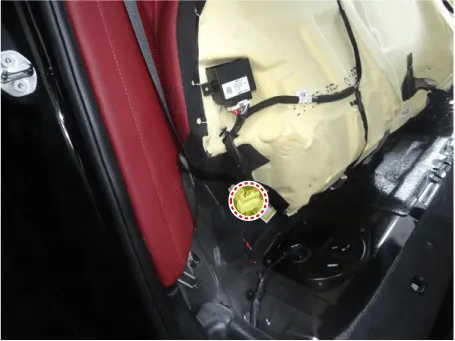
Remove the rear seat cushion assembly after disconnecting the rear seat heater connector (A).
|
| 3. |
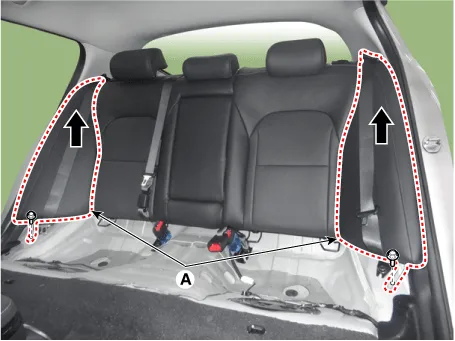
Remove the rear back side seat (A) by pulling it up after loosening the mounting bolts.
|
| 4. |
Disconnect the rear center seat belt (A) after pressing the groove in the direction of the arrow.
|

| 5. |
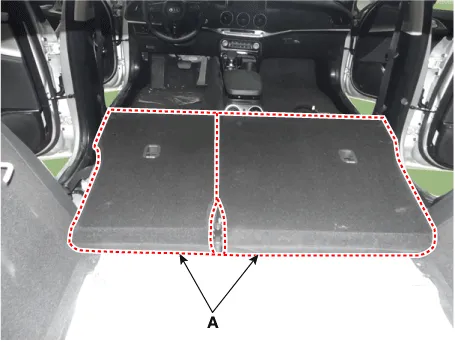
Fold the rear seat back assembly (A).
|
| 6. |
Open the hinge bracket cap (A) after loosening the mounting bolt.
|

| 7. |
Remove the rear seat back assembly (A).
|
| 8. |
Install in the reverse order of removal.
|


Other information:
Severe weather conditions in the winter result in greater wear and other problems. To minimize the problems of winter driving, you should follow these suggestions: WARNING - Driving with summer tires Summer tires are equipped to provide the best driving performance on dry roads, varying according to specification. Do not use summer tires at temperatures below 7°C (45°F) or when driving on snow or ice.Description and operation Description Electric E-CVVT system is electric continuous variable valve timing system. It is located on the intake camshaft of the engine and uses motor rotation to control the rotation angle of camshaft relative to the rotation of crankshaft regardless of engine pressure. E-CVVT controls the DC motor current (duty signal) to more closely control the system compared to the previous pressure type, to increase reaction speed of cam, to improve startability, and to reduce the emission of exhaust gas.Categories
- Manuals Home
- Kia Stinger Owners Manual
- Kia Stinger Service Manual
- New on site
- Most important about car
