
Kia Stinger CK: Smart Cruise Control (Stop & Go) System / Smart Cruise Control (Stop & Go) (SCC) ECU
Description and operation
| Description |
The smart cruise control unit is installed on the front right-hand side of the chassis. A radar sensor is embedded in the front section of the unit. This sensor detects vehicles and objects in front of the vehicle. The radar sensor can detect up to 64 objects ahead of the vehicle. The alarm goes off when the vehicle deviates from the horizontal and vertical alignment reference points during operation. This sensor communicates with the dashboard, warning buzzer, smart cruise control switch, Electronic Stability Program (ESP), ECM, and TCM via CAN communication. The sensor controls vehicle speed through CAN communication between the Electronic Stability Program (ESP) system and the ECM and TCM.
Schematic diagrams
| Schematic Diagrams |
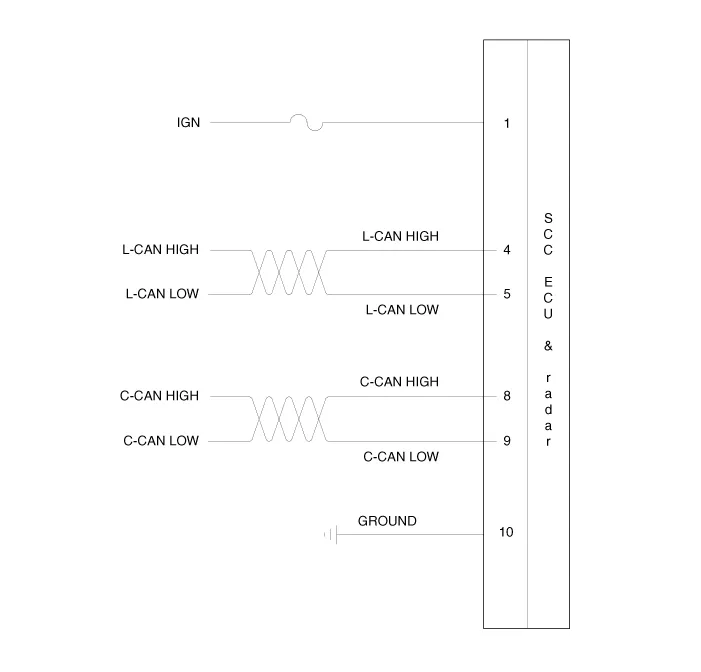
| Terminal function |
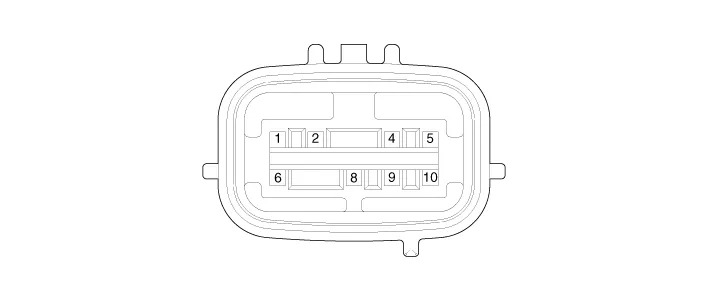
|
Pin No |
Terminal function |
|
1 |
IGN |
|
2 |
- |
|
3 |
- |
|
4 |
L-CAN HIGH |
|
5 |
L-CAN LOW |
|
6 |
- |
|
7 |
- |
|
8 |
C-CAN HIGH |
|
9 |
C-CAN LOW |
|
10 |
GROUND |
Repair procedures
| Removal |
| 1. |
Turn ignition switch OFF and disconnect the negative (-) battery cable. |
| 2. |
Remover the front bumbper assembly. (Refer to Body - "Front bumper assembly") |
| 3. |
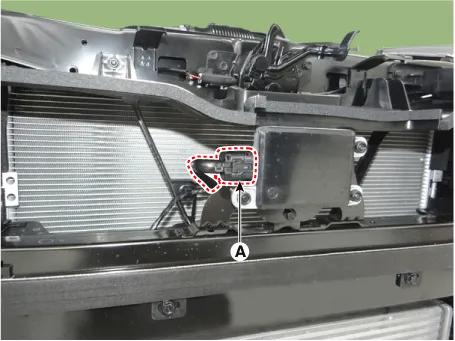
Disconnect the front radar connector (A).
|
| 4. |
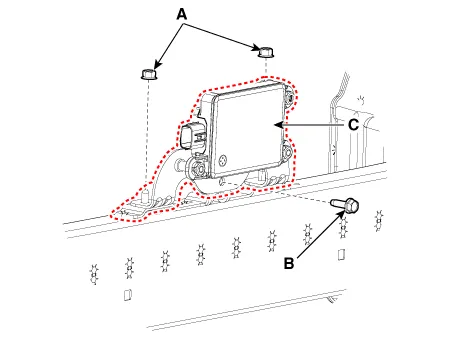
Loosen the front radar nuts (A) and bolt (B) and then remove the front radar (C).
|
| Installation |
| 1. |
Install in the reverse order of removal. |
| 2. |
Perform SCC variant coding.
|
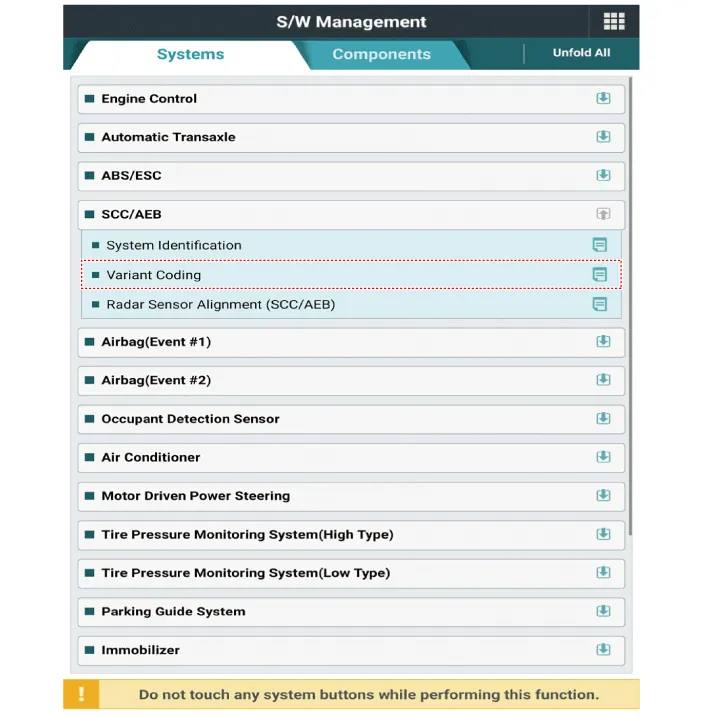
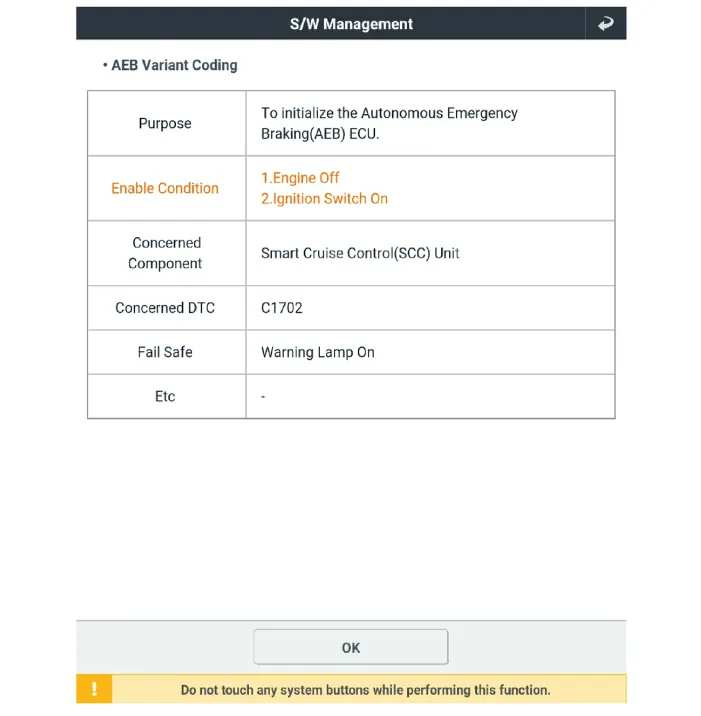
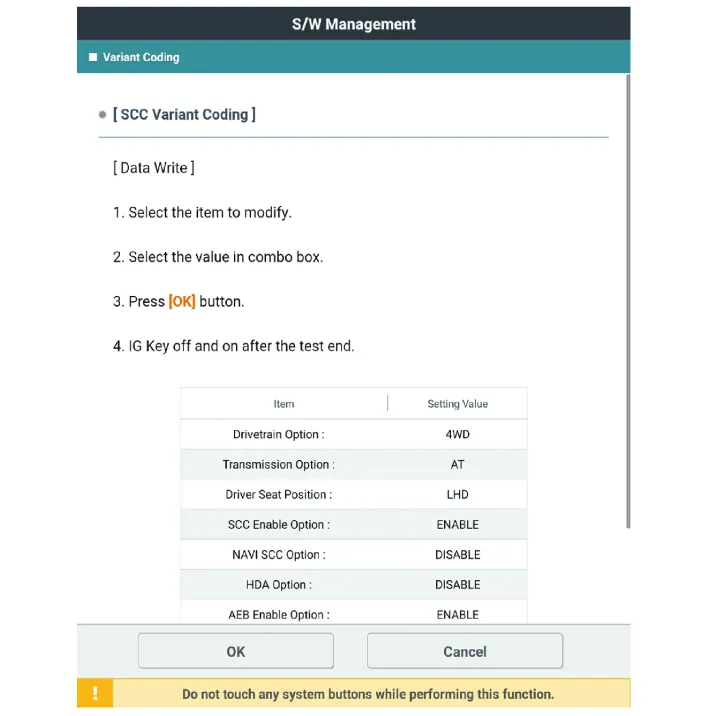
| 3. |
Perform the smart cuise control system (Stop & Go) unit radar alignment. (Refer to Engine Electrical System - "Smart cruise control (Stop & Go) unit-radar") |


Other information:
Kia Stinger (CK) 2018-2023 Service Manual: Limitation of the system
The FCA system is designed to monitor the vehicle ahead or a pedestrian on the roadway through radar signals and camera recognition to warn the driver that a collision is imminent, and if necessary, apply emergency braking. In certain situations, the radar sensor or the camera may not be able to detect the vehicle or pedestrian ahead. In these cases, the FCA system may not operate.Kia Stinger (CK) 2018-2023 Service Manual: Mechanism Assembly
Repair procedures Replacement Put on gloves to protect your hands. • Use a plastic panel removal tool to remove interior trim pieces without marring the surface.Categories
- Manuals Home
- Kia Stinger Owners Manual
- Kia Stinger Service Manual
- New on site
- Most important about car
