
Kia Stinger CK: Brake System / Stop Lamp Switch
Components and components location
| Components |
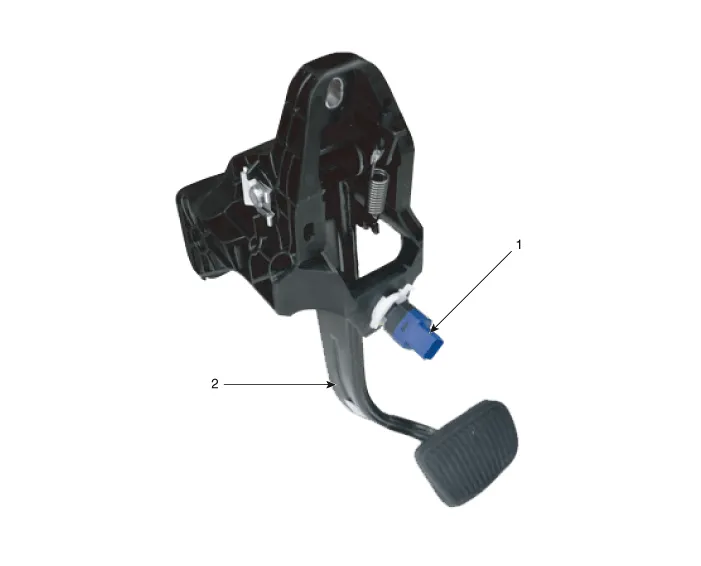
| 1. Brake lamp switch |
2. Brake pedal |
Description and operation
| Operation |
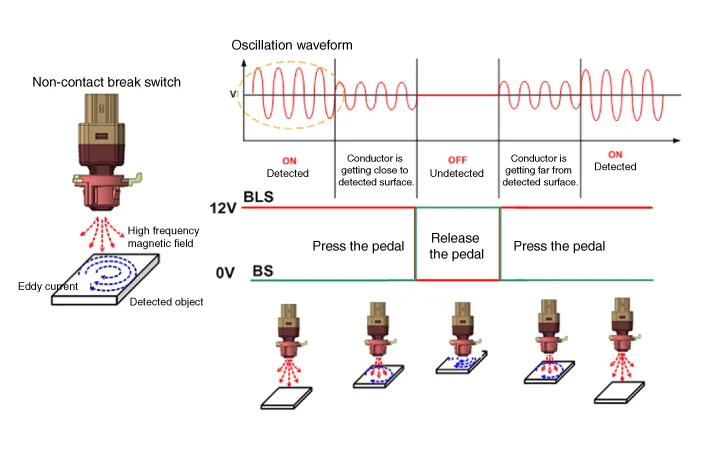
Operation principle of inductive non-contact switch
| 1. |
Use the high frequency magnetic field and the induced current that are generated by oscillation (to approved voltage) of coil in switch. |
| 2. |
The eddy current is generated on surface of metal by self inductance effect if there is metal in high frequency magnetic field. |
| 3. |
The eddy current that is generated attenuates the high frequency magnetic field as much as amount of generated by disturbing the switch's magnetic flux. |
| 4. |
ON-OFF by judging whether high voltage magnetic field is attenuates or not(caluculate the voltage difference by length between metal and coil) |
Schematic diagrams
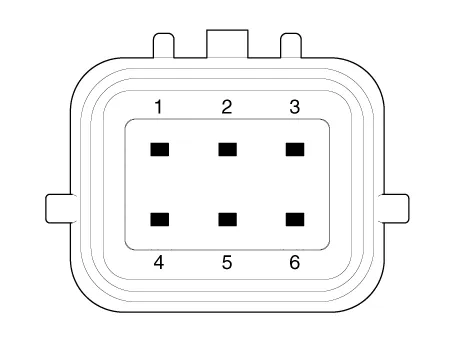
| Terminal function |

|
Pin No |
Description |
|
1 |
IGN1 |
|
2 |
IBU |
|
3 |
- |
|
4 |
B+ |
|
5 |
Stop lmap |
|
6 |
Ground |
Troubleshooting
| Troubleshooting |
| 1. |
Part diagnosis
|
| 2. |
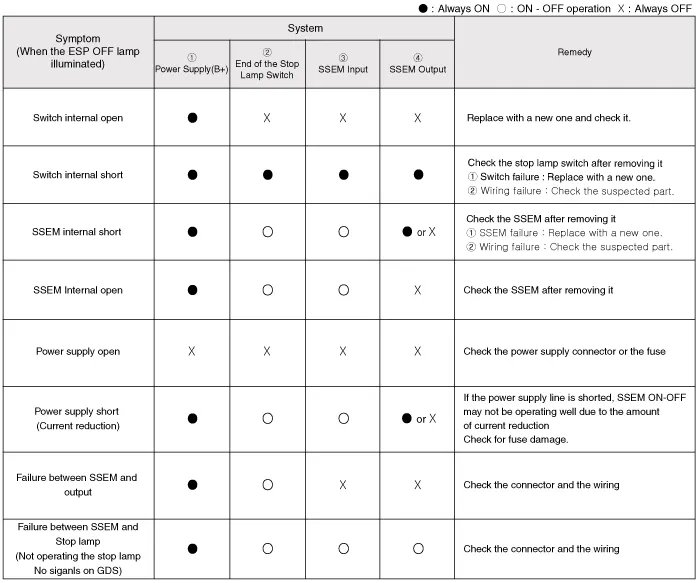
Symptom diagnosis
|
| 3. |
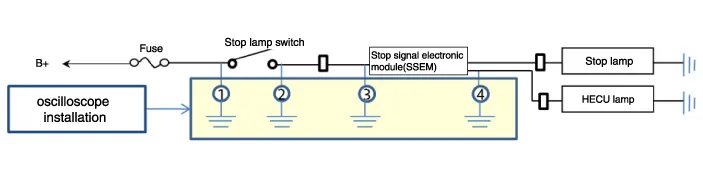
Stop lamp switch system diagnosis
SSEM : Stop Signal Electronic Module |
| 4. |
Refer to DTC guide when the related DTC codes are displayed. |
Repair procedures
| Removal |
| 1. |
Turn ignition switch OFF and disconnect the negative (-) battery cable. |
| 2. |
Remove the crash pad lower panel. (Refer to Body - "Crash Pad Lower Panel") |
| 3. |
Remove the knee airbag. (Refer to Restraint - "Knee airbag (KAB) module") |
| 4. |
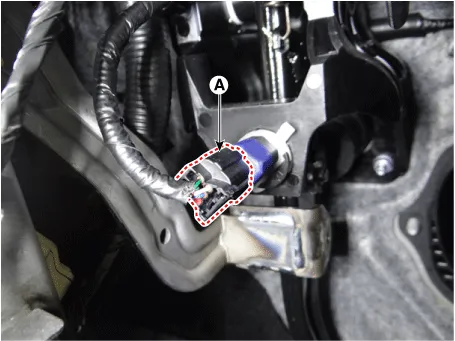
Disconnect the brake lamp switch connector (A).
|
| 5. |
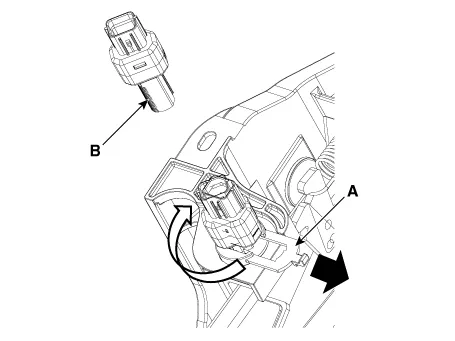
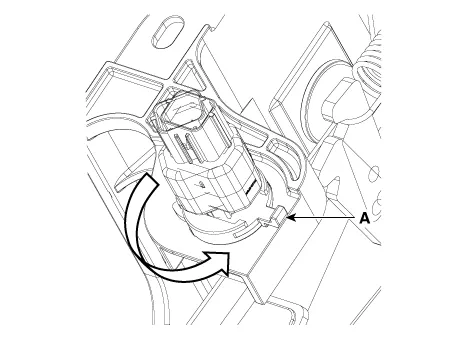
Pull the locking plate (A) as indicated by the arrow and then turn brake switch (B) 45° clockwise and remove it.
|
| 6. |
Inspect a removed stop lamp switch along the below procedures.
|
| Installation |
| 1. |
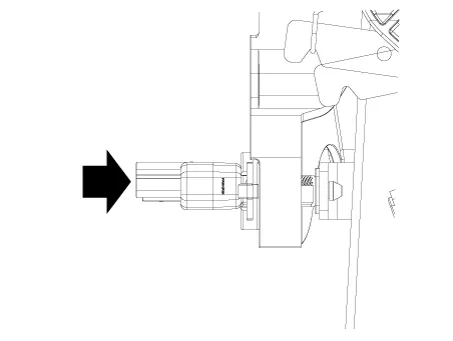
Fix the brake pedal arm and insert fully the brake switch so that the contact part is invisible.
|
| 2. |
After inserting, turn the brake switch 45° counterclockwise, and then assemble locking plate by pushing.
|
| 3. |
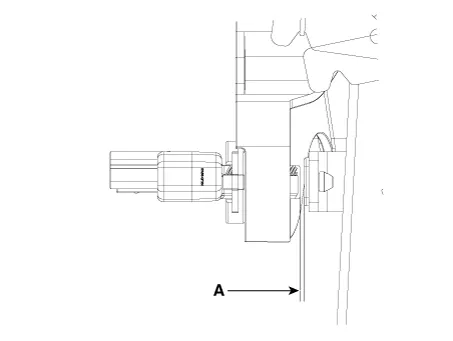
Confirm the gap between stop lamp switch and bracket.
|

| 4. |
Install the stop lamp switch connector (A).
|
| Inspection |
1. Fuse inspection
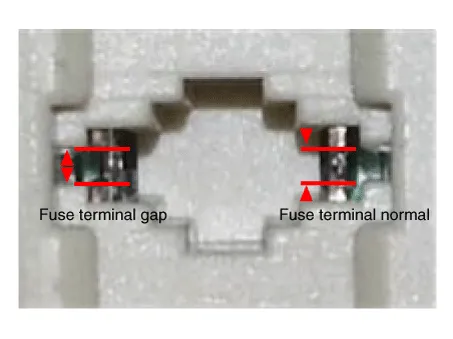
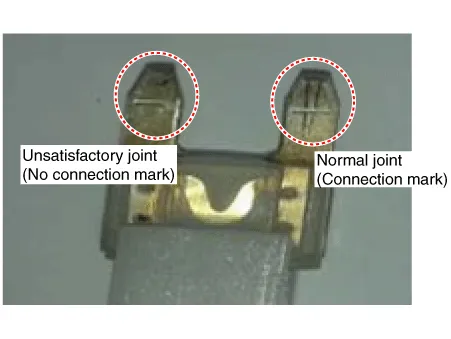
Mount the test fuse to the switch fuse and relay fuse part to confirm a normal joint fit.
2. KDS Data Analysis
| 1. |
Analyze KDS data and check for any abnormality with the stop lamp switch.
|
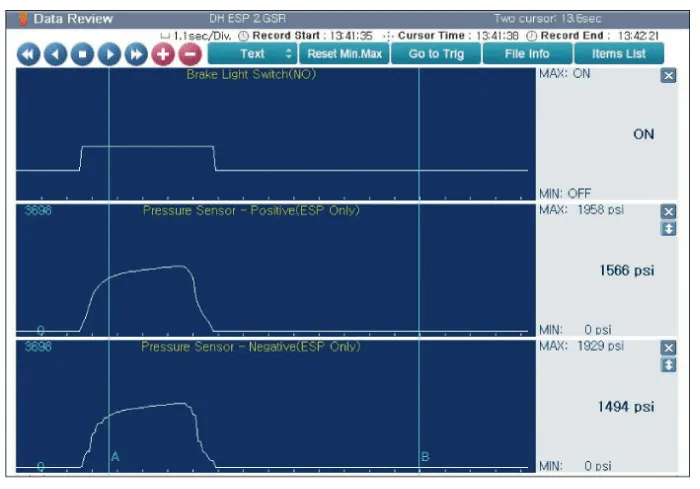
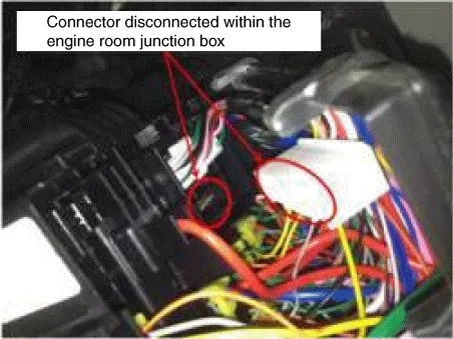
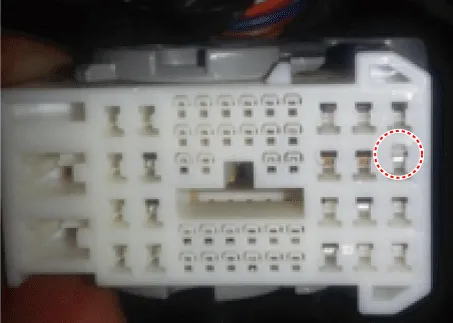
3. Inspection of connector by each part
Check for damage, terminal surge or incomplete connection in each connector.
[Engine room junction box]
[ABS/VDC control module]
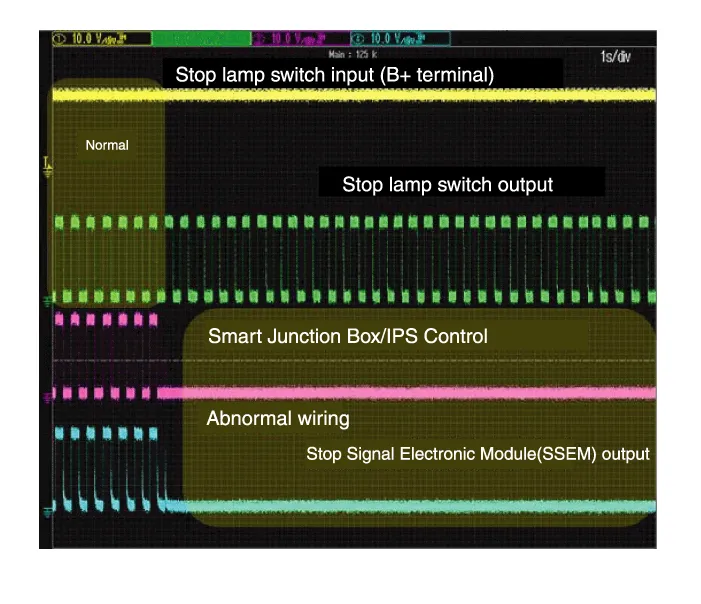
4. Inspect the stop lamp circuit
Connect probe to each terminal wire and confirm oscilloscope waveform.
[Stop lamp switch input/output]

[Oscilloscope waveform screen]


Other information:
Kia Stinger (CK) 2018-2023 Service Manual: Seat Belt Buckle Switch (BS)
Description and operation Description The SRSCM shall monitor the status of the driver and front passenger seat belt buckle. The SRSCM provides one pin each for the driver and front passenger seat belt buckle status input. The seat belt buckle circuit operates from internal boost voltage supplied by the SRSCM, and uses chassis ground for the signal return.Kia Stinger (CK) 2018-2023 Service Manual: Explanation of scheduled maintenance items
Engine oil and filter The engine oil and filter should be changed at the intervals specified in the maintenance schedule. If the vehicle is being driven in severe conditions, more frequent oil and filter changes are required. Drive belts Inspect all drive belts for evidence of cuts, cracks, excessive wear or oil saturation and replace if necessary.Categories
- Manuals Home
- Kia Stinger Owners Manual
- Kia Stinger Service Manual
- New on site
- Most important about car
