Kia Stinger CK: Rear Suspension System / Trailing Arm

Repair procedures
Removal
1.

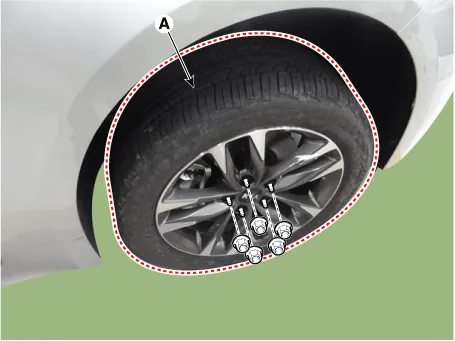
Remove wheel nuts, wheel and tire (A) from hub.

Tightening torque:

107.9 - 127.5 N·m (11.0 - 13.0 kgf·m, 79.6 - 94.0 lb·ft)


Be careful not to damage the wheel bolts when removing the wheel and tire (A).

2.

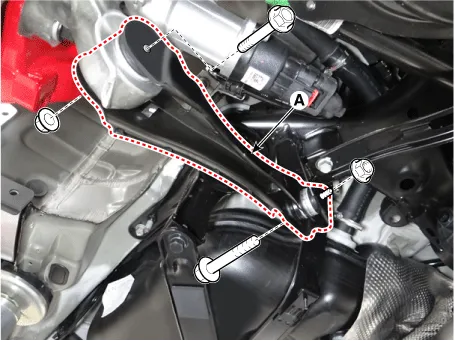
Loosen the trailing arm bolt & nut and then remove the trailing arm.

Tightening torque:

117.7 - 132.4 N·m (12.0 - 13.5 kgf·m, 86.8 - 97.6 lb·ft)


Up the transmission jack under the lower arm in order to remove the rear lower arm in no-load condition.

3.

Install in the reverse order of removal.


Install at the empty vehicle height when it is assembled.

Inspection
1.

Check the bushing for wear and deterioration.

2.

Check the trailing arm deformation.

3.

Check the all bolts.

Other information:

Kia Stinger (CK) 2018-2023 Service Manual: Vehicle recognition

Some vehicles ahead in your lane cannot be recognized by the sensor as follows: - Narrow vehicles such as motorcycles or bicycles - Vehicles offset to one side - Slow-moving vehicles or suddendecelerating vehicles - Stopped vehicles - Vehicles with small rear profiles such as trailers with no loads A vehicle ahead cannot be recognized correctly by the sensor if any of following occurs: - When the vehicle is pointing upwards due to overloading in the trunk or luggage area.

Kia Stinger (CK) 2018-2023 Service Manual: ESP(Electronic Stability Program) System

Components and components location Components Location 1. HECU module 2. Front wheel speed sensor (2WD) 3. Front wheel speed sensor (AWD) 4. Rear wheel speed sensor Description and operation Description of ESP Electronic Stability Program (ESP) recognizes critical driving conditions, such as panic reactions in dangerous situations, and stabilizes the vehicle by wheel-individual braking and engine control intervention.

Categories

 
Copyright © 2026 www.kstinger.com 0.0069