
Kia Stinger CK: Hydraulic System / R Position Solenoid Valve (ON/OFF)
Specifications
| Specifications |
|
Item |
Specification |
|
Control type |
ON/OFF |
|
Control pressure kpa (kgf/cm², psi) |
539.36 (5.5, 78.23) |
|
Current (mA) |
0 - 600 |
|
Coil resistance (Ω) |
10.5 ± 0.5 |
Components and components location
| Components Location |

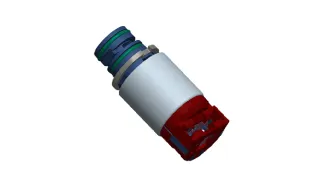
| 1. R position solenoid valve
|
2. Solenoid valve support bracket
|
Description and operation
| Description |
| • |
R position solenoid valve is ON/OFF type. |
| • |
When TCM supplies current to solenoid valve, the solenoid valve operates and controls the R range. |
Solenoid Valve Operation Table
|
|
ON/OFF |
|
(R) |
|
|
P |
|
|
N |
|
|
1 |
|
|
2 |
|
|
3 |
|
|
4 |
|
|
5 |
|
|
6 |
|
|
7 |
|
|
8 |
|
|
REV |
● |
Schematic diagrams
| Circuit Diagram |
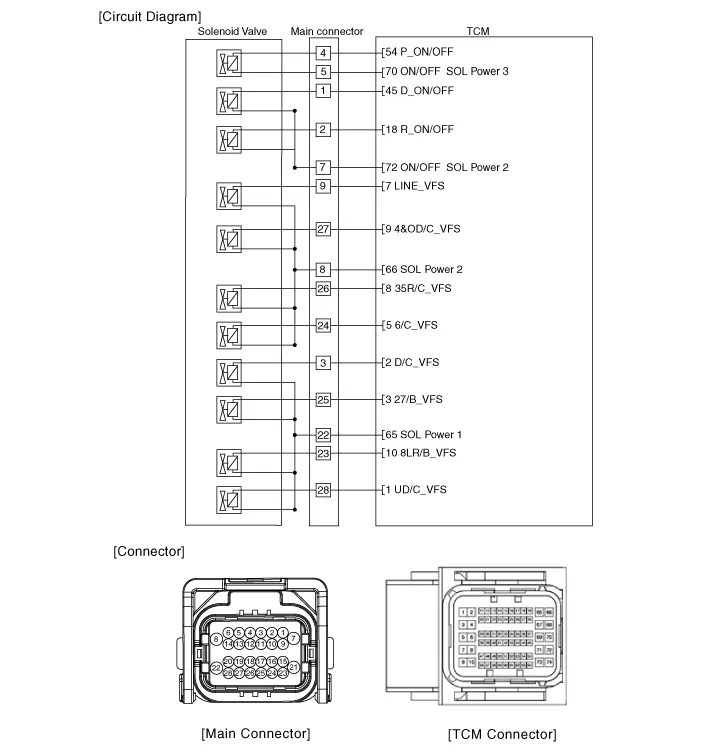
Repair procedures
| Inspection |
| 1. |
Switch "OFF" ignition |
| 2. |
Disconnect the main connector (A).
|

| 3. |
Measure the resistance between power terminal (7) and signal terminal (2).
|
| Removal |
|

| 1. |
Remove the under cover. (Refer to Engine Mechanical System - "Engine Room Under Cover"). |
| 2. |
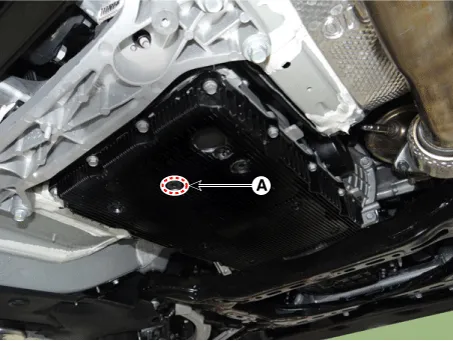
Remove the ATF drain plug (A), allow the fluid to drain out and then reinstall the drain plug.
|

| 3. |
Disconnect the main connector (A).
|
| 4. |
Remove the valve body cover.
|
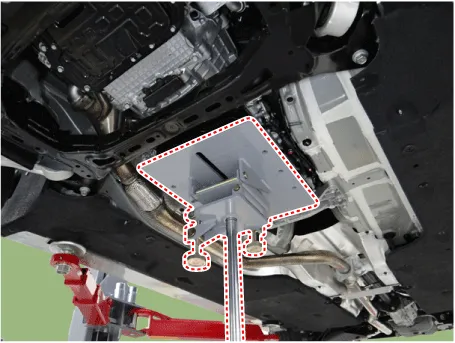
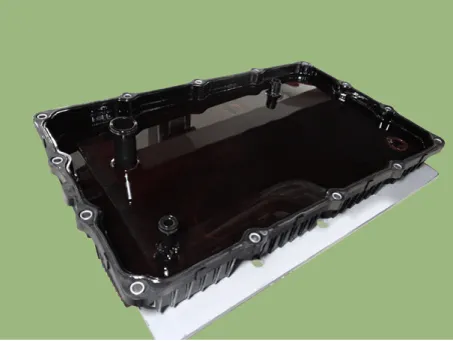
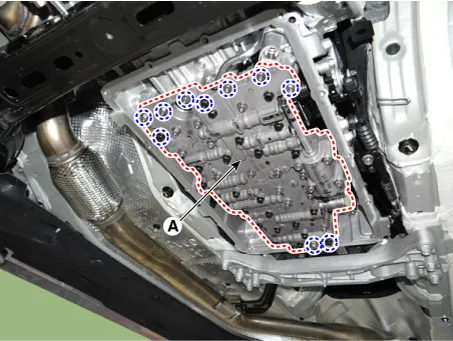
| 5. |
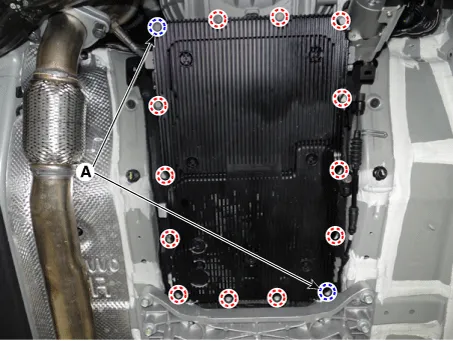
Remove the valve body assembly (A) after loosening the bolts.
|
| 6. |
Remove the E-module (A) after loosening the bolts.
|
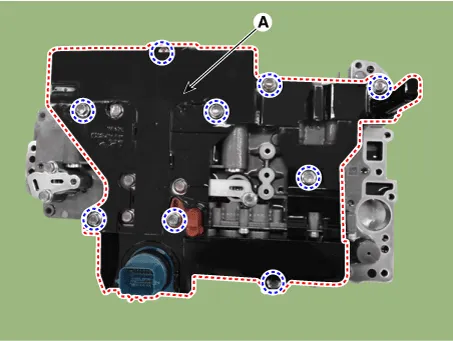
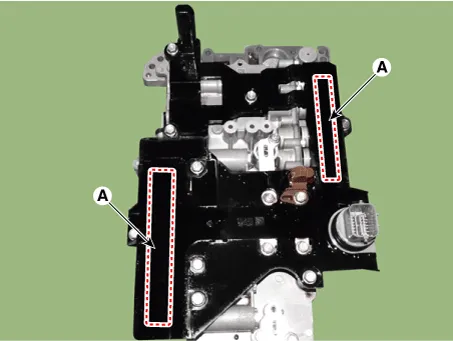
| 7. |
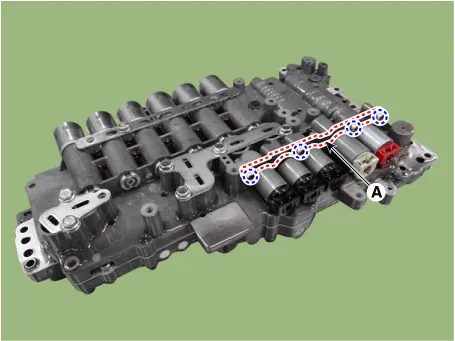
Remove the solenoid valve support bracket (A).
|
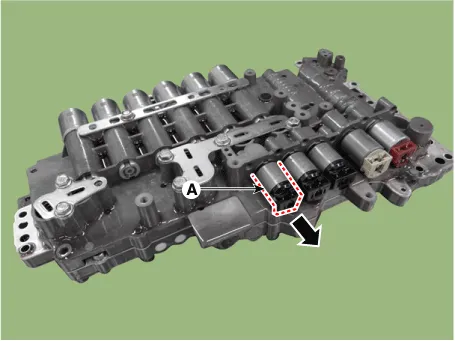
| 8. |
Remove the R position solenoid valve (A).
|
| Installation |
| 1. |
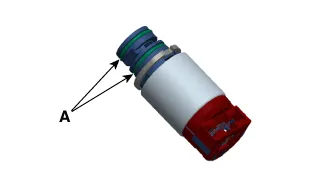
Install in the reverse order of removal.
|
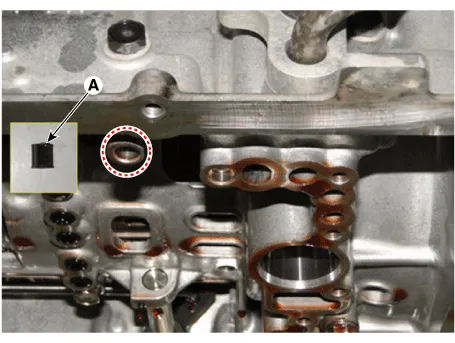
| 2. |
Perform the procedures below after installing.
|


Other information:
Kia Stinger (CK) 2018-2023 Service Manual: Engine Control Module (ECM)
Schematic diagrams ECM Terminal And Input/Output signal ECM Terminal Function Connector [A] Terminal Description Connected to 1 - 2 - 3 - 4 - 5 Electric Waste Gate Actuator (EWGA) DC Motor output (-) Electric WasKia Stinger (CK) 2018-2023 Service Manual: CVVT (Continuous Variable Valve Timing) System
Description and operation Description Continuous Variable Valve Timing (CVVT) system advances or retards the valve timing of the intake and exhaust valve in accordance with the ECM control signal which is calculated by the engine speed and load. By controlling CVVT, the valve over-lap or under-lap occurs, which makes better fuel economy and reduces exhaust gases (NOx, HC) and improves engine performance through reduction of pumping loss, internal EGR effect, improvement of combustion stability, improvement of volumetric efficiency, and increase of expansion work.Categories
- Manuals Home
- Kia Stinger Owners Manual
- Kia Stinger Service Manual
- New on site
- Most important about car
