
Kia Stinger CK: Automatic Transmission Control System / Shift Lever
Components and components location
| Components |
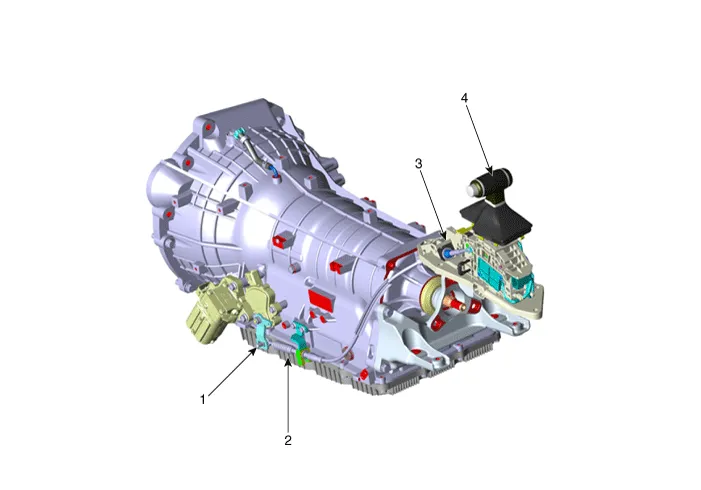
| 1. Manual control lever 2. Shift cable |
3. Shift lever assembly 4. Knob |
Repair procedures
| Removal |
| 1. |
Shift the gear to "N". |
| 2. |
Remove the knob (A) by pulling it in the direction of arrow after removing the boots from the console upper cover.
|

| 3. |
Remove the floor console assembly. (Refer to Body - “Floor Console Assembly”) |
| 4. |
Disconnect the shift lever main connector. |
| 5. |
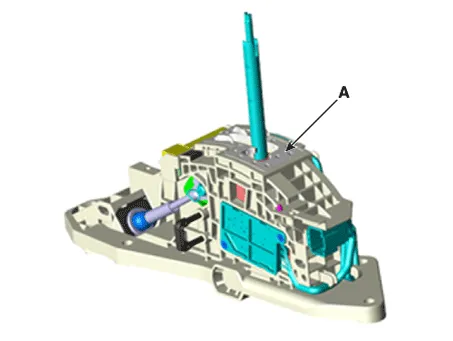
Remove the shift lever (A) after loosening the mounting bolts.
|
| 6. |
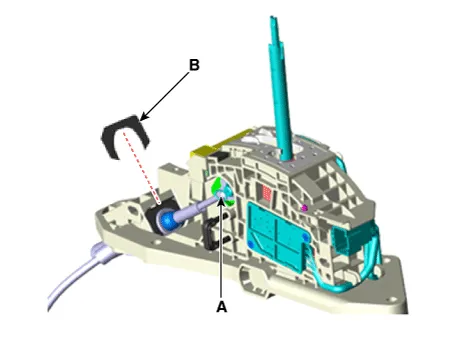
Remove the snap pin (A) and shift cable fixing clip (B).
|
| 7. |
Remove the shift cable from the shift lever after loosening the screws (A).
|

| Installation |
| 1. |
Install in the reverse order of removal. |


Other information:
Kia Stinger (CK) 2018-2023 Service Manual: Timing System
Components and components location Components 1. Front oil seal 2. E-CVVT cover plug 3. E-CVVT assembly cover 4. Timing chain cover 5. Timing chain tensioner 6. Timing chain tensioner arm 7. Timing chain 8. Timing chain guide 9. Timing chain sprocket 10. Balance shaft chain tensioner 11.Kia Stinger (CK) 2018-2023 Service Manual: Disc Brakes and Pads
Repair procedures Inspection Check the pads for excessive wear, discs for run out and wear, and calipers for fluid leakage. Front Brake Front brake disc thickness check 1. Check the brake pads for wear and fade. 2. Check the brake disc for damage and cracks. 3.Categories
- Manuals Home
- Kia Stinger Owners Manual
- Kia Stinger Service Manual
- New on site
- Most important about car
