
Kia Stinger CK: Hydraulic System / Oil Cooler
Components and components location
| Components |

| 1. Oil cooler tube 2. Oil cooler pipe |
3. Oil cooler valve 4. Oil cooler |
Repair procedures
| Replacement |
Oil cooler
| 1. |
Remove the front bumper. (Refer to Body - "Front Bumper Aseembly") |
| 2. |
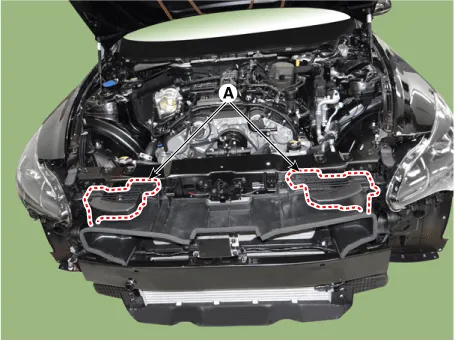
Remove the air intake shield (A).
|
| 3. |
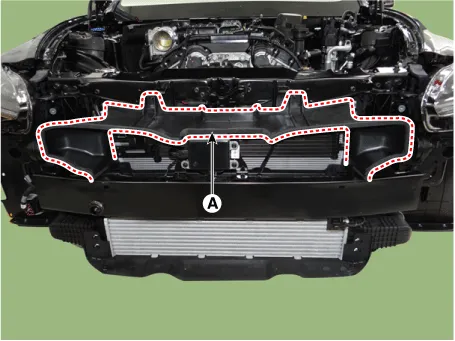
Remove the air guard (A) by loosening the bolts after separating the wiring fixing clip.
|
| 4. |
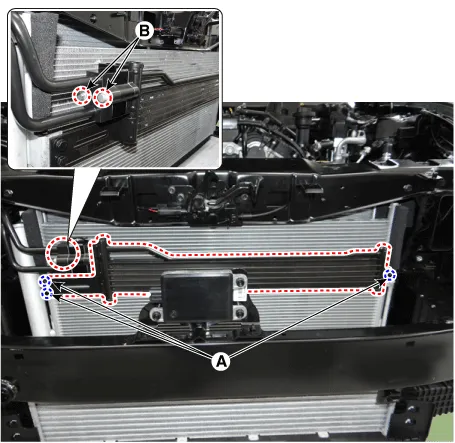
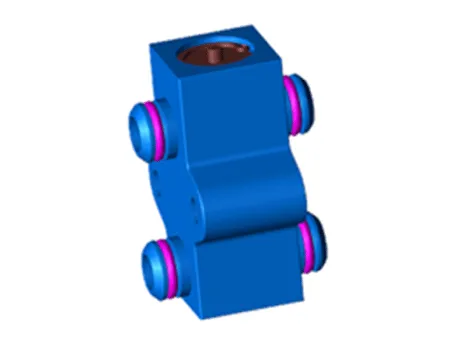
Remove the oil cooler after loosening the bolts (A, B)
|

| 5. |
Install in the reverse order of removal. |
| 6. |
Refill the automatic transmission with fluid. (Refer to Hydraulic System - "Fluid") |
Oil cooler valve
| 1. |
Remove the front bumper. (Refer to Body - "Front Bumper Aseembly") |
| 2. |
Remove the air intake shield (A).
|
| 3. |
Remove the air guard (A) by loosening the bolts after separating the wiring fixing clip.
|
| 4. |
Separat the oil cooler tube (A)and loosen the bolt (B).
|
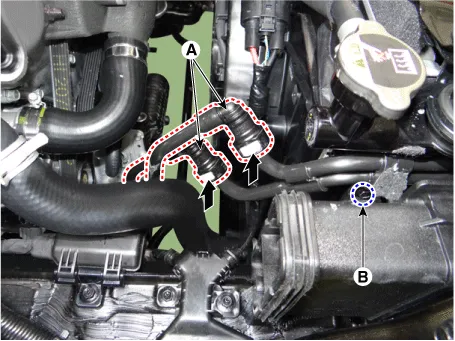
| 5. |
Remove the oil cooler valve (B) after loosening the bolts (A).
|
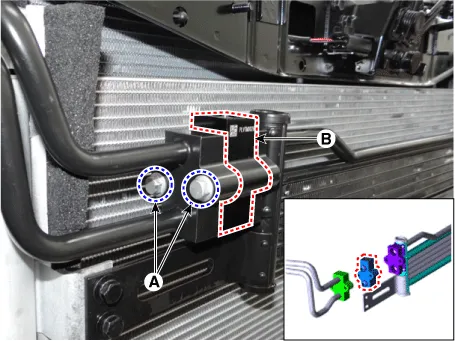
| 6. |
Install in the reverse order of removal. |
| 7. |
Refill the automatic transmission with fluid. (Refer to Hydraulic System - "Fluid") |
Oil cooler pipe
| 1. |
Remove the front bumper. (Refer to Body - "Front Bumper Aseembly") |
| 2. |
Remove the air intake shield (A).
|
| 3. |
Remove the air guard (A) by loosening the bolts after separating the wiring fixing clip.
|
| 4. |
Separat the oil cooler tube (A)and loosen the bolt (B).
|
| 5. |
Loosen the condenser mounting bolt (A).
|
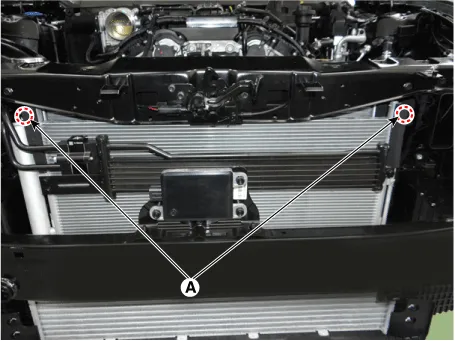
| 6. |
Remove the oil cooler pipe (A) after loosening the bolts.
|
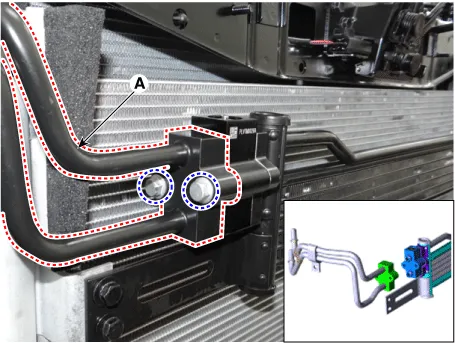
| 7. |
Install in the reverse order of removal. |
| 8. |
Refill the automatic transmission with fluid. (Refer to Hydraulic System - "Fluid") |
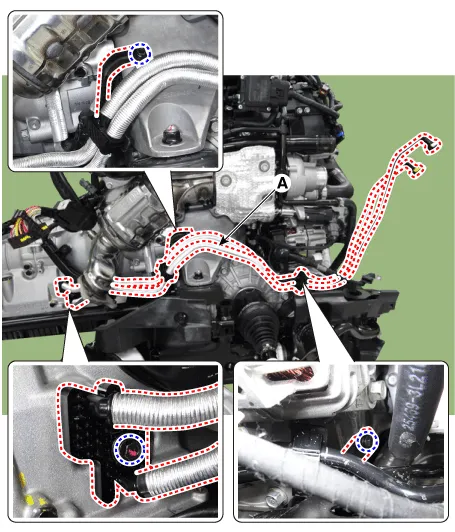
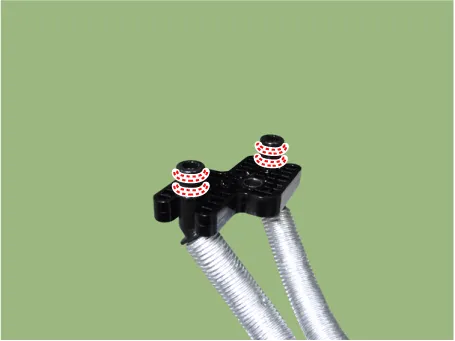
Oil cooler tube
| 1. |
Remove the sub frame. (Refer to Suspension System - "Sub Frame") |
| 2. |
Removethe oil cooler tube (A).
|
| 3. |
Install in the reverse order of removal. |
| 4. |
Refill the automatic transmission with fluid. (Refer to Hydraulic System - "Fluid") |


Other information:
Kia Stinger (CK) 2018-2023 Service Manual: Front Door Module
Components and components location Component Location 1. Front door module Repair procedures Front Door Module Put on gloves to protect your hands. • When prying with a flat-tip screwdriver or using a prying trim tool, wrap protective tap around the tool and related parts to prevent damage.Kia Stinger (CK) 2018-2023 Service Manual: Recommended cold tire inflation pressures
All tire pressures (including the spare) should be checked when the tires are cold. “Cold Tires” means the vehicle has not been driven for at least three hours or driven less than 1.6 km (one mile). Recommended pressures must be maintained for the best ride, top vehicle handling, and minimum tire wear. For recommended inflation pressure refer to “Tire and wheels” in chapter 8.Categories
- Manuals Home
- Kia Stinger Owners Manual
- Kia Stinger Service Manual
- New on site
- Most important about car
