
Kia Stinger CK: Hydraulic System / Line Pressure Control Solenoid Valve (LINE_VFS)
Specifications
| Specifications |
|
Item |
Specification |
|
Control type |
N/L (Normal Low) |
|
Control pressure kpa (kgf/cm², psi) |
0 - 519.75 (0 - 5.3, 0 - 75.38) |
|
Current (mA) |
0 - 850 |
|
Coil resistance (Ω) |
5.1 ± 0.3 |
Components and components location
| Components Location |
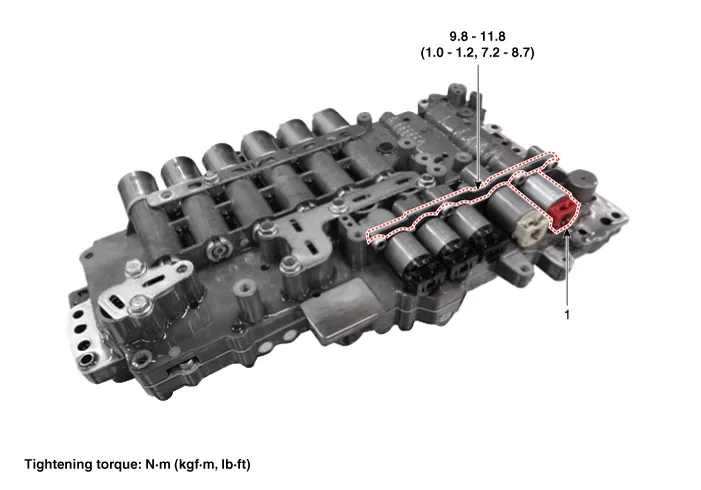
| 1. Line pressure control solenoid
valve |
2. Solenoid valve support bracket
|
Description and operation
| Description |
| • |
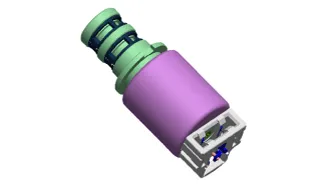
Line pressure solenoid valve is a Variable Force Solenoid (VFS) type. |
| • |
When TCM supplies variable current to solenoid valve, hydraulic pressure is controlled indirectly by solenoid valve. |
Schematic diagrams
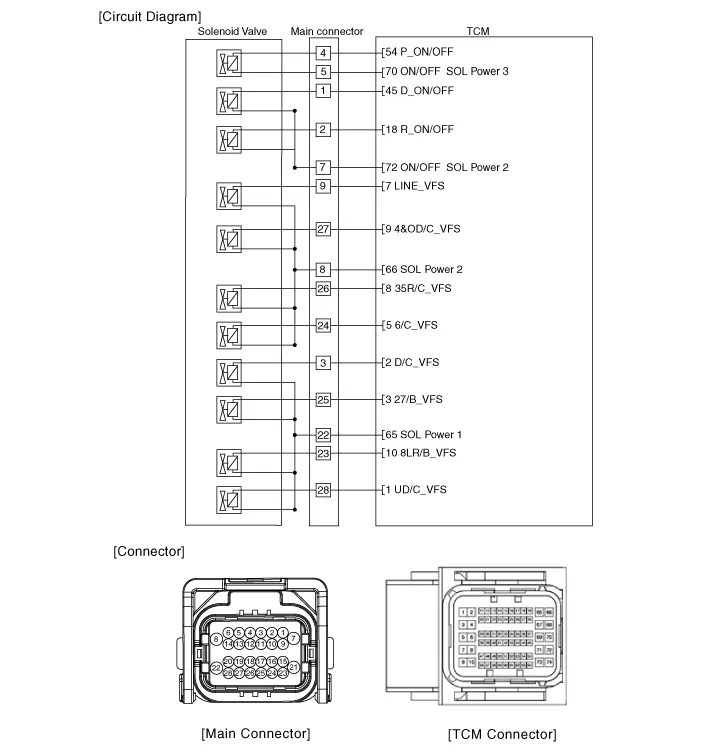
| Circuit Diagram |
Repair procedures
| Inspection |
| 1. |
Switch "OFF" ignition |
| 2. |
Disconnect the main connector (A).
|

| 3. |
Measure the resistance between power terminal (8) and signal terminal (9).
|
| Removal |
|

| 1. |
Remove the under cover. (Refer to Engine Mechanical System - "Engine Room Under Cover"). |
| 2. |
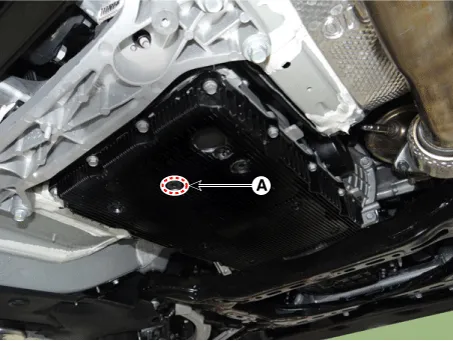
Remove the ATF drain plug (A), allow the fluid to drain out and then reinstall the drain plug.
|

| 3. |
Disconnect the main connector (A).
|
| 4. |
Remove the valve body cover.
|
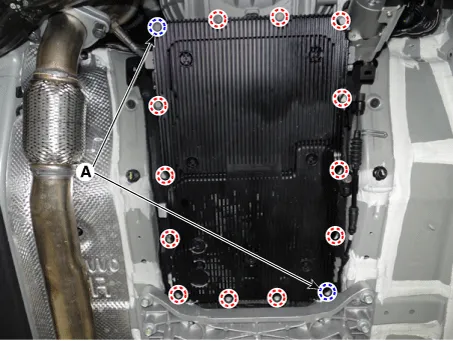
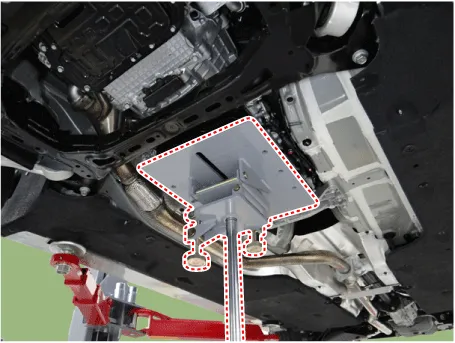
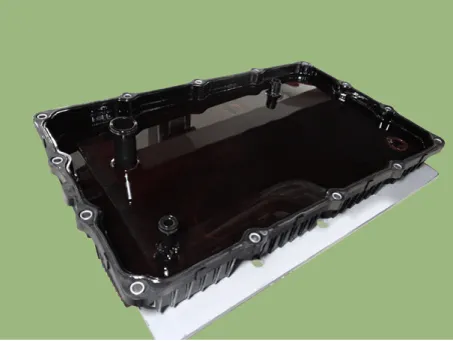
| 5. |
Remove the valve body assembly (A) after loosening the bolts.
|
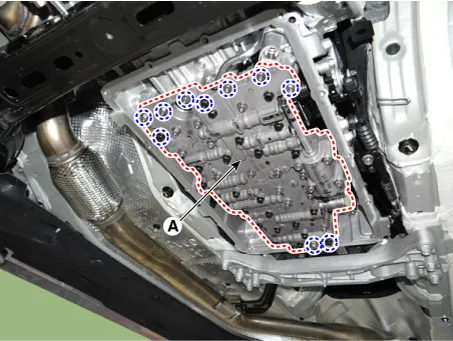
| 6. |
Remove the E-module (A) after loosening the bolts.
|
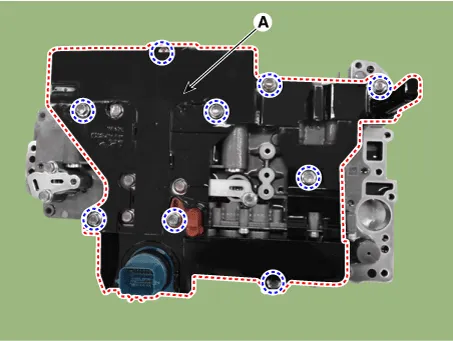
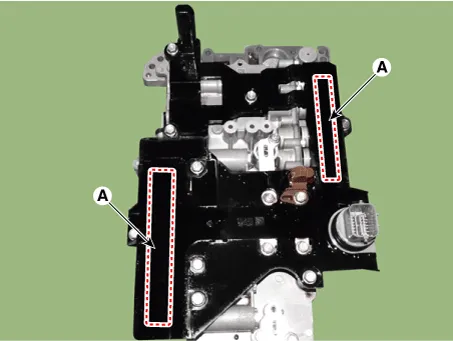
| 7. |
Remove the solenoid valve support bracket (A).
|
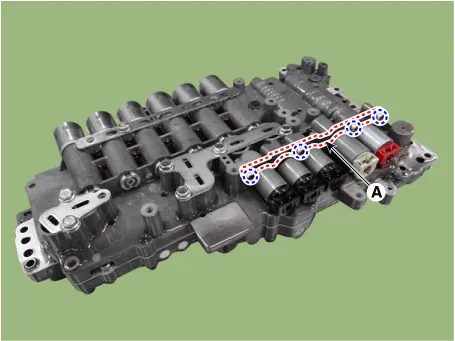
| 8. |
Remove the line pressure control solenoid valve (A).
|
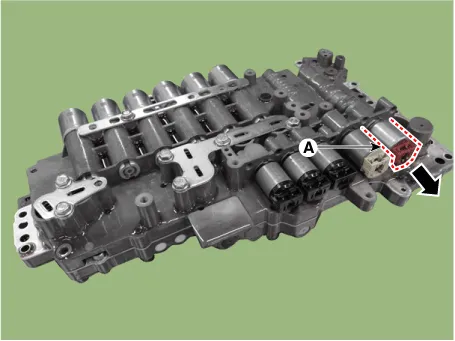
| Installation |
| 1. |
Install in the reverse order of removal.
|
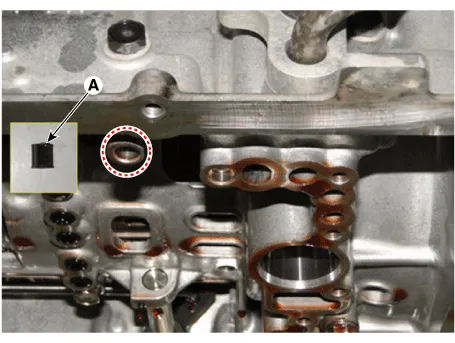
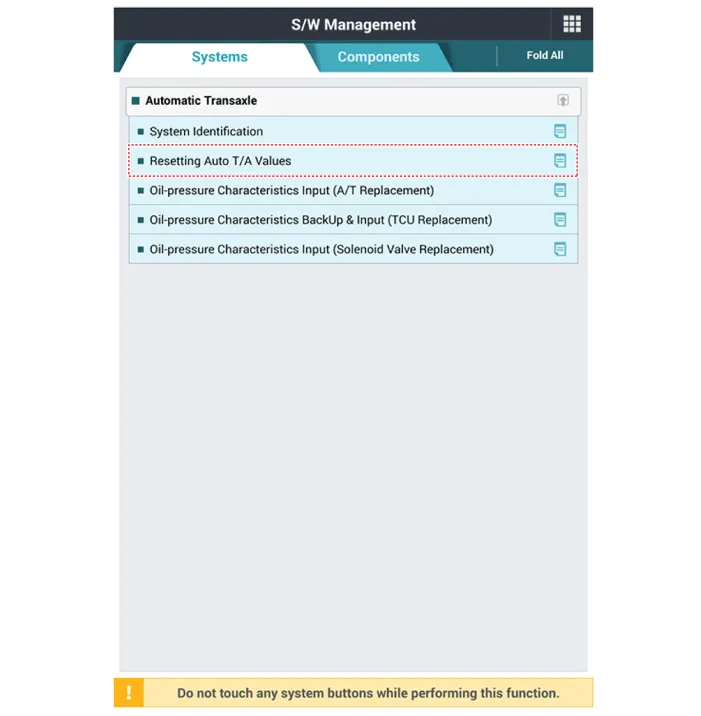
| 2. |
Perform the procedures below after installing.
|


Other information:
Kia Stinger (CK) 2018-2023 Service Manual: Power Door Lock Switch
Repair procedures Inspection Diagnosis With KDS 1. The body electrical system can be quickly diagnosed for failed parts by using vehicle diagnostic system (KDS). The diagnostic system (KDS) provides the following information. (1) Self diagnosis : Checks and displays the failure code (DTC) (2) Current data : Checks the system input/output data state (3) Actuation test : Checks the system operating condition (4) Additional function : Other controls such as the system option and zero point 2.Kia Stinger (CK) 2018-2023 Service Manual: Piston and Connecting Rod
Repair procedures Disassembly In case of removing the high pressure fuel pump, high pressure fuel pipe, delivery pipe, and injector, there may be injury caused by leakage of the high pressure fuel. So don’t do any repair work right after engine stops. • Use fender covers to avoid damaging painted surfaces.Categories
- Manuals Home
- Kia Stinger Owners Manual
- Kia Stinger Service Manual
- New on site
- Most important about car
