
Kia Stinger CK: Front Seat Belt / Rear Door
Contents:
- Rear Door Trim
- Rear Door Inside Handle
- Rear Door Window Glass
- Rear Door Module
- Rear Door Outside Handle
- Rear Door Belt Outside Weatherstrip
- Rear Door Belt Inside Weatherstrip
- Rear Door Side Weatherstrip
- Rear Door Latch
Components and components location
| Components |
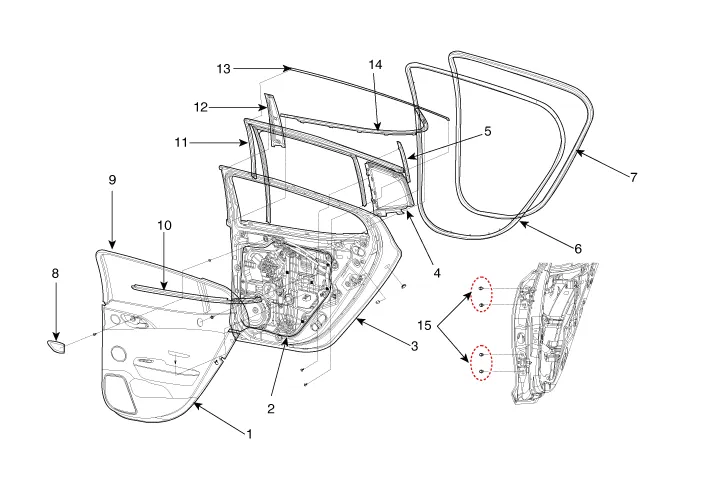
| 1. Rear door trim panel 2. Rear door module 3. Rear door panel 4. Rear door fixed glass & weatherstrip 5. Rear door drive channel 6. Rear door side weatherstrip 7. Rear door body side weatherstrip 8. Rear door inside handle cover |
9. Rear door frame inner cover
10. Rear door belt inner weatherstrip 11. Rear door window glass run 12. Rear door frame garnish 13. Rear door frame molding 14. Rear door belt outer weatherstrip 15. Rear door hinge |
Repair procedures
| Adjustment |
Glass Adjustment
Check the glass run channel for damage or deterioration, and replace if necessary. |

| 1. |
Remove the rear door trim. (Refer to Rear Door - "Rear Door Trim") |
| 2. |
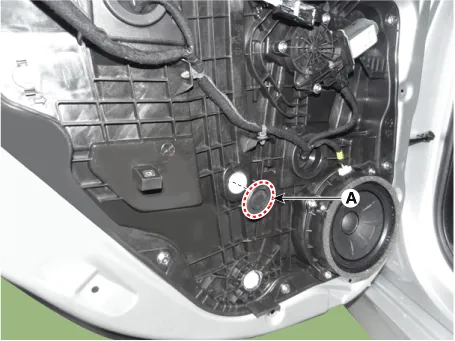
Remove the rear door window glass mounting hole plug (A).
|
| 3. |
Carefully move the front door window glass (A) until the glass mounting bolts are visible, then loosen them.
|

| 4. |
Check that the glass moves smoothly. |
Door Striker Adjustment
| 1. |
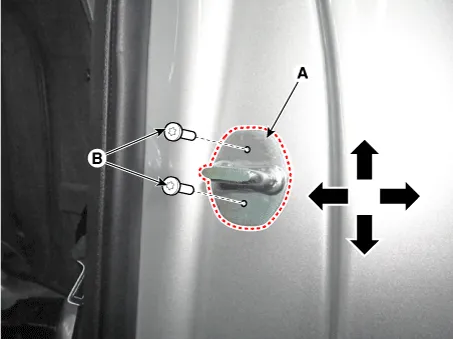
Remove the rear striker cover. |
| 2. |
Loosen the bolts (A) just enough for the striker to move.
|
| 3. |
Tap on the striker with a plastic hammer to adjust the striker. The striker will not move much, but will give some adjustment. |
| 4. |
Hold the outer handle out, and push the door against the body to be sure the striker allows a flush fit. If the door latches properly, tighten the screws and recheck. |
Door Position Adjustment
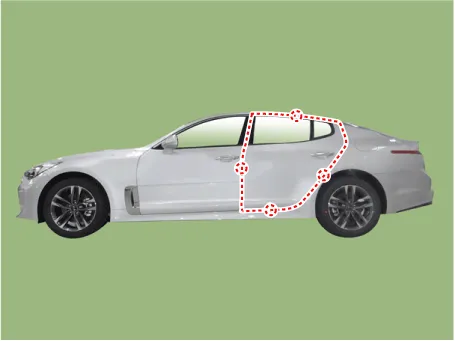
After installing the door, check for a flush fit with the adjacent body panels, then check for equal gaps between the front, rear, and bottom, door edges and the body. Check that the door and body edges are parallel. Before adjusting, replace the mounting bolts. |
| 1. |
Check that the door and body edges are parallel.
|
| 2. |
Place the vehicle on a firm, level surface when adjusting the doors. |
| 3. |
Adjust at the hinges (A):
|
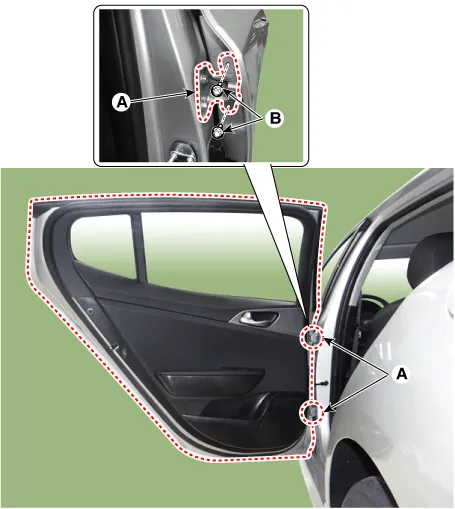
| 4. |
Grease the pivot portions of the hinges indicated by the arrows. |
| 5. |
Check for water leaks. |
Rear Door Trim ➤
Rear Door Inside Handle ➤
Rear Door Window Glass ➤
Rear Door Module ➤
Rear Door Outside Handle ➤
Rear Door Belt Outside Weatherstrip
Repair procedures
| Replacement |
| 1. |
Pull down rear door window glass by pressing the power window glass switch. |
| 2. |
Remove the rear door belt outside weatherstrip (A).
|
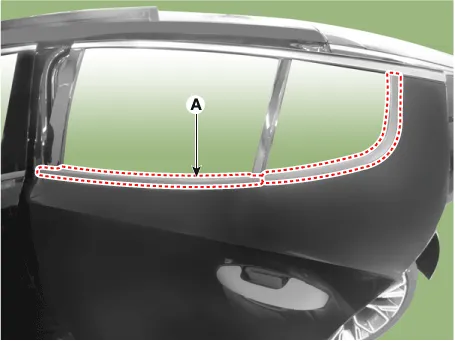
| 3. |
Install in the reverse order of removal.
|
Rear Door Belt Inside Weatherstrip
Repair procedures
| Replacement |
| 1. |
Remove the rear door trim. (Refer to Rear Door - "Rear Door Trim") |
| 2. |
Remove the rear door belt inside weatherstrip (A).
|
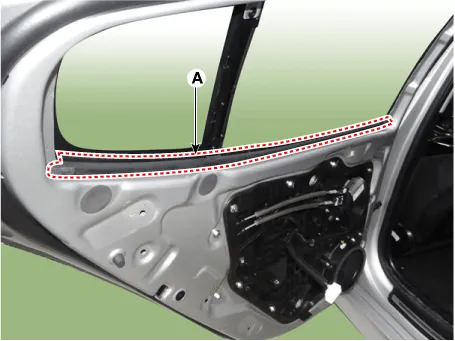
| 3. |
Install in the reverse order of removal.
|
Rear Door Side Weatherstrip
Repair procedures
| Replacement |
| 1. |
Loosen the rear door checker (B) mounting bolt. |
| 2. |
Detach the clips, then remove the rear door side weatherstrip (A).
|
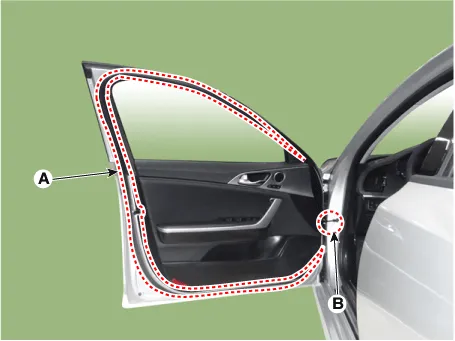
| 3. |
Install in the reverse order of removal.
|
Rear Door Latch ➤


Other information:
Kia Stinger (CK) 2018-2023 Service Manual: Electronic stability control (ESC)
The Electronic Stability control (ESC) system is designed to stabilize the vehicle during cornering maneuvers. ESC checks where you are steering and where the vehicle is actually going. ESC applies the brakes on individual wheels and intervenes with the engine management system to stabilize the vehicle. Electronic stability control (ESC) will not prevent accidents.Repair procedures Replacement 1. Disconnect the negative (-) battery terminal. 2. Remove the heater unit. (Refer to Heater - "Heater Unit") 3. Remove the heater unit lower case (A) after loosening the screws. 4.Categories
- Manuals Home
- Kia Stinger Owners Manual
- Kia Stinger Service Manual
- Rear Door Trim
- Rear Door Inside Handle
- Rear Door Window Glass
- Rear Door Module
- Rear Door Outside Handle
- Rear Door Belt Outside Weatherstrip
- Rear Door Belt Inside Weatherstrip
- Rear Door Side Weatherstrip
- Rear Door Latch
- New on site
- Most important about car
Contents
